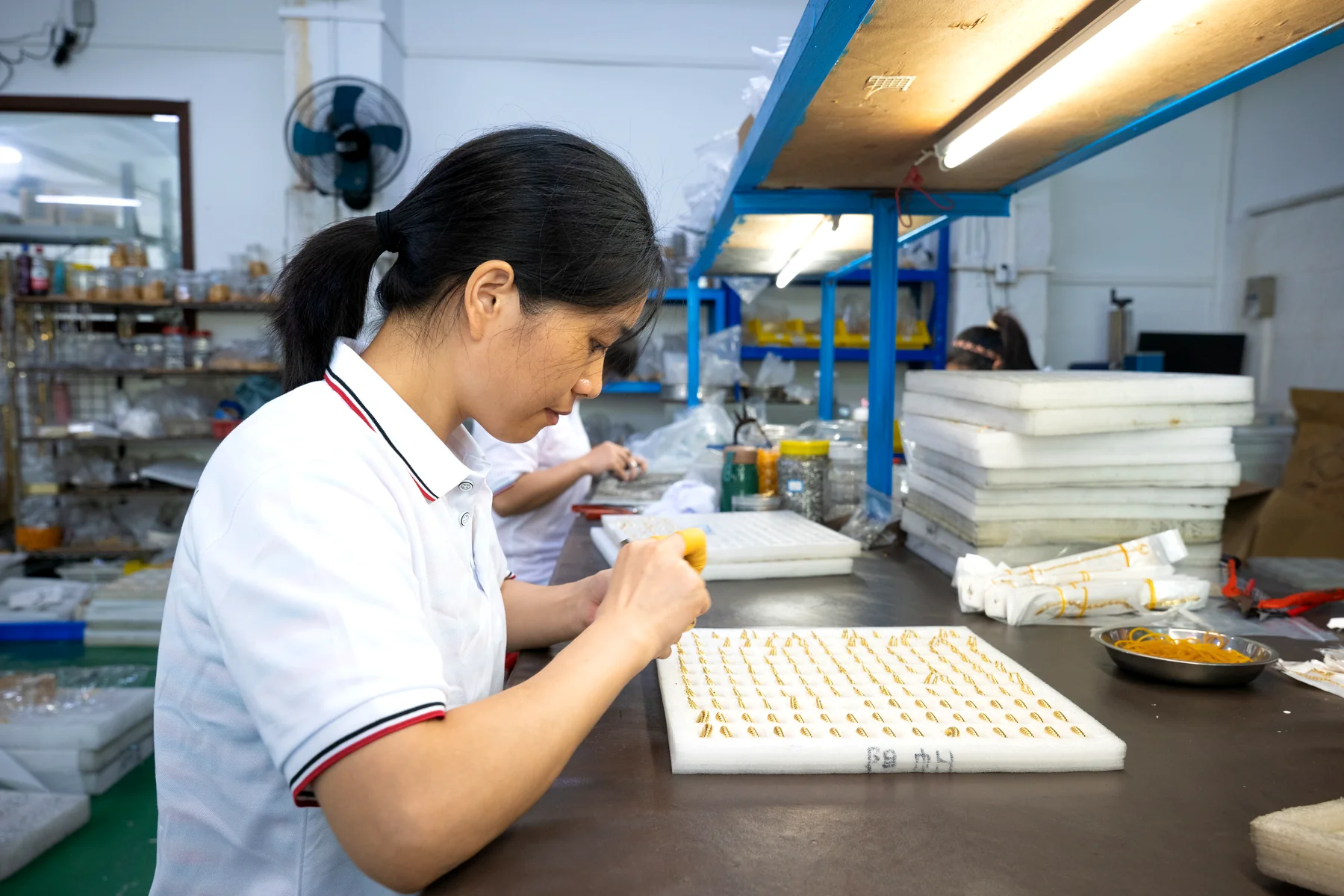
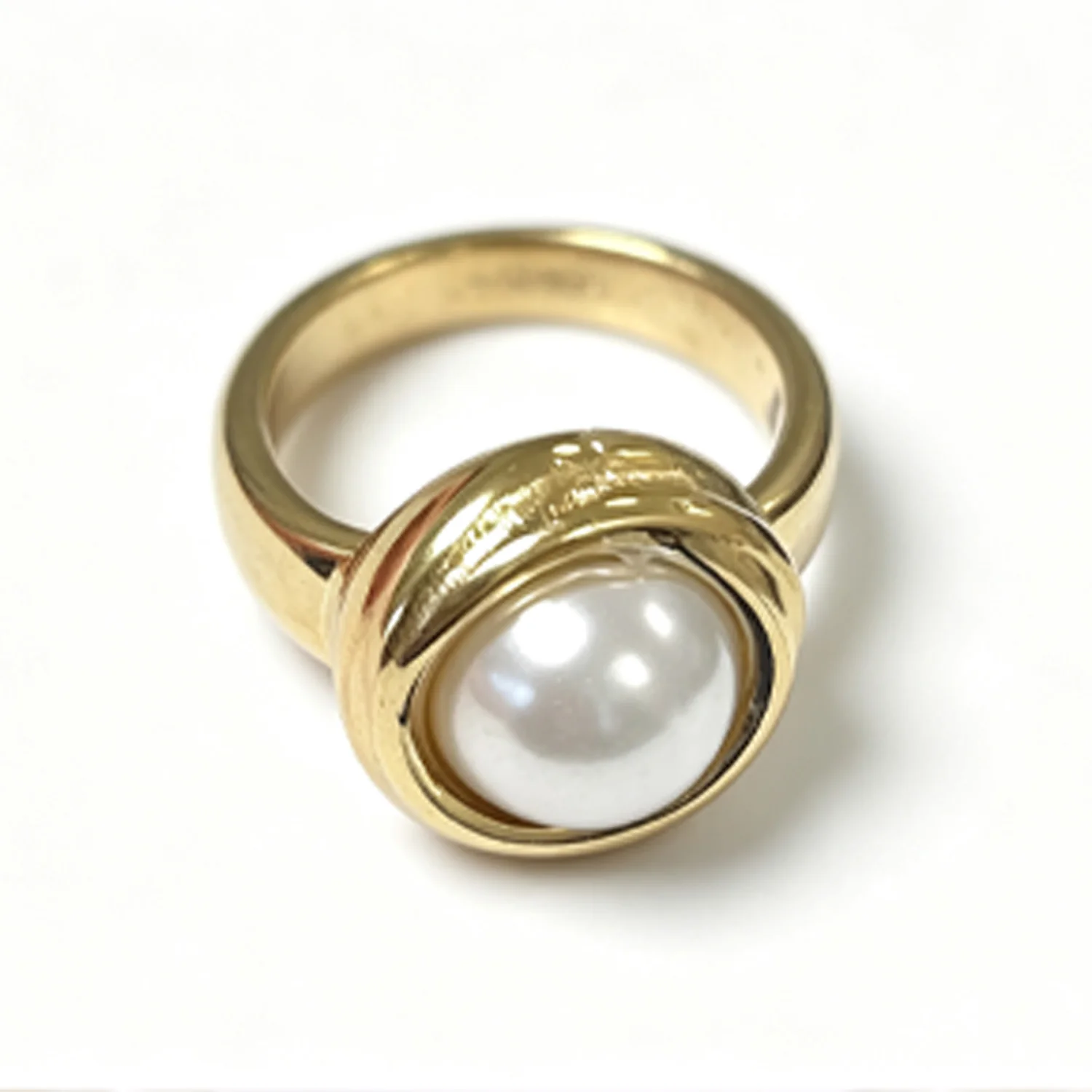
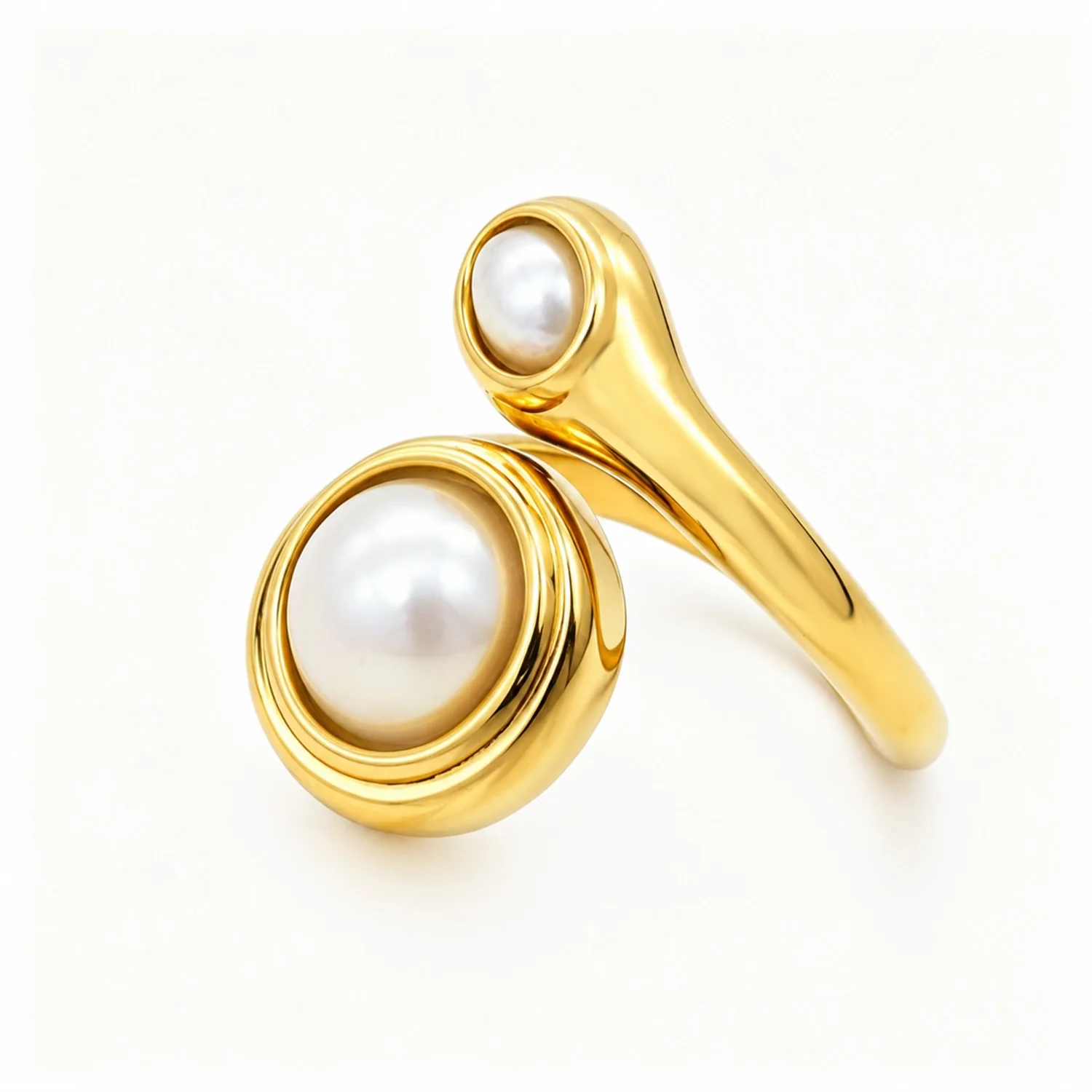
Cleaner settings
Improved gap polishing around the setting helps create a cleaner finish and prevent excess glue from overflowing.


From exposed silver areas and excess glue to loose stones and rough edges, these examples show how our workmanship addresses common concerns.
Improved gap polishing around the setting helps create a cleaner finish and prevent excess glue from overflowing.
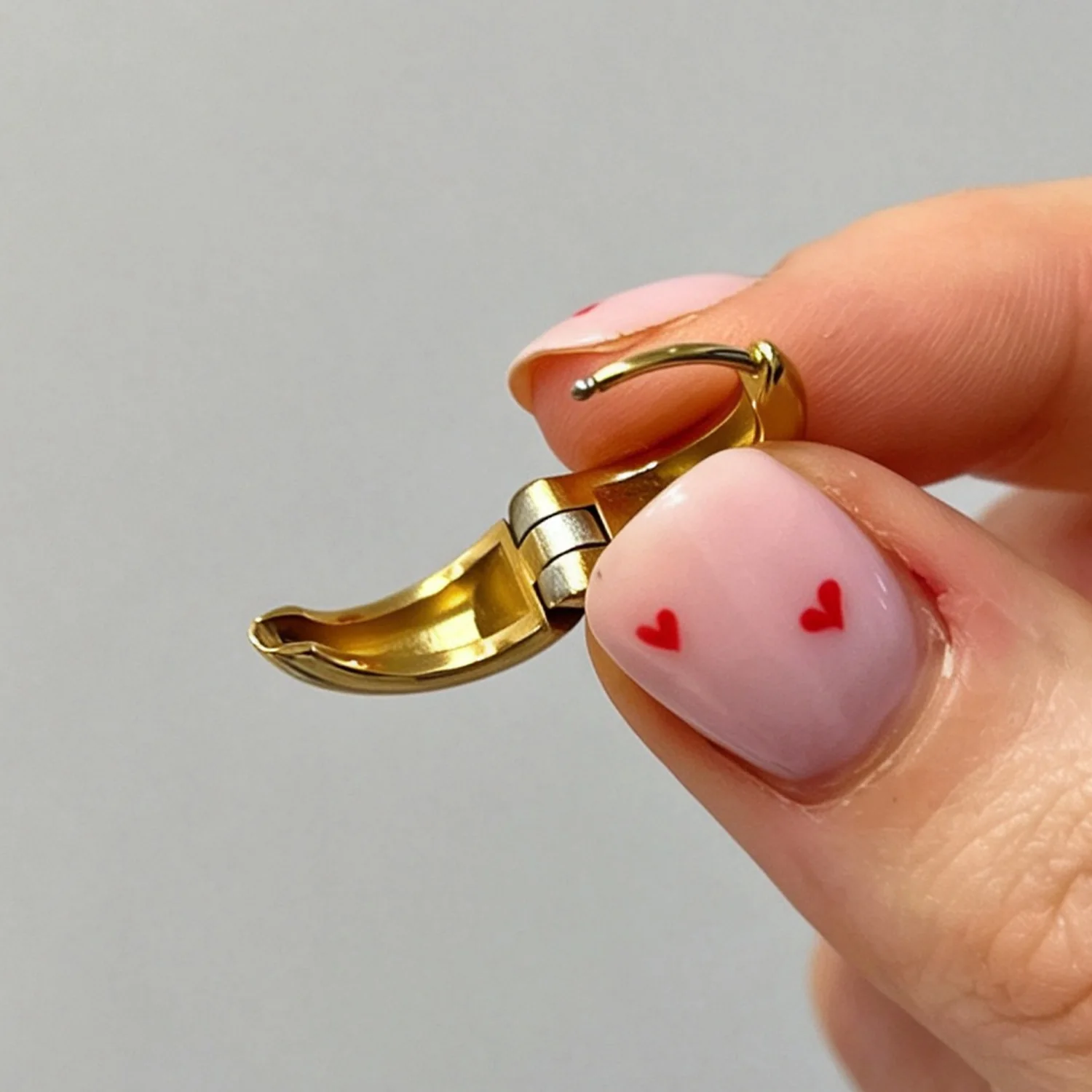
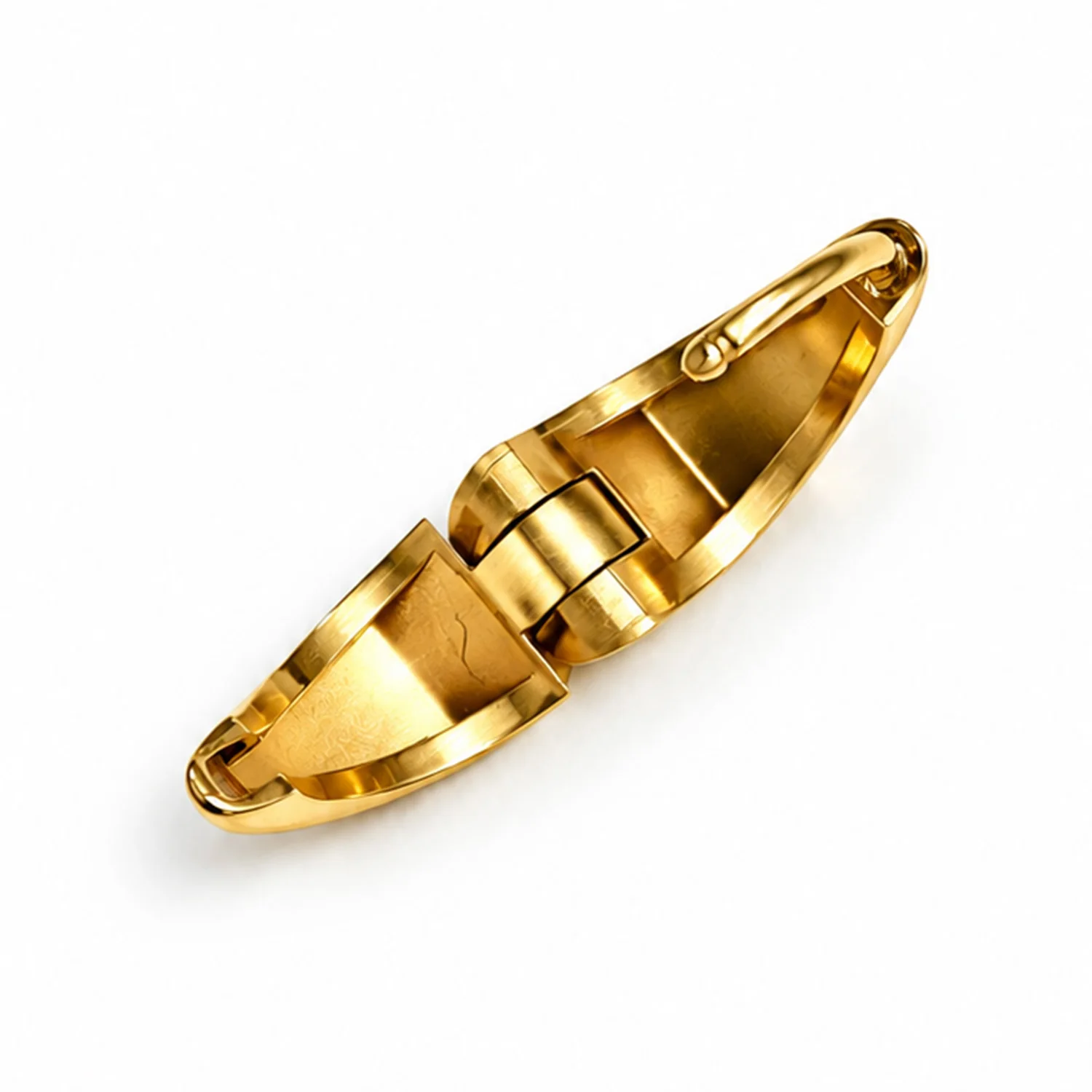
Earring bottom connections receive two PVD plating passes to cover exposed silver-colored areas.
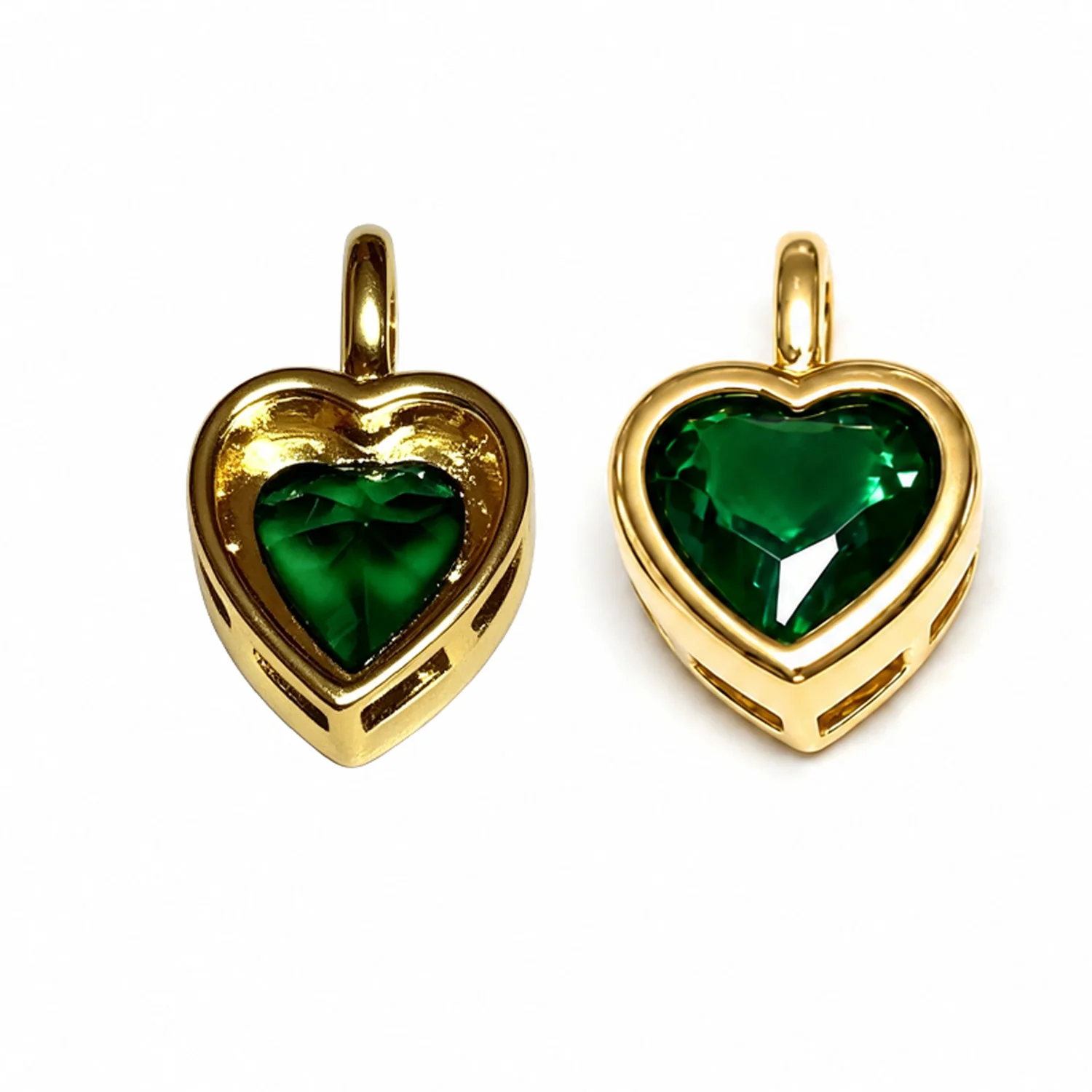
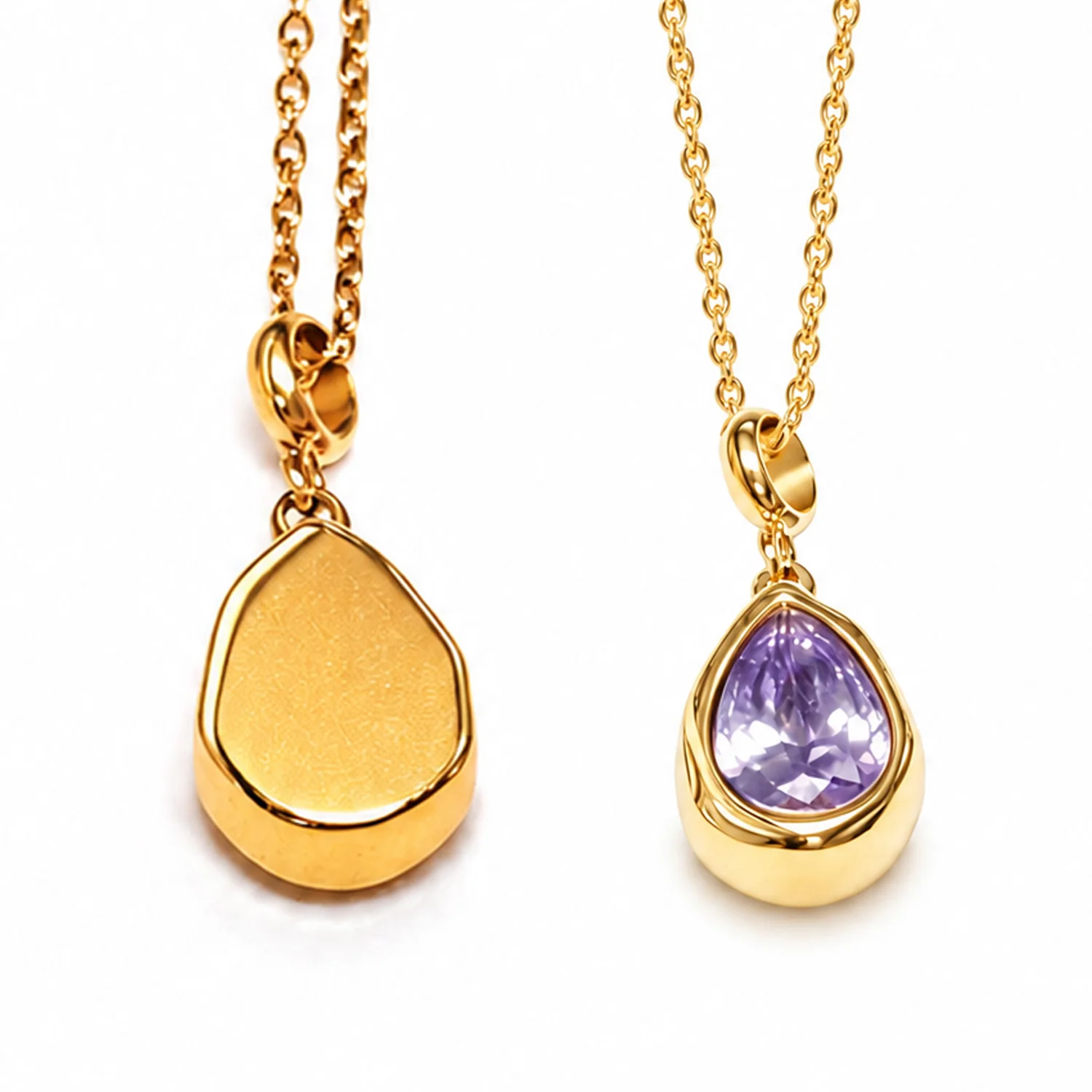
A solid steel base and CNC-finished zirconia give cast styles a more refined look.
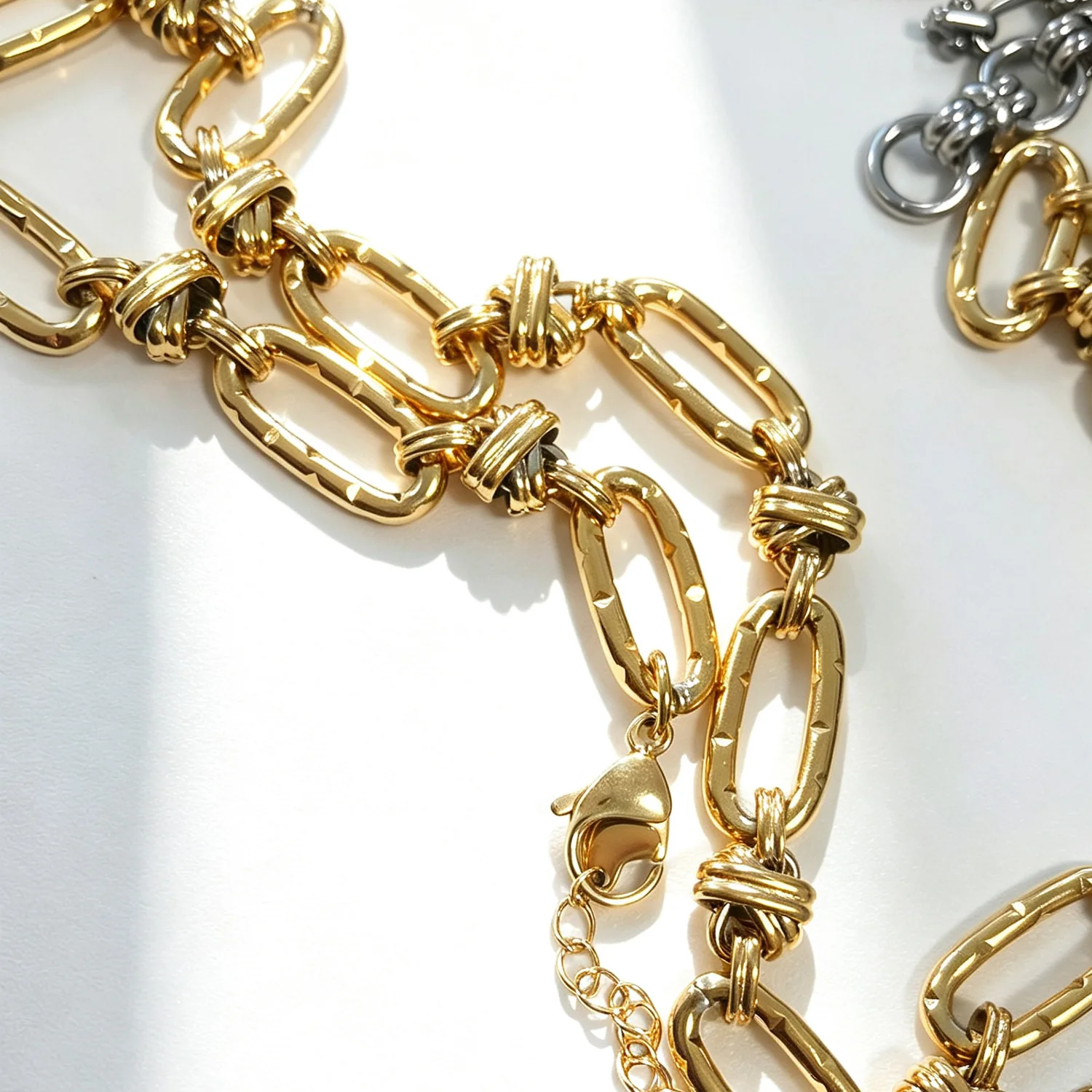
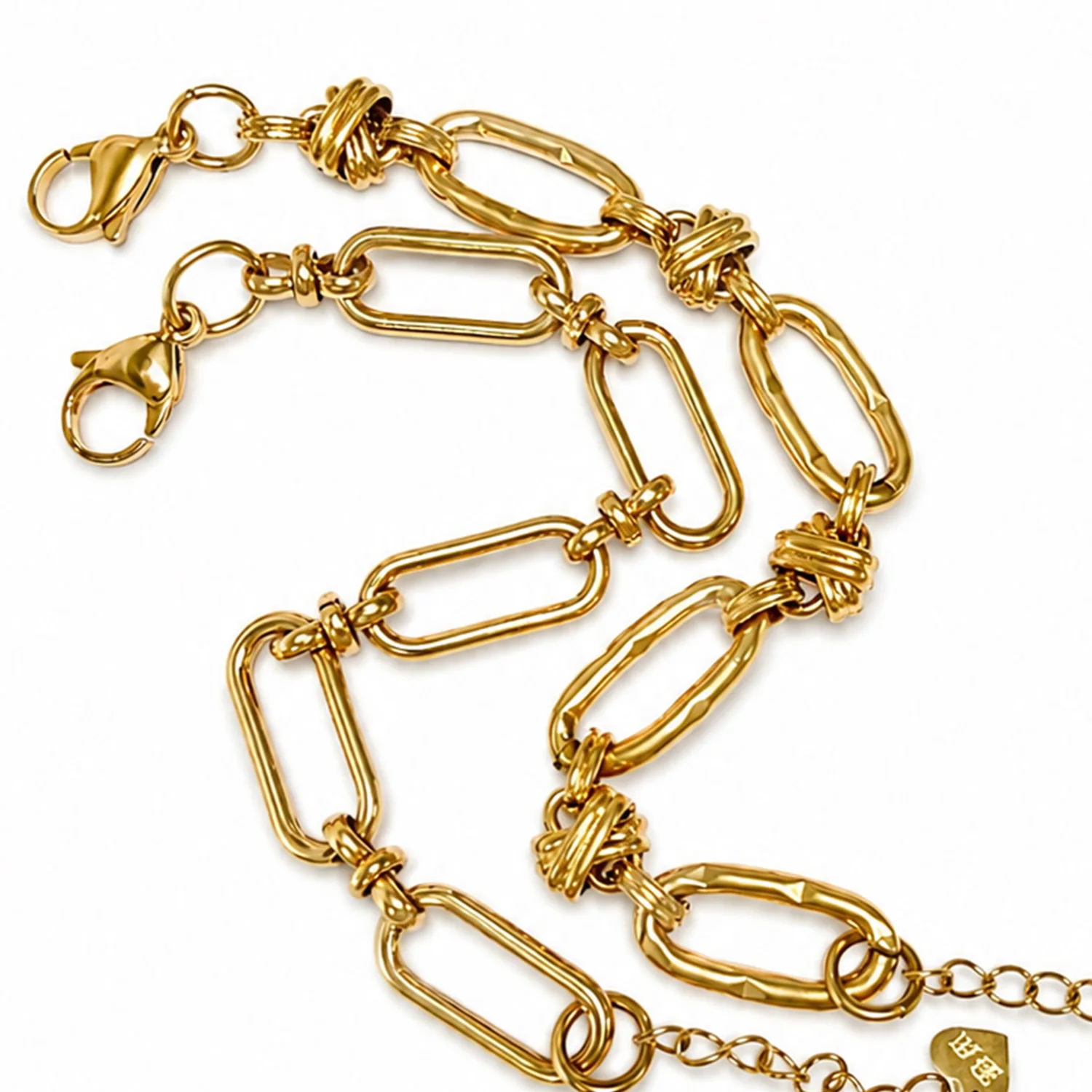
Chain-link connections receive two PVD plating passes to cover exposed silver-colored areas.
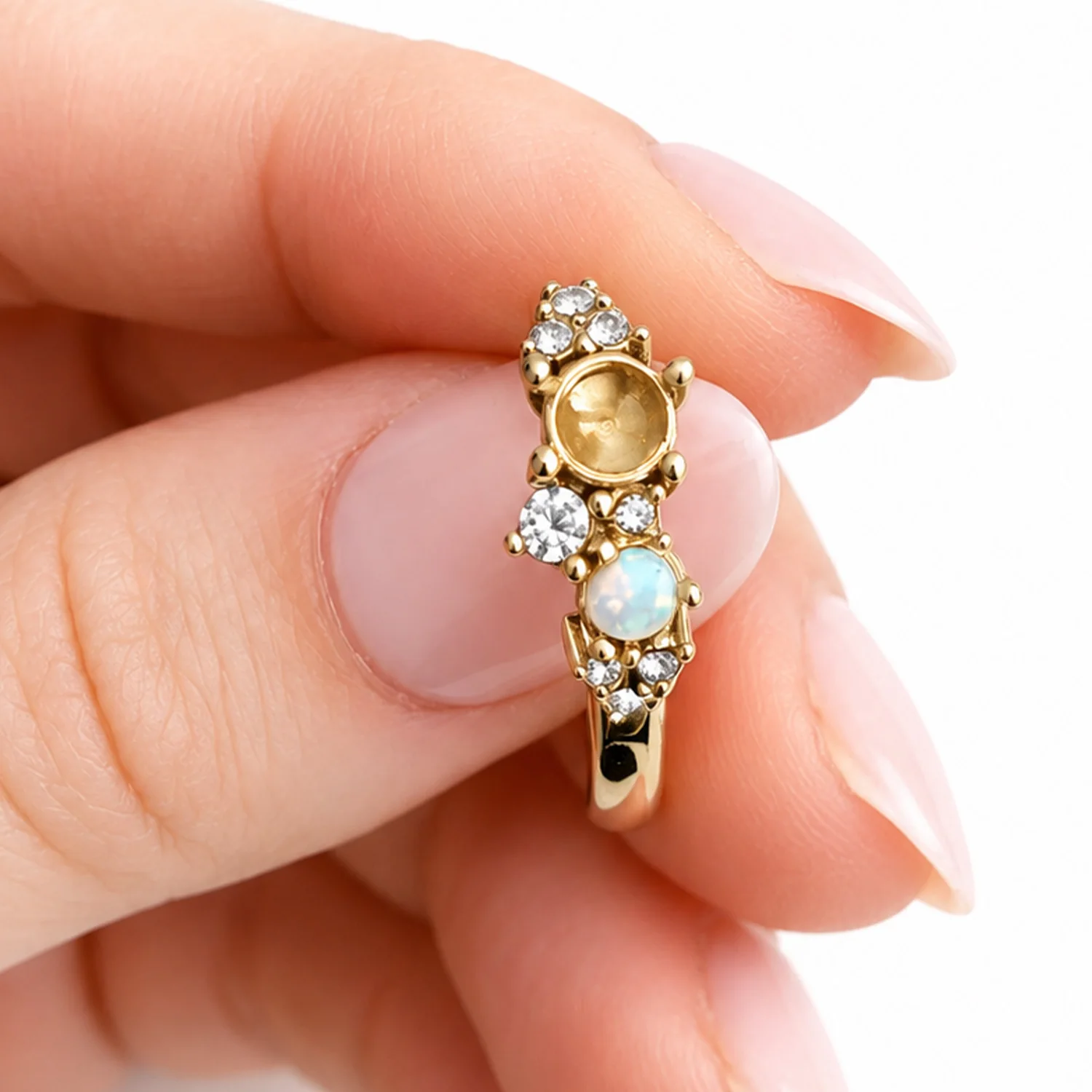
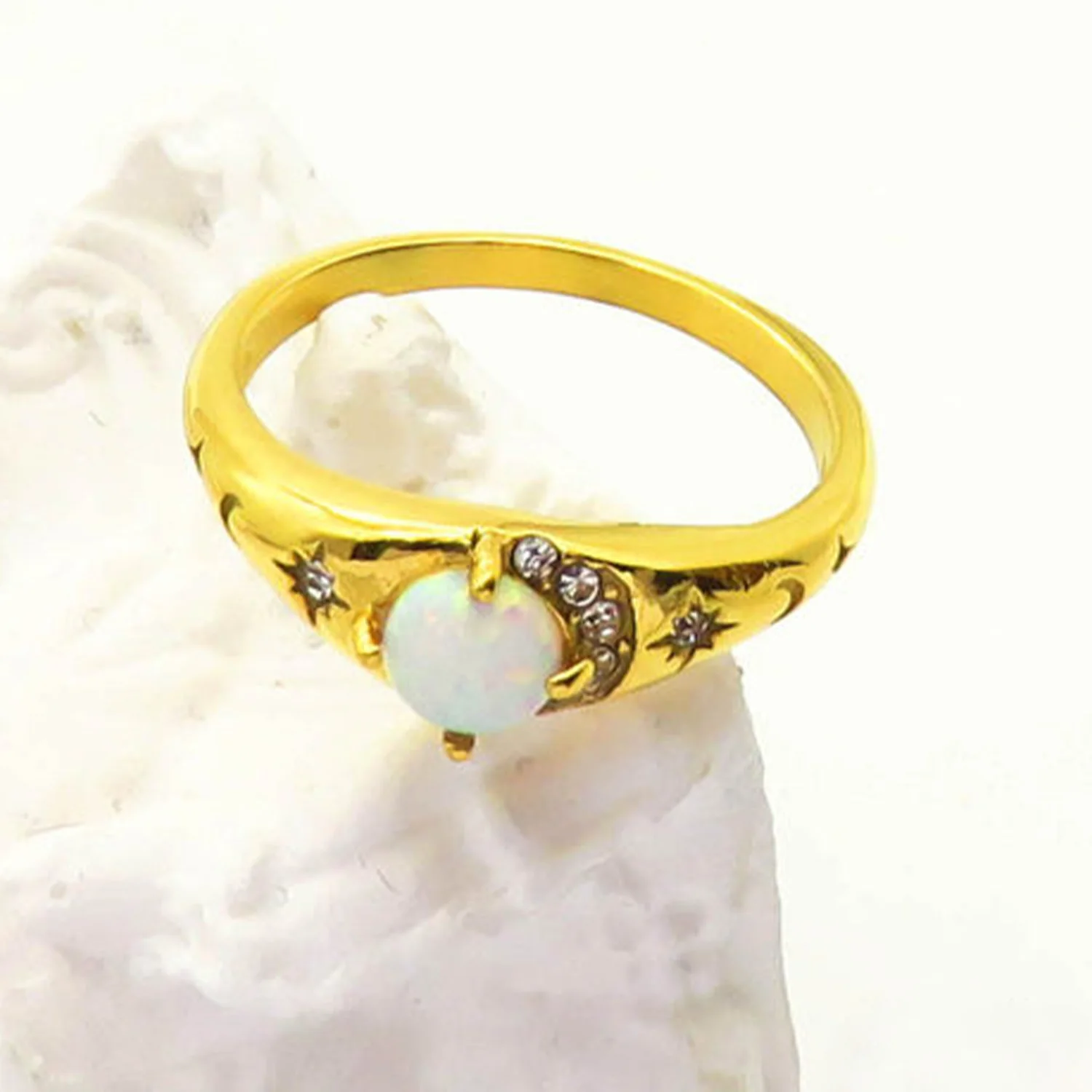
More secure prongs help hold stones and zirconia in place in prong-set styles.
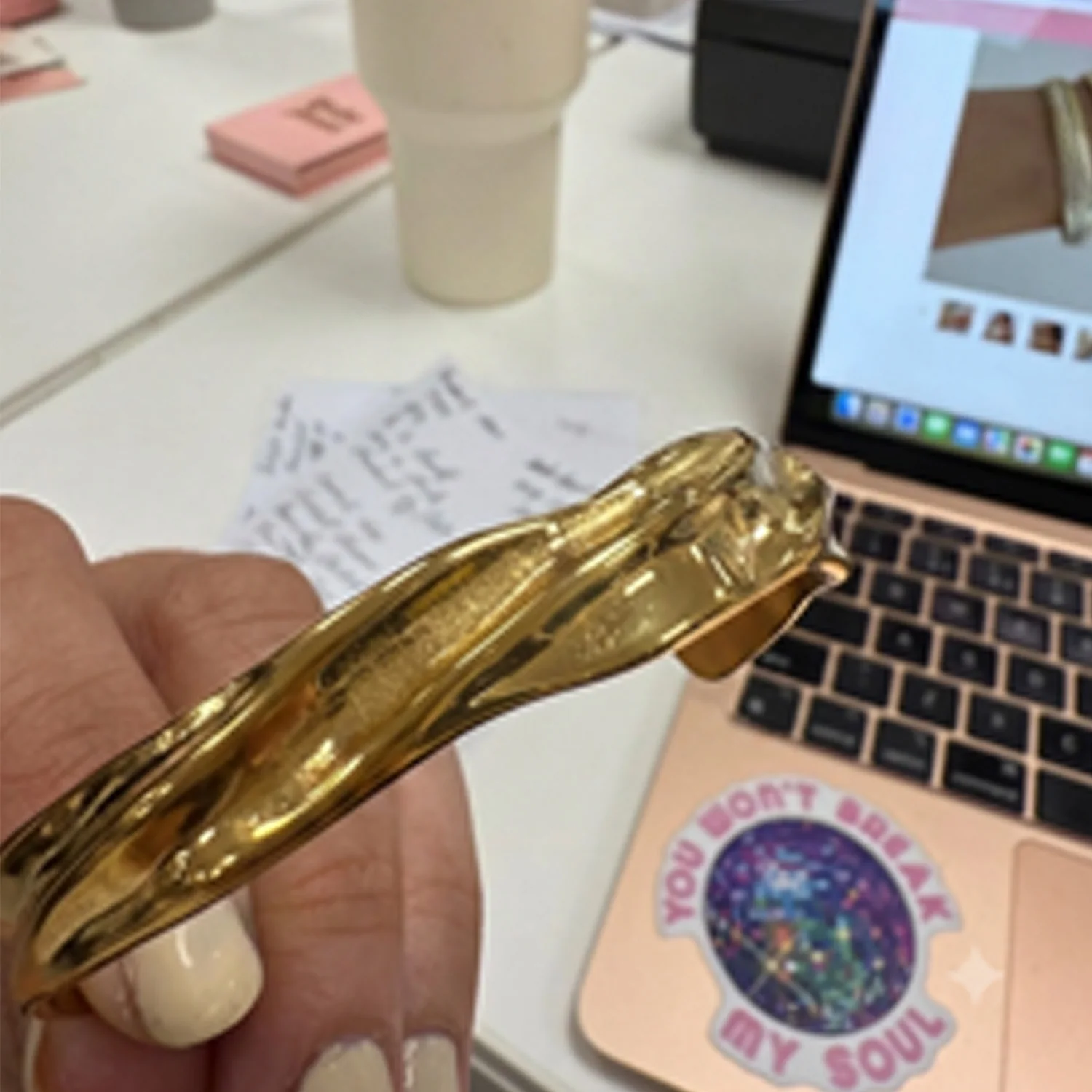
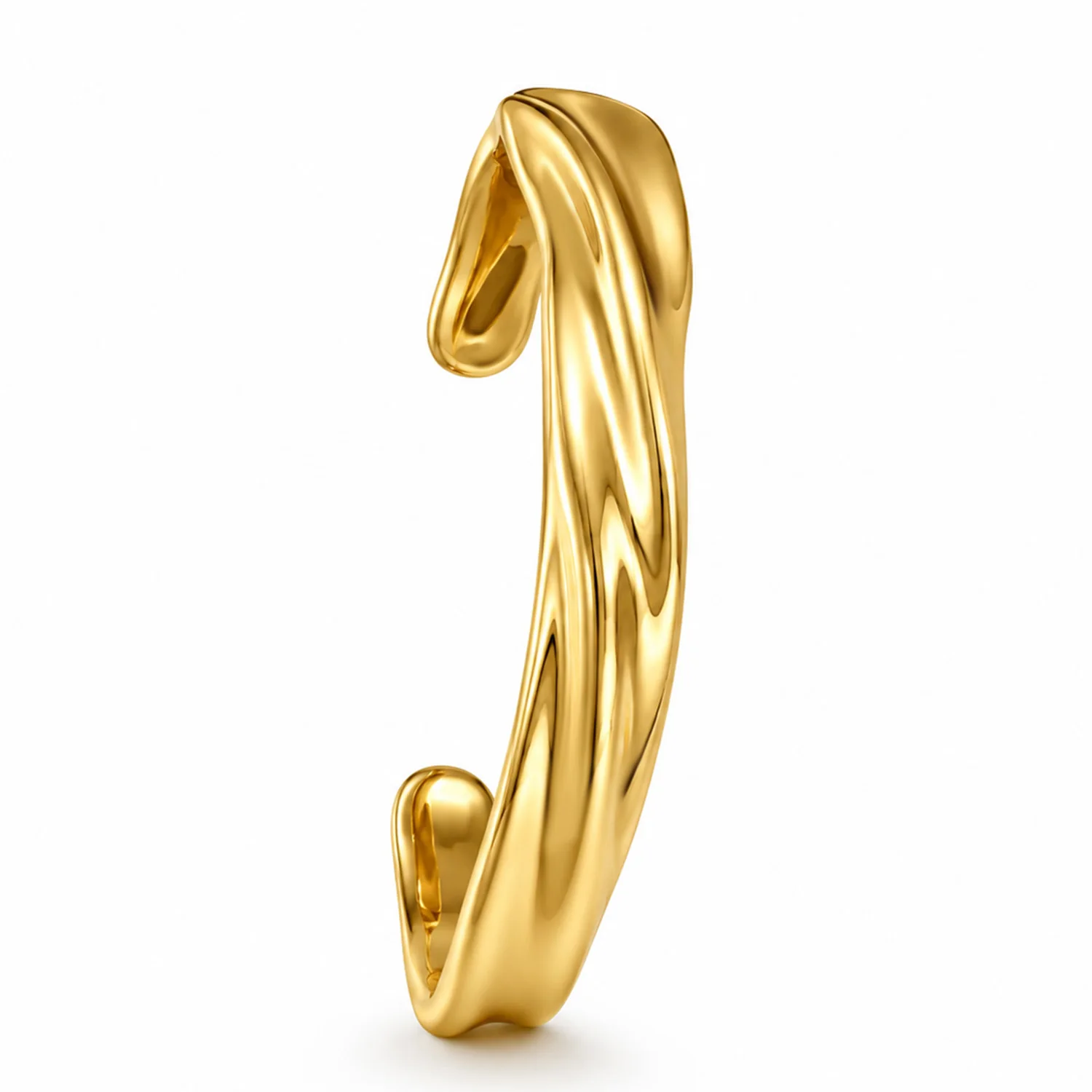
Improved gap polishing creates a smoother finish.
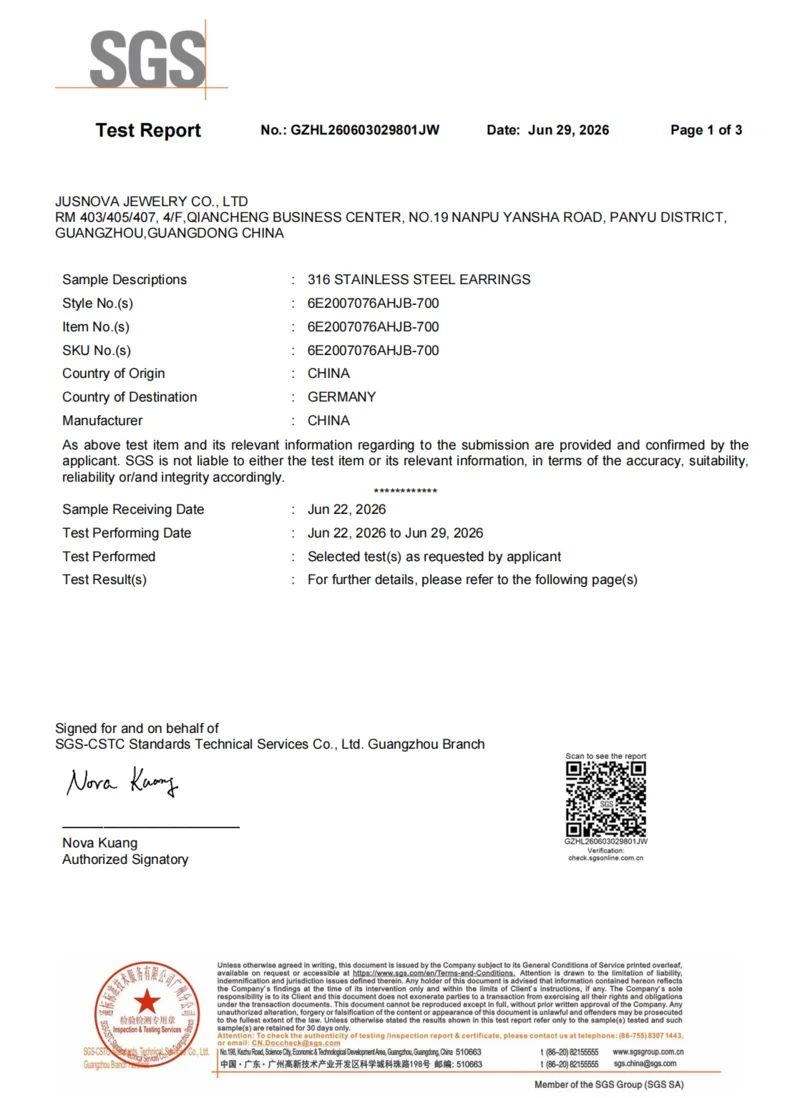
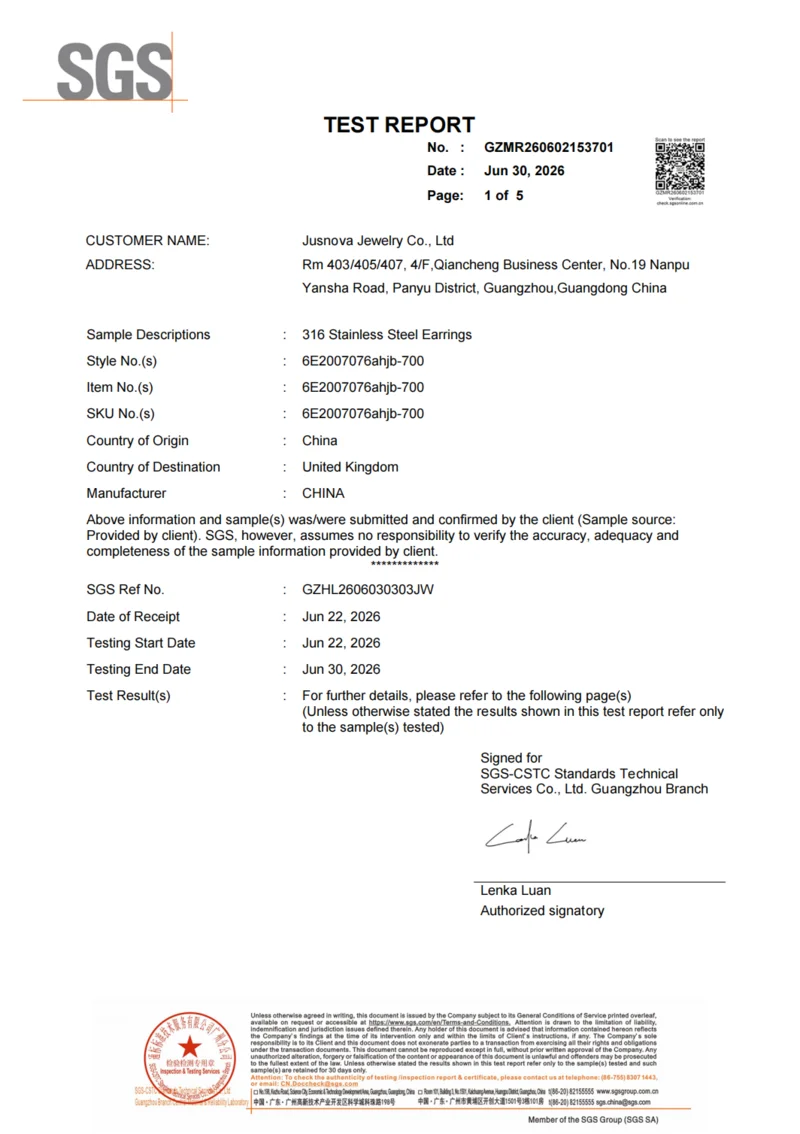
Three product-level tests cover material, plating and sweat exposure. Two document sets support market entry and factory review.
Product Tests
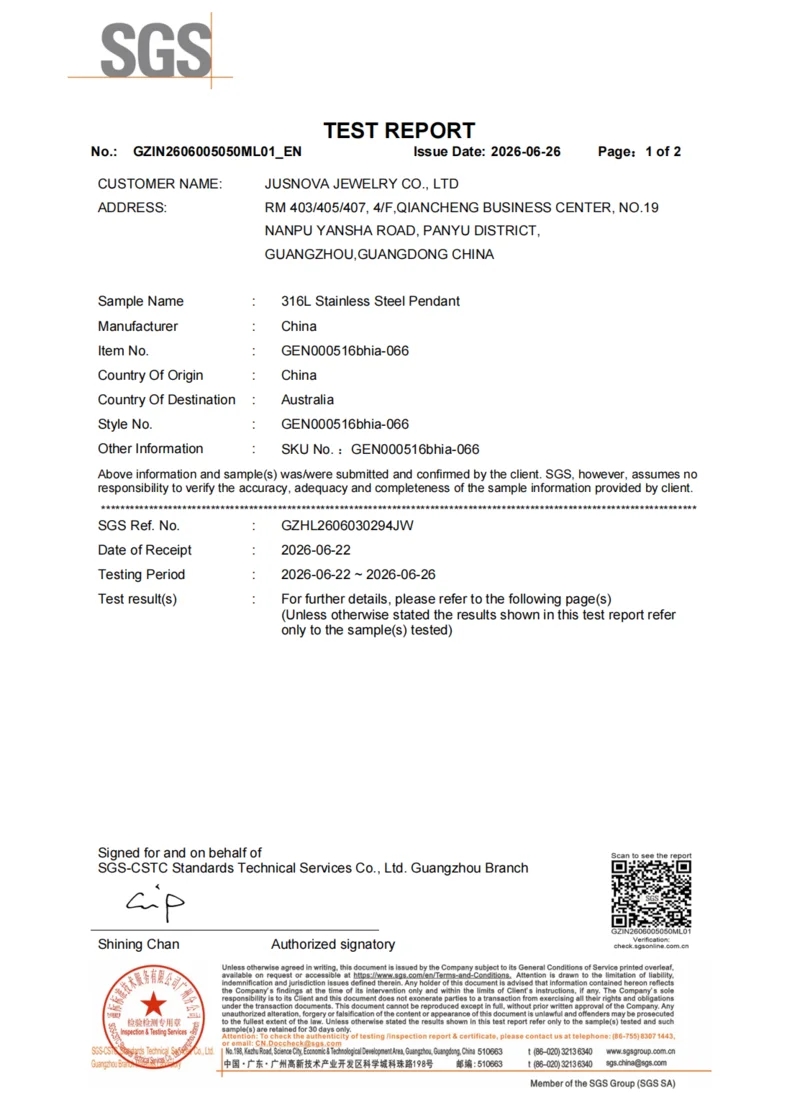
Checks 316L material and composition.
Checks finish durability under salt-spray exposure.
Checks finish performance against sweat exposure.
Compliance Documents
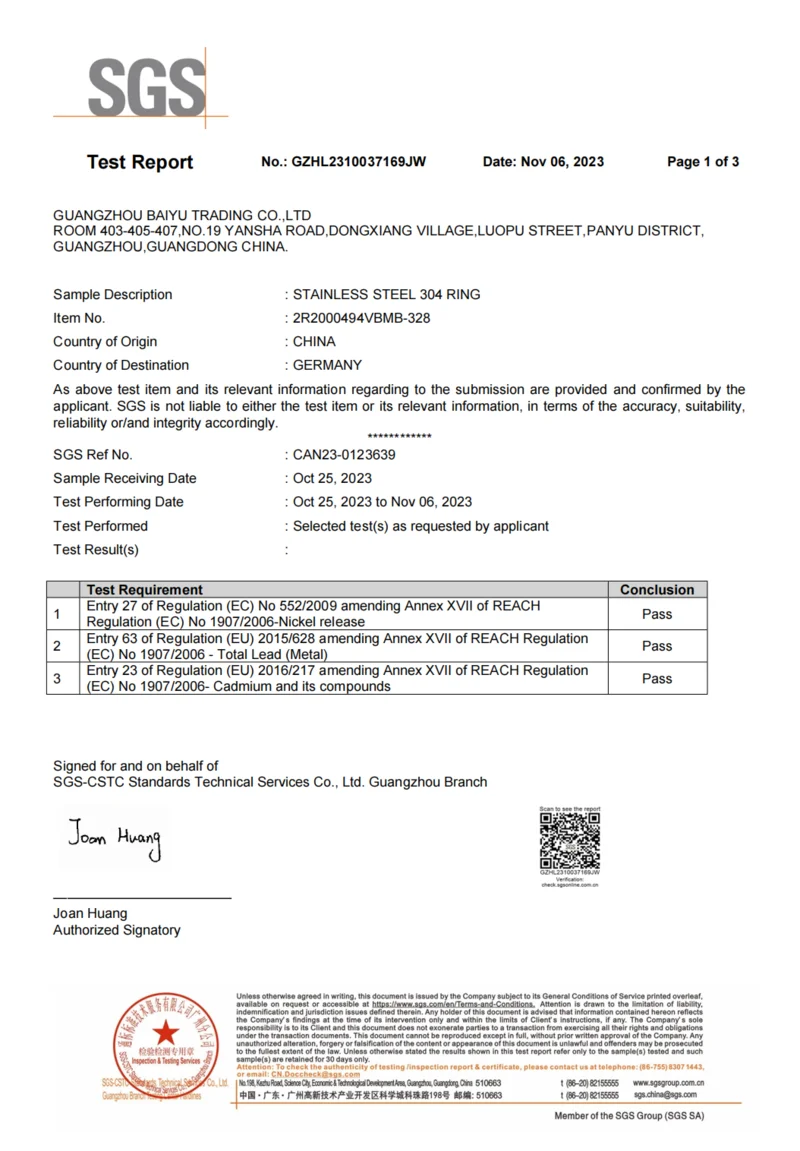
Supports EU market compliance review.
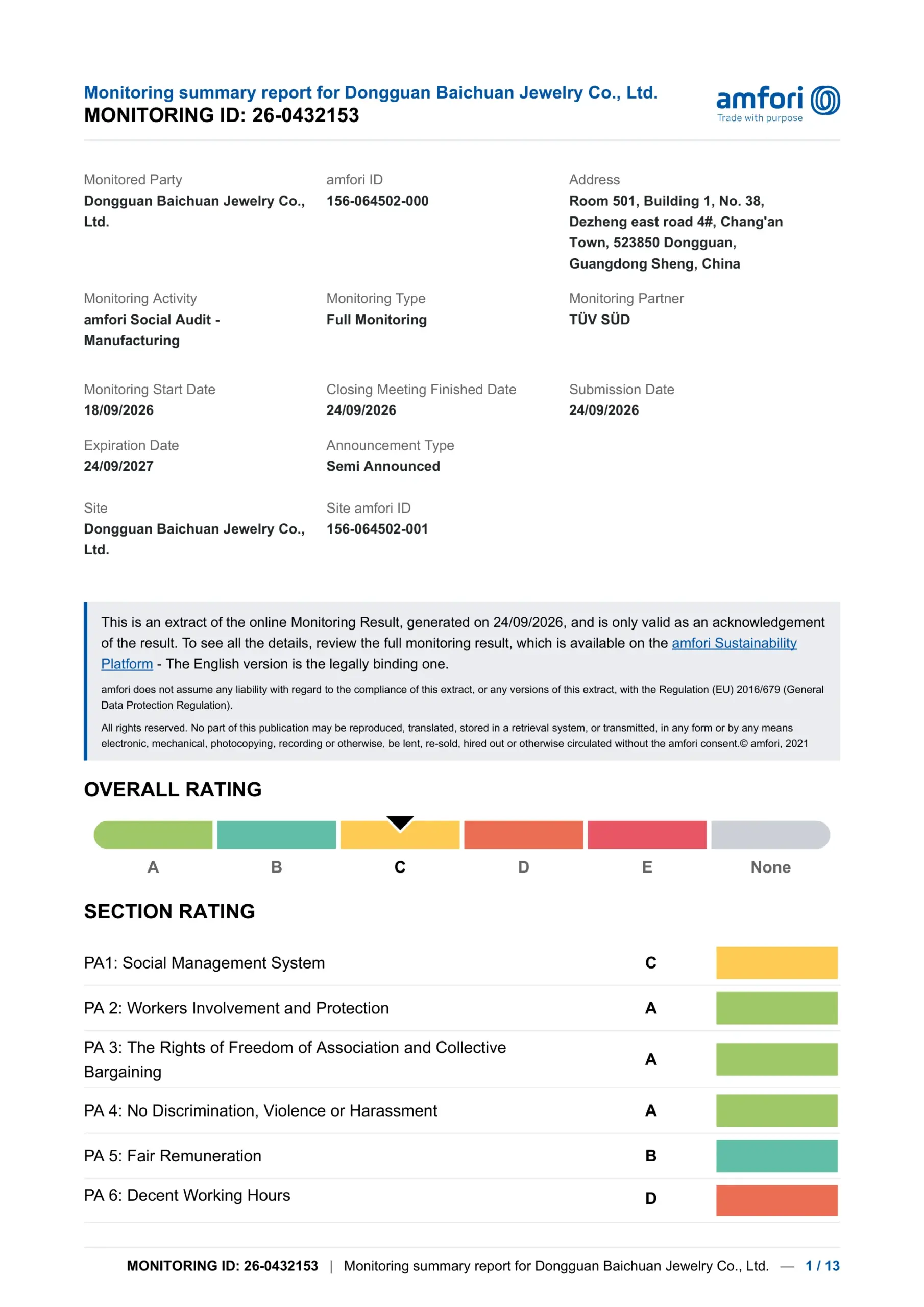
Provides factory-level social responsibility audit information.
Share test reports when a marketplace or platform asks for compliance documents.
Use available reports during buyer review to answer quality and compliance questions faster.
Keep relevant documents on file for customs, market entry and internal procurement review.
Every gold finish is applied by vacuum PVD on hypoallergenic 316L stainless steel — a coating that is harder and more wear-resistant than conventional electroplating. The right thickness depends on how the piece will be worn.
| Tier | Gold Layer | Expected Color Retention* | Best For |
|---|---|---|---|
| Standard | 0.03 µm | 1–2 years | Fast-fashion and seasonal collections |
| Premium Most Popular | 0.05 µm | 2–3+ years | DTC brands balancing durability and unit cost |
| Heavy-Duty | 0.10 µm | 3–5+ years | Rings, cuffs, clasps and other high-friction pieces |
*Under normal daily wear.
Above 0.15 µm, PVD layers build internal stress and can micro-crack. Between 0.05 and 0.10 µm, adhesion and wear resistance are at their best.
All three tiers are sweat- and water-resistant under daily wear. Plating is tested with 96-hour salt spray and synthetic perspiration.
Necklaces, earrings and pendants see little friction, so Standard or Premium works well. Rings, cuffs and clasps are better served by Heavy-Duty.
Explore how the two finishing methods compare.
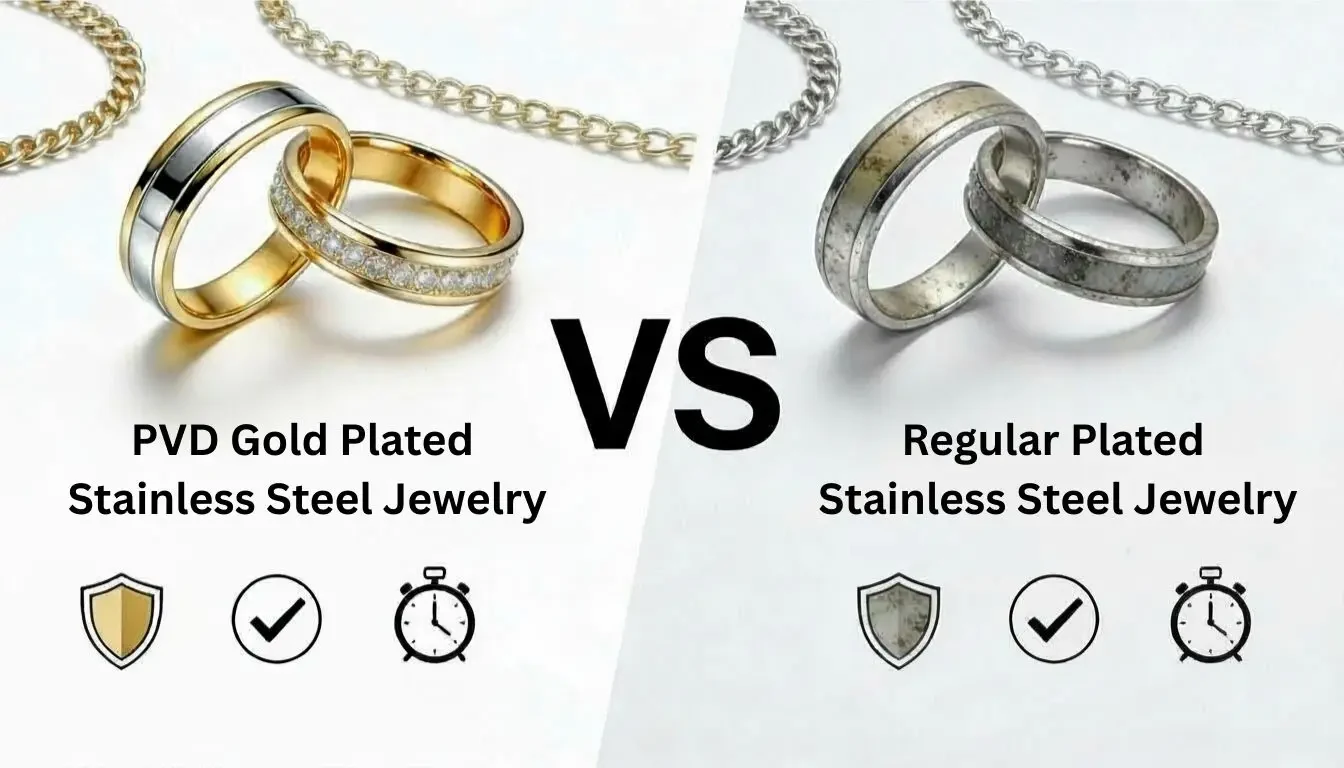
For stainless steel jewelry, a 0.05–0.10 µm PVD layer gives the best balance of adhesion and wear. Above 0.15 µm the layer builds internal stress and may micro-crack — which is why thicker is not automatically better.
Tell us your market, product scope and order plan. We will share the test reports and compliance documents that apply to your order.
Expect a reply within 12 business hours. Jusnova coordinates design support, production follow-up and shipping.


