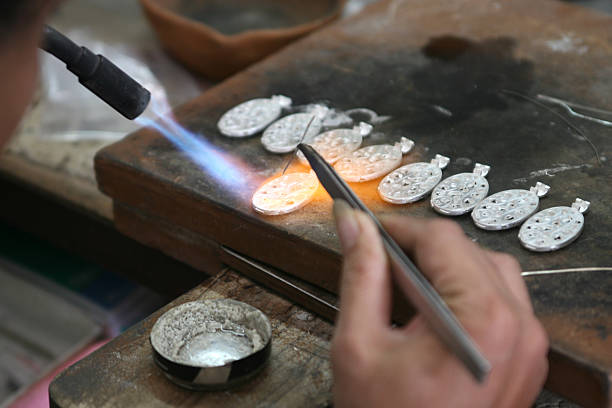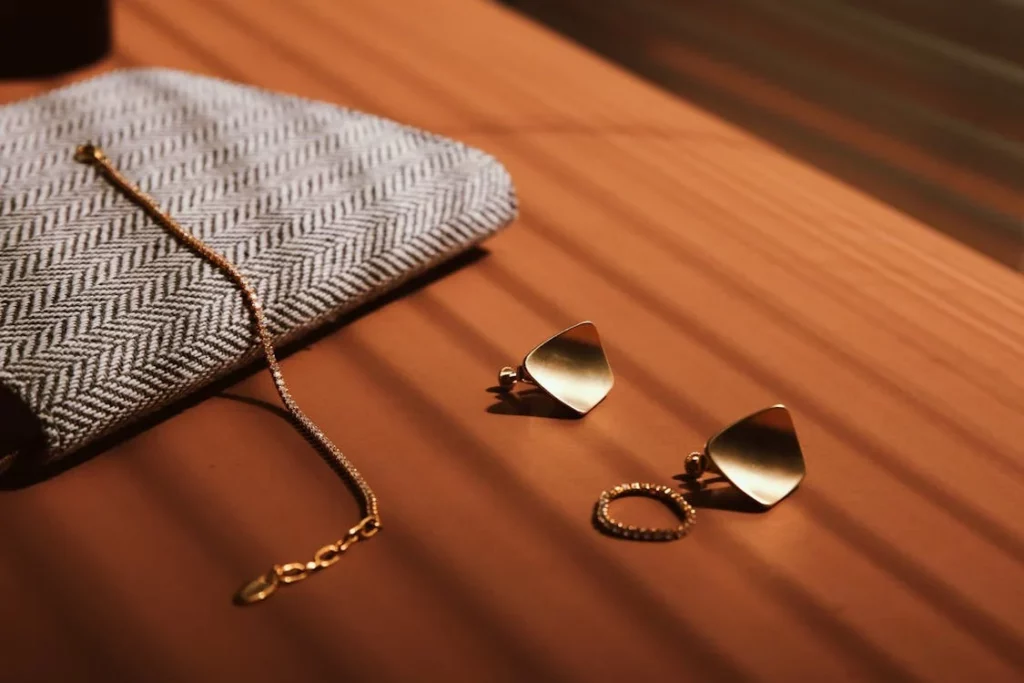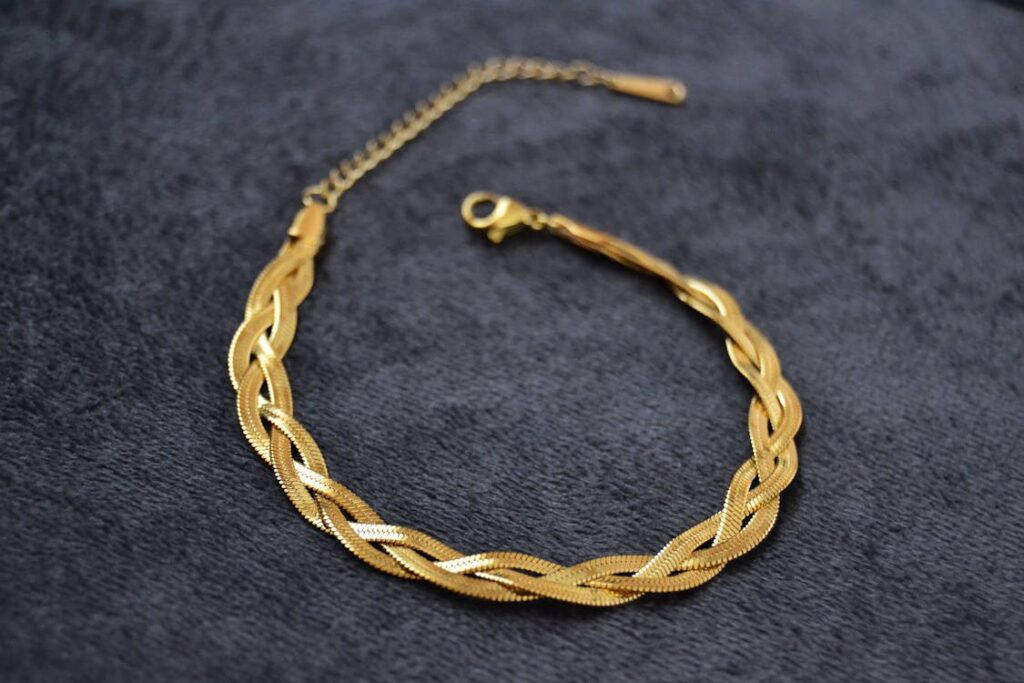
The right questions to ask before choosing a jewelry factory are a risk-control tool, not a simple checklist. Failing to go beyond headline price and MOQ exposes your brand to quality failures, unexpected costs that destroy your margins, and partners who cannot meet your launch dates.
This analysis provides the specific vetting criteria you need. We evaluate everything from a factory’s stated AQL standards and ISO 9001 certification status to their policy on NDA execution and plating thickness verification, giving you the data to protect your margins and brand reputation.
Why Asking the Right Questions Matters Before Choosing a Factory
Asking the right questions is a risk-control tool. It exposes a factory’s true capabilities, protecting your brand from quality, delivery, and compliance failures beyond the headline price.
When you’re choosing a jewelry manufacturer, headline numbers like price, Mindestbestellmenge, and lead time are just the starting point. They don’t tell you the real story. Digging deeper with process-focused questions is the only way to vet a partner properly. It’s about figuring out how they think, how they solve problems, and whether they can actually deliver what your brand needs.
Exposing Core Risks in Quality, Kosten, and Compliance
The right questions act as a bullshit detector, uncovering hidden risks before you commit. Relying only on a low price quote is a recipe for disaster. You need to understand the operational reality behind the numbers to protect your brand and your margins.
- Quality Risk: You need to verify if their definition of „Qualität“ matches yours. This means asking about material authenticity (are the gems real?), process controls for stone setting and plating, and certifications like ISO 9001 or REACH compliance. Without this, you risk high defect rates and inconsistent products.
- Cost Risk: A factory that can’t provide a clear cost breakdown is a major red flag. You need to know if the quoted price includes everything—materials, labor, tooling, Verpackung, and any surcharges. Vague pricing often leads to surprise fees that destroy your profit margin.
- Lieferung & Reliability Risk: A promised lead time is useless if the factory has poor capacity planning or relies on hidden subcontractors. Asking about their production timeline, bottlenecks, and how they handle delays reveals whether they can reliably meet your launch dates or if you’ll constantly be chasing them for updates.
- Compliance & IP Risk: Your brand is on the line. You must ask about IP protection like NDAs to prevent your designs from being copied. You also need to confirm their ethical sourcing policies (like RJC membership) to avoid association with unethical labor or mining practices.
Aligning Factory Capabilities with Your Brand Strategy
Choosing a factory isn’t just a procurement task; it’s a strategic decision that directly shapes your brand’s position in the market. The factory you partner with determines your product’s feel, its story, and its reliability. Systematic vetting ensures the factory is an asset, not a liability.
- Match Material Capabilities to Your Price Point: Does the factory specialize in fine jewelry (solid gold, Platin) or fashion jewelry (Edelstahl, Messing)? Their expertise must align with your product’s price point and design language. A factory learning on your dime is a risk you can’t afford.
- Align Sourcing Ethics with Your Brand Story: If you market your brand as „ethically sourced“ oder „sustainable,“ your factory must provide proof. This means asking for documentation like RJC audits or conflict-free stone declarations. Your marketing claims are only as strong as your supply chain’s integrity.
- Ensure Process Discipline Supports Your Scale: Can the factory handle your volume without quality dropping off? Can they meet tight launch calendars for seasonal drops? Questions about their workflow, Kapazität, and project management separate the professional operations from the workshops that will crack under pressure.
Questions About Manufacturing Experience
Asking about a factory’s experience separates real capability from a good sales pitch. It’s your best tool for managing risk and ensuring they can deliver on your specific needs.
Assessing Technical Capabilities and Specializations
You need to get past the marketing claims and see what a factory can actually make. These questions cut straight to their hands-on skills, equipment, and whether their expertise matches your product’s requirements. This is how you verify they have the right tools and talent for the job.
- Metals and Stones: You have to ask which specific metals (wie Edelstahl, 925 Silber, 18k Gold) and stones they have *proven* experience with. A factory that excels at stainless steel fashion jewelry may not have the casting precision for fine gold. You need a partner whose material specialty aligns with your product line.
- In-House Processes: Confirm which core processes like casting, CNC-Bearbeitung, PVD-Beschichtung, and stone setting are done in-house. If a factory subcontracts critical steps, you lose direct control over quality and timelines, introducing more risk and variability.
- Product Samples: Asking for samples of products similar to yours in complexity and finish is non-negotiable. Physical samples are the ultimate proof of their craftsmanship, Toleranzen, and finishing standards. What you see is what you’re likely to get.
- Complexity Challenges: Ask about the most complex jewelry line they’ve ever produced and the challenges they faced. A transparent answer reveals their problem-solving skills and honesty. A factory that openly discusses past hurdles is more reliable than one that claims everything is simple.
Evaluating Systems, Reliability, and Client History
A technically skilled factory that can’t deliver on time or with consistent quality is a liability. These questions are designed to test a factory’s operational discipline, its documented systems, and its real-world track record with other brands. This is about verifying their professionalism and reliability.
- Lead Times and Shipment Rate: Don’t just accept a quoted lead time, which for jewelry is often 6-12 weeks. Ask for their on-time shipment rate over the last 12 Monate. That number tells the true story about their capacity planning and ability to meet deadlines.
- Zertifizierungen: Quality or ethical certifications like ISO 9001 and RJC (Responsible Jewellery Council) are more than just badges. They confirm that a factory has documented, audited systems for quality and responsible sourcing, which is a strong sign of experience with global brand standards. Also ask how long they’ve held them; long-term certification shows consistency.
- Quality Control Management: A factory should have a multi-stage quality control process: incoming material inspection, in-process checks during production, and a final inspection before shipping. A factory that only checks at the end is catching defects far too late in the game.
- Client References: Speaking with one or two of a factory’s long-term clients is one of the best ways to validate their performance. It provides direct insight into their communication, reliability, and quality over time. A confident, trustworthy factory will have no problem providing references.
Dauerhaft, Custom Jewelry to Scale Your Brand
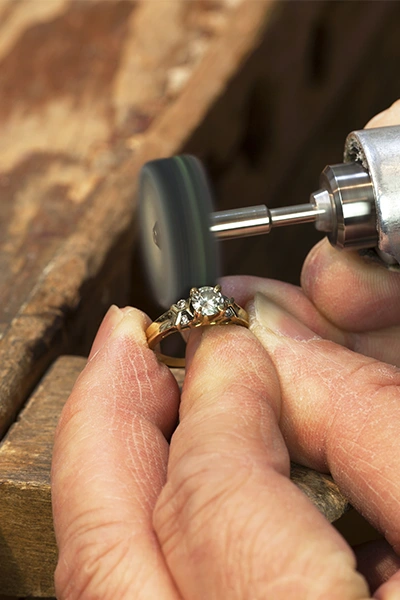
Questions About Product Specialization and Materials
Digging into a factory’s product and material expertise reveals if they can actually build your jewelry to spec, or if they’re just learning on your brand’s dime.
Evaluating a Factory’s Product Specialization and Technical Skills
You need to match the factory’s core business to your product line. A factory that spends 70% of its time on fine jewelry engagement rings operates differently from one that pumps out high-volume fashion necklaces. Asking about their focus shows you where their real expertise, tooling, and skilled labor are concentrated.
Start by asking them to specify their main product focus. You want to know:
- Primary Value Tier: Do they specialize in fine jewelry (solid gold, Platin), demi-fine (gold vermeil, Sterlingsilber), or fashion jewelry (Messing, Edelstahl)? Ask for the production percentage from each.
- Core Product Types: Are they known for rings, Halsketten, Ohrringe, oder Armbänder? A factory focused on chain manufacturing has different equipment and skills than one specializing in pavé ring settings.
- Typical Market Segment: Do they serve mass-market brands, mid-tier retailers, or luxury houses? This tells you about the quality standards and price points they’re used to hitting.
Once you know their focus, drill down into their technical skills. You’re not just buying a product, you’re buying their process. Find out which manufacturing techniques they are strongest in, and which they do in-house versus subcontracting.
- Key Processes: Are they experts in casting, CNC-Bearbeitung, hand fabrication, micro-pavé setting, enameling, or PVD plating?
- Specialist Teams: Do they have dedicated teams for complex work like engagement rings, halo settings, or tennis bracelets?
- Tolerances: What dimensional tolerances can they consistently hold? Zum Beispiel, can they maintain ±0.05 mm for ring sizes or ±0.02 ct for stone weights? A vague answer is a red flag.
Investigating Material Capabilities, Sourcing, und Qualitätskontrolle
A factory’s material capabilities and sourcing practices directly impact your product’s durability, Aussehen, und Markenreputation. Plating quality, insbesondere, is a huge factor in customer satisfaction and returns, so this is not an area to skim over.
Get precise specifications on the materials they work with regularly.
- Metals: Clarify which base metals (316L Edelstahl, Messing) and precious metals (925 Silber, 14K/18K gold, Platin) they use. For gold, what are the standard karats and alloy colors? Do they offer hallmarking support?
- Überzug: What technologies do they use—PVD or electroplating? What is the standard thickness in microns? A good target for durable fashion jewelry is ≥0.5 microns of 18K gold PVD. Ask for salt spray test data (Z.B., ASTM B117) to verify corrosion resistance.
- Stones: What is their range? Natürliche Diamanten, lab-grown, Moissanit, CZ, semi-precious stones, or pearls? What setting types are they proficient in (prong, bezel, pavé, channel)? Do they provide grading certificates like GIA or IGI for key stones?
Sourcing transparency is no longer optional for many brands. You need to know where your materials come from and what ethical standards the factory follows. This directly affects your brand’s story and compliance.
- Sourcing Channels: Where do they get their metals and stones? Do they use recycled precious metals? Can they provide authentication documents like assay reports?
- Ethical Standards: Are they RJC (Responsible Jewellery Council) certified? Do they comply with the Kimberley Process for diamonds? Ask for their internal policy on conflict-free sourcing and labor conditions.
- Hypoallergenic Products: For sensitive-skin markets, ask about their experience with nickel-free alloys, 316L Edelstahl, und Titan. Request test reports for nickel release, lead, and cadmium that comply with EU REACH standards.
Endlich, verify how they control these materials during production. Claims are easy, but process control is what delivers consistent quality. Material mix-ups or out-of-spec batches are high-risk issues.
- Incoming Inspection: How do they check materials upon receipt? Do they use tools like XRF analyzers to test metal purity? Are stones verified for size and quality?
- Lot Tracking: Do they use batch numbers to track metals and stones through the production process? This is critical for traceability if a problem arises.
- Defect Handling: What is their procedure when a material non-conformity is found? Do they rework, scrap, or get a new supplier? A clear process shows they take material control seriously.
Questions About Sampling and Product Development
Drilling down on sampling and development separates real partners from pretenders. It’s how you lock down quality, kosten, and timelines before committing to a bulk order.
Evaluating the Technical Development and Sampling Process
The sampling process is where a factory’s talk turns into a tangible product. Your job is to vet their technical discipline before you spend a dime on tooling. A professional outfit will have clear, documented answers to these questions.
- Ask them to map out their entire workflow. You want to see specific stages, from reviewing the brief and creating CAD files to prototyping and the final, approved production sample. A clear map shows they have a system, not just an ad-hoc process.
- Clarify exactly what inputs they need to start. A good factory will demand 2D drawings with dimensions, material specifications, and functional details like clasp types. If they don’t ask for specifics, it’s a major red flag.
- Understand their CAD development and approval process. Pin down how many revision rounds are included and who owns the final CAD files. You must own the files you paid to develop, so you aren’t locked into one supplier.
- Get their definitions straight: distinguish between a ‚prototype‘ und a ‚production sample.‘ A prototype is often just for validating shape and feel, sometimes made in a different material. A production sample must be made with the final materials, tooling, und endet. It’s the „golden sample“ for mass production.
- Find out which processes are handled in-house versus subcontracted. Key stages like casting, Steinsetzung, and plating have a huge impact on quality. If they’re outsourced, your control over the final product and its timeline is weaker.
- Confirm the dimensional and technical tolerances they can hold. Ask what level of precision (Z.B., ±0.2 mm) they can maintain from the sample all the way through mass production. Vague answers here mean you can expect inconsistent results.
Assessing Commercial Terms, Quality Systems, and Scalability
A great sample is useless if the commercial terms are a nightmare, the quality system is non-existent, or the factory can’t scale. These questions smoke out the business risks hiding behind a nice-looking prototype.
- Demand a clear breakdown of all development costs. This includes CAD, tooling, and each sample. A critical commercial term is their policy on crediting these initial costs against a future bulk order. Get it in writing.
- Verify their quality and compliance standards. Don’t just accept claims of „high quality.“ Ask for proof of certifications like ISO 9001 for quality management or Responsible Jewellery Council (RJC) for ethical sourcing.
- Establish a non-negotiable sample approval protocol. How do you provide feedback for revisions? What’s the process for rejecting a sample? This must be documented with photos and notes to avoid disputes later.
- Ask for typical lead times for both sampling and production. Then ask what affects those timelines. A professional factory can tell you how design complexity or a larger order volume will impact the schedule.
- Discuss their ability to scale from a single sample to mass production. What is their maximum output? What are their historical on-time shipping rates? You need a partner who can grow with you, not one who crumbles under pressure.
- Clarify how they protect your intellectual property. The bare minimum is a signed Non-Disclosure Agreement (NDA) before you share anything sensitive. Auch, ask about their internal protocols for handling and securing your valuable design files.
Questions About MOQ, Pricing and Lead Times
Headline numbers for MOQ, Preis, and lead time are just the start. The real evaluation is understanding the trade-offs and what’s actually included in the cost structure.
Clarifying Order Minimums and Pricing Structure
The Minimum Order Quantity (Mindestbestellmenge), Preis, and lead time are the three commercial pillars of any manufacturing deal. But the numbers you see on a quote sheet rarely tell the whole story. You have to dig into how they’re structured to avoid surprises that kill your margins and timelines.
Erste, get the real MOQ. Im Schmuck, it’s almost always per SKU or design, not the total order. A factory might say their MOQ is 100 units, but that could mean 100 units of the exact same ring, in the same plating color, with the same stone. Changing the plating from gold to rhodium might trigger a separate MOQ. Typical MOQs can range from 10–50 pieces for simple fashion items to over 500 for complex custom work. If you need to order below the stated MOQ, expect to pay a premium—often 15-30%—or accept a longer lead time.
Next is pricing. The unit price is just one component. A professional factory should be able to give you a clear cost breakdown. You need to know what’s included and what’s extra. Key costs to confirm are:
- Mold and Tooling Fees: These are often part of the first order but excluded from reorders. You need to know if you own the mold once you pay for it.
- Sample Charges: These are usually higher per unit than the bulk price and may or may not be credited back on your first mass order.
- Plating Costs: Price varies by thickness (Mikrometer) and material.
- Packaging and Logistics: Are branded boxes, Beutel, or cards included? Is the price EXW (Ex-Works), meaning you handle shipping?
- Compliance and Testing Fees: Costs for things like salt spray or nickel-release tests can be hidden add-ons.
Some factories, especially for materials like sterling silver, might operate on a minimum investment model, wie ein $5,000 initial order, rather than a strict per-unit MOQ. Always ask for price tiers—the unit cost should drop as your order quantity increases.
Defining Production Timelines and Trade-Offs
Lead time isn’t just one number; it’s a sequence of stages, and a delay in any one of them can derail your launch. For standard catalog items, A 2-4 week turnaround is common. For fully custom designs, it’s more like 4-8 weeks, and complex fine jewelry can take much longer. A good factory can break this down for you.
A typical project timeline looks something like this:
- Design/CAD & Prototyping: 7–10 business days
- Probenahme: Another 7–10 business days
- Bulk-Produktion: 20–30 business days after sample approval
- Reorders: Faster, often around 12–15 business days since tooling is ready.
The biggest sources of delay are late approvals from your side, design changes mid-process, and material shortages. Ask the factory what their main bottlenecks are—it’s often plating or sourcing special stones. A transparent partner will be honest about this.
These three commercial terms are always a trade-off. If you want a lower MOQ, expect to pay more per unit or wait longer. If you need a faster lead time, you might have to accept a higher MOQ or pay a rush fee. The best way to get favorable terms is to provide the factory with a rolling forecast or commit to a series of orders over several months. This gives them predictability, which they can reward with better pricing and flexibility.
Questions About Quality Control and Testing
Vetting a factory’s quality means asking sharp questions about its systems, compliance paperwork, and physical tests. Vague answers are a clear sign of risk.
Questions About Systems, Compliance, and Documentation
A factory’s quality isn’t about luck; it’s about the system it runs. If they can’t produce the right paperwork, they can’t produce a consistent product. These questions get straight to the point and separate the professionals from the pretenders.
- What formal quality control system does the factory use, and is it applied at every stage of production? A serious factory uses a system like ISO 9001 and applies it everywhere: incoming materials, in-process casting and setting, and final pre-shipment checks. Anything less than multi-stage inspection is a red flag.
- Which regulatory standards does the factory comply with, such as REACH, RoHS, and lead/cadmium limits? They must know the specific standards for your target markets, like REACH for the EU or Prop 65 for California. Ask for current third-party test reports to prove their products are legal and safe.
- Does the factory hold key certifications like ISO 9001 for quality management or Responsible Jewellery Council (RJC)? Certifications like ISO 9001 and RJC aren’t just logos. They prove the factory has documented procedures for quality, traceability, and ethical sourcing that withstand third-party audits. Ask for the certificate and its validity date.
- What sampling plan is used for inspections (Z.B., AQL), and how are defects categorized? A professional factory uses AQL (Acceptable Quality Limit) sampling. They can define what counts as a critical, major, or minor defect—for example, a loose stone is critical, while a minor polish mark is minor. They should be able to tell you their standard AQL levels.
- Can the factory provide a written QC workflow, Inspektionsberichte, and material certificates of analysis (CoAs)? Talk is cheap. Real factories have paperwork. They should be able to provide a QC workflow diagram, sample inspection reports from past orders, and CoAs that prove their metals are what they claim to be.
Questions About Physical Product Testing and Inspection
A piece of jewelry lives or dies by its physical integrity. The right tests catch weak clasps, poor plating, and loose stones before they become customer complaints. If a factory doesn’t have answers for these, they’re not testing properly.
- How do you verify incoming material quality, such as precious metal fineness and alloy composition? They should have a clear process. This often means using an XRF spectrometer to check metal alloys upon arrival or sending samples for third-party assaying. They shouldn’t just trust their supplier’s word.
- What inspections are done after casting and during stone setting? Casting should be inspected for porosity and cracks. Stone setting requires checks for security, alignment, and consistency. These are non-negotiable in-process controls to prevent structural failures later.
- How is plating thickness measured, and how do you test for durability? For plated jewelry, this is everything. They should measure thickness in microns using an XRF or similar tool and provide test reports for each run. They should also perform durability tests, like a salt-spray test, to simulate wear and prove the plating won’t fade prematurely.
- What functional and durability tests are performed on components like clasps, Ketten, and hinges? Moving parts are failure points. Ask about specific tests, like cycle testing for clasps (how many open/close cycles before failure) or pull tests for chains. A good factory can show you its standards and test results.
- What is the structure of the final pre-shipment inspection? This is the last line of defense. The final inspection should be a comprehensive check covering all aspects: visual look, Abmessungen, Gewicht, all functional tests, and—critically—correct packaging and labeling. This is usually done using AQL sampling on the finished batch.
Questions About Certifications and Compliance
Certifications aren’t just paperwork; they verify quality, Sicherheit, and ethics. Never trust certificates alone—always demand the full audit reports to see the real story.
Essential Certification Categories to Examine
Don’t just ask if a factory is „certified.“ You need to dig into specific categories that directly impact your brand’s risk and reputation.
- Quality and Environmental Management: Ask for ISO 9001 for quality systems and ISO 14001 for environmental management. These certifications show the factory has structured processes for production, risk assessment, and waste control.
- Product Safety and Chemical Rules: Confirm the factory understands regional laws like REACH for the EU and CPSIA for the US. This is critical for ensuring products are legal and safe, especially concerning heavy metals and allergens.
- Ethical and Social Responsibility: Look for social audits like Sedex/SMETA or BSCI for labor rights and health and safety. Responsible Jewellery Council (RJC) certification is the industry standard for verifying ethical business practices and responsible sourcing.
Verifying Claims and Documentation
A certificate is just a piece of paper. The real value is in the data behind it. Here’s how you verify what you’re being told.
- Request full audit reports, not just certificates. A full report, including any Corrective Action Plans (CAPs), provides a transparent view of a factory’s performance and commitment to improvement. A clean certificate can hide a dozen underlying issues.
- Check lab report authenticity. Ensure reports are from accredited labs (ISO/IEC 17025), are recent, and that the sample descriptions match your products. You can also verify report numbers directly with the lab.
- Demand a complete compliance dossier. A professional factory should provide a consolidated file for your product, including lab reports, material safety data sheets (MSDS), and regulatory declarations. If they can’t, it’s a major red flag.
- Confirm material traceability. Ask for chain-of-custody documentation that traces metals and stones to their origin. This is necessary to support any claims about recycled content or conflict-free sourcing.
Questions About OEM, ODM and Private Label Services
OEM, ODM, and private label define your control over design, IP, and risk. Your choice depends entirely on your budget, speed-to-market needs, and desire for exclusivity.
Choosing Your Production Model
Picking the right production model is the first real decision you’ll make. Each one represents a trade-off between control, Geschwindigkeit, und Kosten. There’s no single „am besten“ option, only the one that fits your brand’s strategy right now.
- OEM (Original Equipment Manufacturer): This is your path if you have a unique, fully-realized design. You provide the specs, and you own the intellectual property. It gives you total exclusivity, but the upfront investment in development and tooling is significant, and so is the market risk.
- ODM (Original Design Manufacturer): This is the middle ground. You start with a factory’s existing design and modify it to fit your brand. It’s a smart way to get some customization—like changing materials, Steine, or colors—without the high cost and risk of starting from a blank slate.
- Private Label: This is the fastest and lowest-risk way to get product to market. You pick finished jewelry from a factory’s catalog and simply add your own branding and packaging. Customization is minimal, but you can launch a collection quickly to test the waters.
Essential Questions for Your Manufacturer
Once you know which model you’re using, you need to vet potential partners. These are not just suggestions; they are non-negotiable questions that protect your business. A factory that can’t give you straight answers on these points is a major red flag.
- Intellectual Property: Who owns the final designs, the CAD files, and the physical molds that are created? Get this in writing. If you pay for the tooling, you should own it.
- Minimums and Costs: What are the real minimum order quantities (MOQs) for each service? Ask for a clear breakdown of separate costs for molds, samples, and any design changes. Don’t accept a single blended price.
- Quality and Compliance: How do you verify metal purity and stone quality? Can you provide compliance documentation for specific markets, like REACH test reports for Europe? A real manufacturer has this data ready.
- Production Timeline: What is the real lead time from the day I approve the design to the day it ships? Get estimates for each service type (OEM, ODM, Private Label) to understand the time commitment.
Questions About Intellectual Property Protection
Your designs are your most valuable asset. Get ownership and confidentiality locked down in writing before you share anything with a factory.
Ownership of Designs, Files, and Tooling
You need to know who owns every design asset created for your project. This includes the CAD files, physical molds, prototypes, and even any technical drawings the factory makes based on your sketches. Without a clear contract, the factory that creates these assets might legally own them. This gives them the power to reuse your designs for other clients.
Your manufacturing agreement must state, in no uncertain terms, that you own all intellectual property created for your project. This isn’t something to assume. A simple „mold fee“ on an invoice does not transfer ownership. The contract is the only thing that matters. Also clarify how the factory handles different IP categories. They need to understand the difference between:
- Copyrights: For your original artwork and sketches.
- Trademarks: For your brand name and logos.
- Design Patents: For the unique ornamental appearance of your product.
Endlich, get the factory’s policy for handling your assets when production ends. Your contract should require them to either return or destroy all your files and physical tools. This prevents them from „finding“ your molds years later to produce knockoffs.
Confidentiality Agreements and Internal Controls
Before you share any sensitive files, the factory must sign a confidentiality agreement, or NDA. This is a non-negotiable first step. A serious factory will agree to this. If they refuse, walk away. The NDA should include a non-use clause that explicitly prohibits them from using your designs for other customers or displaying them in their portfolio.
An NDA on its own isn’t enough. You need to ask about the factory’s real-world security. How do they limit access to your designs internally? Who on their team can see your files? If they use subcontractors for any part of the process, are those subcontractors also bound by your confidentiality terms? Get written confirmation that they will not copy, display, or sell your designs to anyone else.
Check if the factory has experience with patented or registered designs. A factory that knows how to handle protected IP will have systems to segregate your project, control document access, and prevent accidental leaks. They understand the difference between a production right and IP ownership, which is a critical distinction.
Questions About Communication and Project Management
Weak communication and messy project management can sink a jewelry launch. You need to know how a factory shares information, tracks progress, and handles problems before you commit.
Even a technically brilliant factory is a liability if its communication is chaotic. How a potential partner organizes projects, shares information, and manages risk directly impacts your product quality, costs, and launch schedules. You need to dig into their operational discipline, not just their craftsmanship.
Evaluating Communication Processes and Team Structure
Your first task is to figure out who you will be talking to and how information flows. A factory that gives you a single point of contact—ideally a dedicated project manager, not just a sales rep—shows they have a professional structure. This person should be your conduit, consolidating updates from design, CAD, Gießen, and QA so you aren’t chasing down answers from five different people.
A good factory has a clear communication plan, whether it’s formal or informal. They can tell you how often you’ll get updates (weekly, milestone-based) and what tools they use to keep you in the loop. Ambiguity here is a major red flag. To cut through the noise, ask them directly:
- Who will be my primary point of contact, and what is their role (sales, PM, engineer)? Is there a backup?
- Do you assign a dedicated project manager to our brand? What are their responsibilities?
- How often will we receive status updates during development and production?
- What communication channels and document-sharing tools do you use (email, WhatsApp, project portals)?
- Can you show us a sample status report or a project timeline you used for a previous launch?
Analyzing Project Controls and Execution
Professional factories run on systems, not guesswork. Their ability to execute depends on how they control information, changes, and schedules. Erste, look at their documentation and version control. If production is using an outdated CAD file because of sloppy file management, you’re the one paying for the rework.
Change management is just as important. Designs evolve, but uncontrolled changes create chaos. A good partner has a formal process: you submit a written request, they assess the impact on cost and lead time, and nothing changes until both sides sign off. Anything less is asking for trouble. You also need to see how they plan schedules and identify risks before they become emergencies. Find out what tools they use to track progress and what their escalation path looks like when things go wrong.
- What is your formal process for handling a design change after sampling begins?
- How do you control versions of CAD files, technical drawings, and specifications to ensure the production line always has the latest approved version?
- What key milestones do you track for a new product launch, and how are delays identified and communicated?
- What is the escalation path for critical issues like a major quality failure or a significant schedule slip?
- Can you describe a recent production issue and how your communication process helped resolve it?
Questions About Logistics, Warranty and After-sales Support
Strong warranty questions clarify who handles returns, how fast repairs happen, what documents are needed, and who manages the reverse logistics for defective products.
After-sales support isn’t a bonus; it’s a critical part of your supply chain that protects your brand and customer trust. Vague promises to „review case by case“ are a major red flag. You need to pin down the exact terms for how a factory handles defects, repairs, and returns before you place an order. A factory with a clear, written policy understands the real-world operational needs of a jewelry brand.
Questions to Define Warranty Coverage and Terms
Your warranty negotiations should focus on getting specific, written commitments. Anything less leaves you exposed. The key is to understand what is covered, what isn’t, and for how long. Start with these questions:
- What does the warranty cover? Nail down specifics like manufacturing defects, plating failure, stone loss, and broken clasps. Distinguish this from issues caused by customer misuse.
- What is excluded? A professional factory will have a clear list of exclusions, such as normal wear, accidental damage, or unauthorized third-party repairs.
- What is the warranty period and when does it start? A typical warranty for jewelry might be 6 Monate. Confirm if it starts from your customer’s delivery date or the factory shipment date. The customer delivery date is the industry standard.
- Is the full policy available in writing? Verbal assurances are worthless. Get the complete warranty and after-sales policy in writing before you commit to a purchase order.
Questions for Claim Processing and Return Logistics
A good warranty is useless without a clear process to enforce it. The logistics of returning defective products, especially internationally, can be costly and slow. You need to know exactly how claims and returns will be handled.
- How do we submit a claim and what evidence is needed? Clarify the required documentation, like the original invoice, photos, and a defect description. Also confirm the intake channel (email, web form, usw.).
- What are your response and resolution timelines? Ask for a maximum repair time, wie 30 Tage. A solid partner will commit to a written response within a fixed period, wie zum Beispiel 15 Tage.
- Do you repair, replace, or refund? Understand the resolution ladder. Most factories will attempt to repair an item first, then offer a replacement if repair isn’t possible.
- Who pays for return shipping? For international shipments, reverse logistics can be expensive. Define who covers return freight, customs, and insurance for defective items.
- Where do defective items go? Products might go directly back to the factory or to a regional hub. A defined reverse logistics process is essential for time-critical transport.
- Do you stock spare parts for repairs? A factory’s ability to perform timely repairs depends on having replacement components like clasps, Steine, and settings in stock.
- How do you track recurring defects? Ask if they log complaints and repairs by SKU or batch. This data is vital for identifying systemic quality issues and preventing them in future orders.
Supplier Evaluation Checklist
A good checklist moves you beyond price-shopping. It’s a risk-control tool for objectively vetting a factory’s operational, commercial, and ethical capabilities before you commit capital.
| Operational Capability and Quality Verification | Commercial Terms and Ethical Standards |
|---|---|
|
|
Häufig gestellte Fragen
Are you a manufacturer or a trading company?
A manufacturer owns the factory and production process, often giving you lower prices, better customization options, and direct quality control. A trading company is an intermediary that buys from factories, offering convenience, wider catalogs, and smaller order quantities. Verifying this difference is key for your business’s price, Qualität, and ability to scale.
What jewelry categories do you specialize in?
Factories usually focus on specific categories, either by material (like fine, demi-fine, or fashion jewelry) or by product type (Ringe, Halsketten, Ohrringe). A factory’s specialty affects quality, kosten, and production time. Asking this helps you match the factory’s skills with your brand’s quality expectations and price point.
Can you provide recent production examples?
A factory should be able to show you recent samples, photos, and technical details from production runs completed in the last 6 Zu 12 Monate. These examples are proof of their current quality, Handwerkskunst, and process control for materials like gold, Silber, or plated metals. This is a practical way to confirm their capabilities.
What materials do you regularly work with?
Factories specialize in certain materials, such as precious metals (Gold, Silber), unedle Metalle (Edelstahl, Messing), or others like resin and wood. Their experience with specific materials determines their production methods, finishing quality, and ability to meet standards like hallmarking or nickel-free regulations. This question confirms if their material expertise fits your product.
What is your MOQ for custom orders?
The Minimum Order Quantity (Mindestbestellmenge) is the fewest pieces per style a factory will produce. It can range from 30–100 pieces for custom silver or gold jewelry to over 100–500 for fashion jewelry. MOQs are set based on the costs of tooling and batch processing. Lower MOQs may be possible for the factory’s existing designs or if you agree to a higher price per piece.
How long does sampling take?
For most fashion or silver jewelry, sampling takes about 2 Zu 4 weeks after the design is approved. For complex fine jewelry with gemstones, it can extend to 3 Zu 8 weeks. The final timeline depends on design complexity, sourcing materials, and the factory’s current workload.
How many sample revisions are included?
There is no single industry standard, Aber 1 Zu 3 revision rounds are common. This usually includes a mix of digital design (CAD) changes and physical sample adjustments. It’s best to define the number of included revisions in your contract, as extra changes typically add cost and time.
How do you perform quality inspections?
Quality control should happen in stages, not just at the end. This includes checking raw materials when they arrive, inspecting items during production, and doing a final check before shipping. A good factory has a clear process for documenting defects and deciding on rework, replacements, or credits.
What certifications do your products meet?
Certifications confirm that products follow rules for chemical safety, material content, and ethical production. Important ones for jewelry include REACH and nickel-release tests for products sold in Europe. Factory-level certifications like ISO 9001 (Qualität) or BSCI (social compliance) show the factory has reliable management systems.
Can you sign an NDA before I show you my design?
Ja, a reputable factory should agree to sign a Non-Disclosure Agreement (NDA) before you share any confidential designs or technical files. This is a standard step to protect your intellectual property. The NDA should be signed before you share sensitive information.
Who owns the mold and CAD files after production?
You do not automatically own the molds or CAD files, even if you paid for them. Ownership must be clearly stated in your contract. Without a written agreement, the factory that created them may have legal ownership. Your contract should specify that you own all molds and design files created for your brand.
How do you handle defective products?
A good factory will have a clear system for handling defects. This involves identifying the type of defect, documenting it with photos, and offering a fair solution like reworking the piece, providing a replacement, or issuing a credit. They should also explain what steps they’ll take to prevent the same problem from happening again.
Can you provide third-party inspection reports?
Ja, a credible factory should be able to share recent third-party reports from inspection companies like SGS, Intertek, or Bureau Veritas. These reports offer an objective look at the factory’s quality, confirming things like metal purity, plating thickness, and compliance with safety regulations.
Who will manage my project during production?
You should have a dedicated project manager or production manager as your main contact. This person’s job is to coordinate all the teams at the factory, from design to quality control, ensuring your project stays on schedule and meets your standards. They should give you regular updates and manage any issues that come up.
What happens if production is delayed?
Production delays can happen for many reasons, like material shortages or quality issues. A reliable factory will let you know about any potential delays as soon as possible, explain why it’s happening, and provide a new timeline. Good partners build buffer time into their schedules and have backup plans for common problems.
Letzte Gedanken
Choosing a factory based on price alone is a gamble that risks your brand’s reputation. The questions outlined here are your primary tool for separating true manufacturing partners from low-cost suppliers who hide their liabilities. A vetted partner is a strategic asset that protects your margins, Qualität, and timelines.
You now have the framework to make a decisive choice. The next logical step is to put a potential partner to the test. Kontaktieren Sie unser Team to discuss your OEM/ODM requirements and see how our processes stand up to this level of scrutiny.