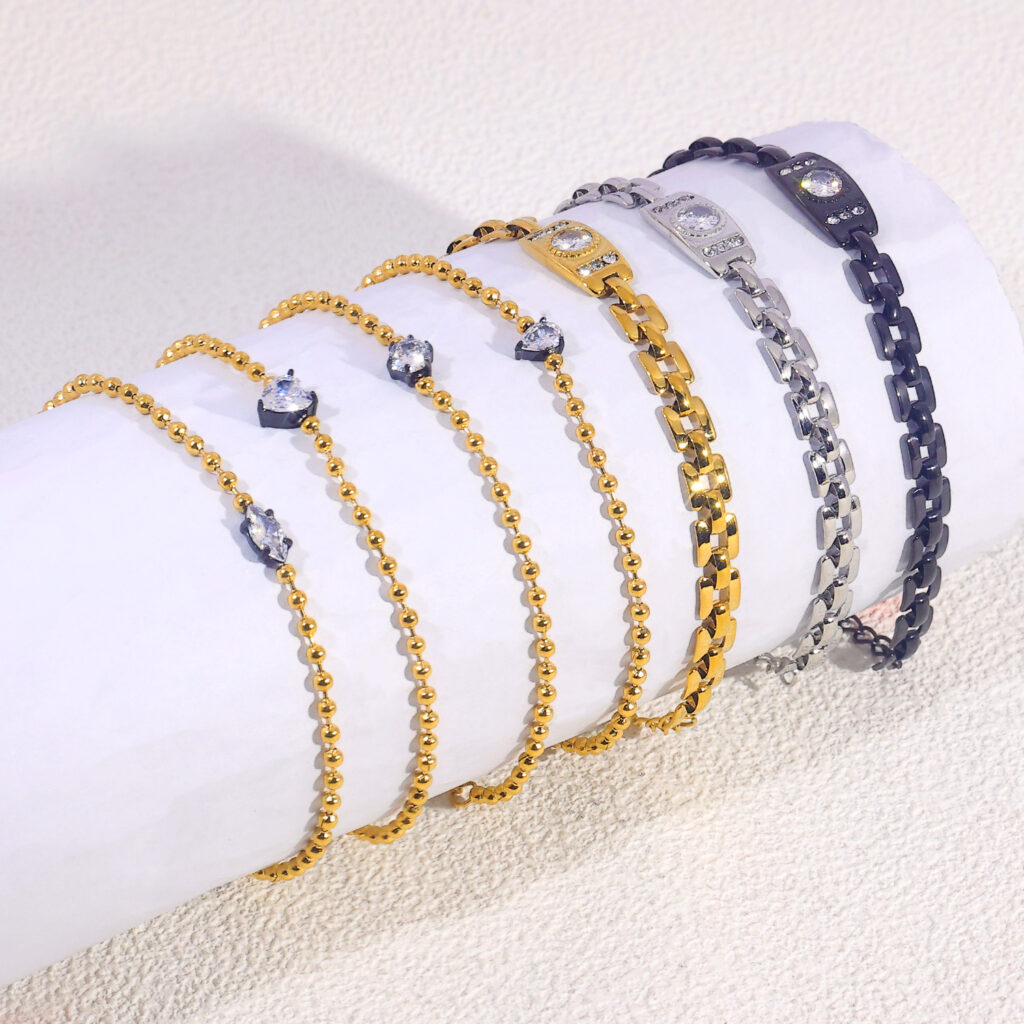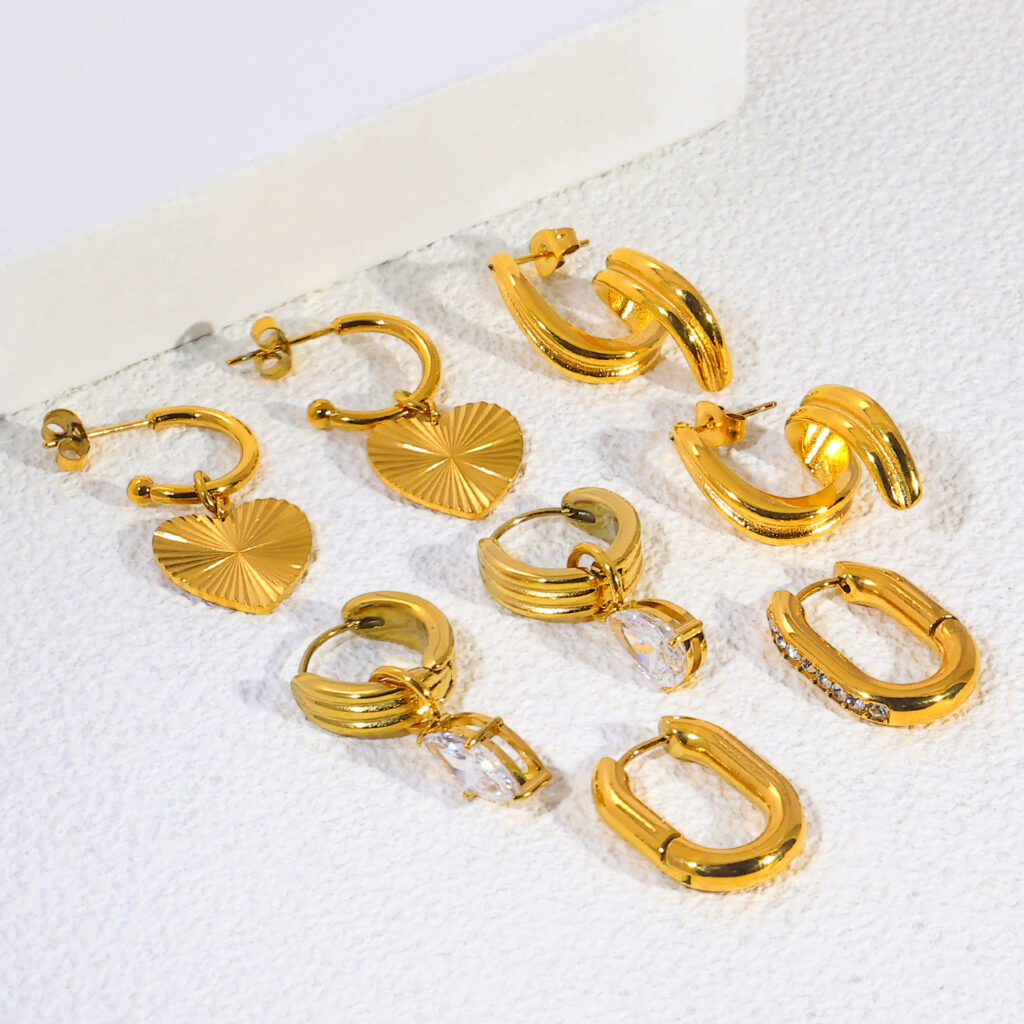
La couleur de Bijoux en or PVD peut varier selon les composants et les lots de production, même lorsque le même nom de couleur est utilisé. Ces différences sont particulièrement visibles dans les ensembles correspondants, comme un collier et un fermoir, et peut créer des problèmes lorsque les clients s'attendent à ce qu'une nouvelle commande corresponde à la collection d'origine..
Ce guide explique comment les matériaux de revêtement, état de surface, éclairage, et les conditions de production affectent la couleur PVD. Il explique également comment les échantillons maîtres physiques, Mesures CIELAB, et les tolérances de couleur convenues peuvent aider les marques et les fournisseurs à gérer la cohérence entre les cycles de production..
Pourquoi les couleurs de l'or PVD peuvent-elles être différentes?
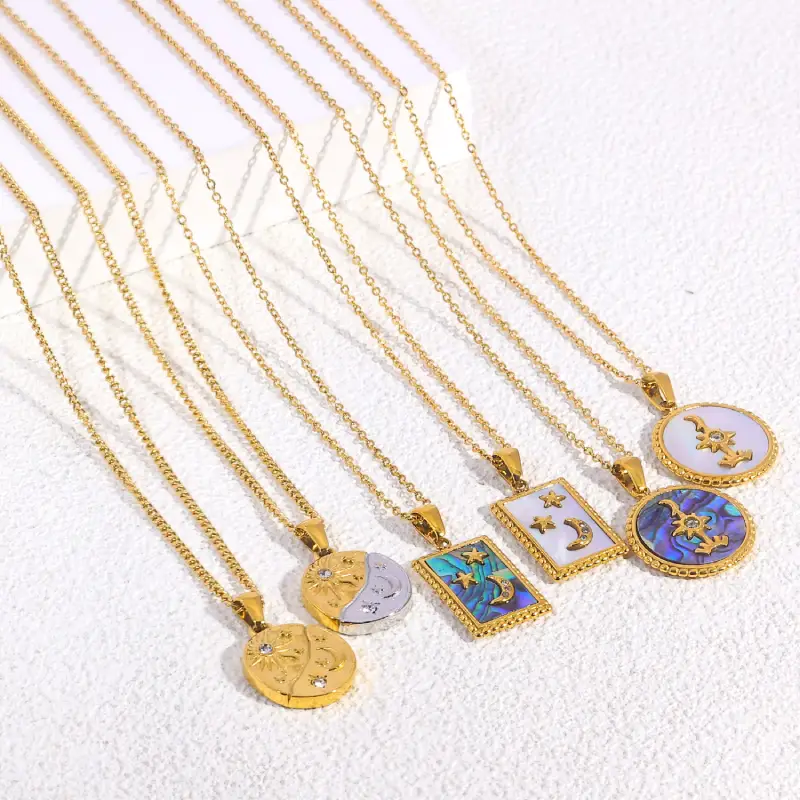
L'or PVD est’une seule couleur. Sa teinte finale dépend d'une combinaison de matériaux de revêtement, chimie des gaz, épaisseur du film, et la finition de la surface sous-jacente.
Matériaux de revêtement et chimie des gaz
La couleur or du PVD dépend en partie du système de revêtement. Des composés tels que TiN et ZrN peuvent produire différentes teintes jaunes et dorées., tandis que les changements dans les gaz réactifs peuvent modifier la chaleur ou la saturation. Le résultat dépend de la recette complète plutôt que d'un seul matériau.
Épaisseur et uniformité du revêtement
L'épaisseur du film peut affecter l'apparence d'une couleur PVD. Si le revêtement est irrégulier, différentes zones d'une même pièce peuvent présenter de légères variations, en particulier sur les bords, courbes, et détails encastrés. Un dépôt cohérent est donc important pour faire correspondre les composants et les lots.
Métal de base et finition de surface
La surface sous le revêtement affecte également l'aspect final. Une surface polie semble généralement plus brillante et plus réfléchissante, tandis qu'une finition brossée ou mate produit un effet plus doux. Rayures, résidu, ou un polissage inégal peut rendre la couleur incohérente après le revêtement..
Conditions de processus et de visualisation
Modifications des paramètres de la chambre, débit de gaz, placement des pièces, ou la préparation peut entraîner des différences de couleur entre les cycles de production. L'éclairage et l'angle de vision affectent également la façon dont les finitions métalliques sont perçues. Pour des comparaisons fiables, suivre une méthode cohérente pour tester la qualité des bijoux PVD dans des conditions d'éclairage convenues et par rapport à un échantillon physique approuvé.
Que fait 14K, 18K, et les tons d'or 24 carats signifient?

En bijoux PVD, 14K, 18K, et 24K font généralement référence à la couleur prévue de la finition. La teinte exacte peut varier selon les fournisseurs et les systèmes de revêtement.
Le ton doré n'est pas une allégation de pureté
Pour l'or massif, le carat indique la pureté du métal. Dans Bijoux PVD, les mêmes termes ne peuvent être utilisés que pour décrire une teinte cible, comme un jaune plus clair de style 14K ou un or plus riche de style 18K. Ils ne confirment pas la composition du revêtement ni la teneur en or, ces détails doivent donc être spécifiés séparément.
Pourquoi les photos et les codes Pantone sont des références incomplètes
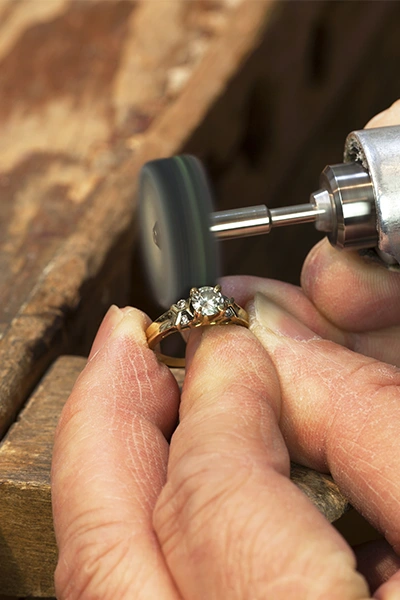
Les photos et les codes Pantone peuvent aider à communiquer une direction de couleur, mais ils ne peuvent pas représenter pleinement la finition de la surface, réflectivité, et conditions de visualisation qui affectent les bijoux PVD.
Limites de la correspondance basée sur des photos
Les bijoux métalliques peuvent avoir un aspect différent selon l'éclairage, paramètres de la caméra, angle de vision, et écran utilisé pour afficher l'image. Une photo peut indiquer si une finition doit paraître plus chaude ou plus froide., mais ce n'est pas assez fiable pour l'approbation finale de la production.
Comment utiliser Pantone pour la couleur PVD
Un code Pantone peut constituer un point de départ utile, mais cela ne se traduit pas directement par une recette de revêtement PVD. Les échantillons imprimés et les revêtements métalliques réfléchissent la lumière différemment, le bijou fini peut donc ne pas paraître identique à la référence Pantone. Utilisez le code pour communiquer la direction générale des couleurs, puis approuvez un échantillon physiquement enduit dans des conditions d'éclairage convenues.
Comment choisir une référence physique?
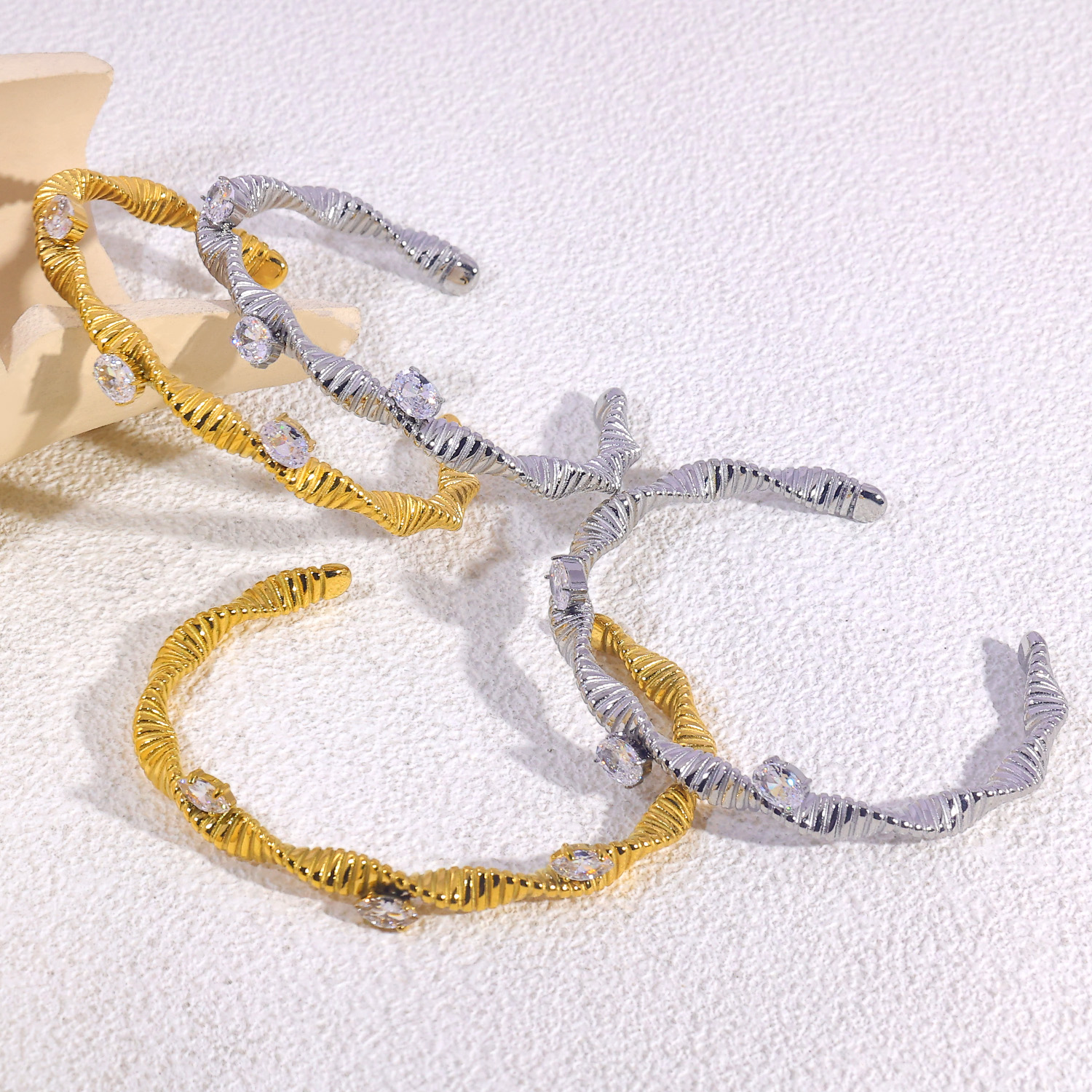
Un échantillon physique approuvé donne à l'acheteur et au fournisseur une référence commune de couleur, état de surface, et correspondance des composants.
Faites correspondre le matériau de production et la finition
La référence doit utiliser le même métal de base et la même finition de surface que le produit final. Une surface polie peut paraître plus brillante et plus réfléchissante, tandis qu'une finition brossée ou satinée peut rendre le même revêtement plus doux. Si une collection utilise plusieurs finitions de surface, approuver une référence distincte pour chaque finition.
Ajouter des critères de couleur mesurables
Lorsque la forme du produit permet une mesure fiable, enregistrer l’échantillon de référence Les valeurs du CIELAB avec un spectrophotomètre. L'acheteur et le fournisseur doivent également se mettre d'accord sur la formule de différence de couleur, paramètres des instruments, lieux de mesure, et tolérance d'acceptation. Ces détails fournissent une base plus claire pour les contrôles de production mais doivent être utilisés conjointement avec l'inspection visuelle..
Approuver et maintenir la référence
Étiquetez et approuvez l’échantillon principal par écrit, puis rangez-le à l'abri des dommages, contamination, et une exposition prolongée à la lumière. Des doublons fonctionnels peuvent être utilisés pour les contrôles de routine en usine, tandis que le maître reste la référence finale de la comparaison. Remplacez ou réapprouvez les échantillons si leur état change ou si le matériau, finition, ou le processus de revêtement est modifié.
Ce qui doit être approuvé avant la production?
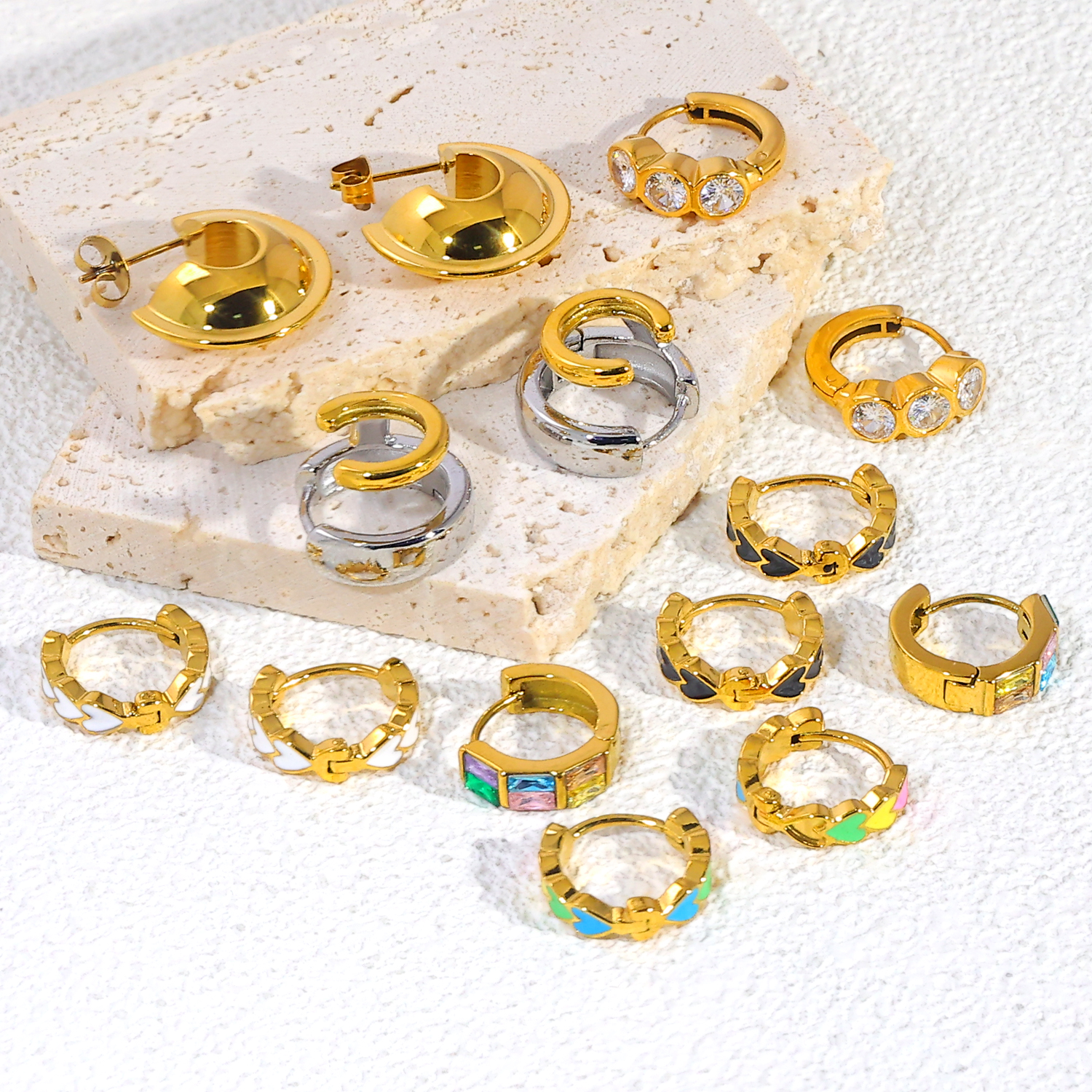
Avant la production, confirmer l'échantillon approuvé, matériel, état de surface, exigences en matière de revêtement, méthode de mesure, et les critères d'inspection par écrit.
| Article d'approbation | Critères clés |
|---|---|
| Norme de couleur principale | Approuver une référence physique pour chaque couleur et finition de surface, produit sur le métal de base spécifié et évalué dans des conditions de visualisation convenues. |
| Mesure des couleurs et tolérance | Documenter les valeurs CIELAB cibles, formule de différence de couleur, paramètres des instruments, lieux de mesure, et tolérance d'acceptation convenue. |
| Système de revêtement et épaisseur | Confirmer le système de revêtement convenu, plage d'épaisseur cible, et exigence de réapprobation avant tout changement de matériau de revêtement ou de processus. |
| Métal de base et finition de surface | Spécifier la qualité du métal de base, préparation des surfaces, texture, et limites acceptables pour les rayures, trous d'épingle, marques de polissage, et autres défauts visibles. |
| Plan d'inspection et d'acceptation | Convenir de la méthode d'échantillonnage, conditions de contrôle, classifications des défauts, et exigences de correspondance des couleurs pour les composants, paires, et des ensembles. |
Comment les réapprovisionnements peuvent-ils rester visuellement cohérents?
Les réapprovisionnements cohérents dépendent d’un échantillon principal approuvé, conditions de production stables, et la même méthode d'inspection pour chaque lot.
Maintenir des conditions de production cohérentes
La couleur PVD peut changer lors du processus de revêtement, préparation des pièces, ou modifications de la disposition des chambres. Les fournisseurs doivent documenter les conditions critiques utilisées pour le lot approuvé et examiner toute modification de matériau ou de processus avant la prochaine commande..
- Maintenir la cohérence du système de revêtement approuvé et de la plage d'épaisseur cible.
- Utiliser la même préparation de surface, nettoyage, montage, et placement des pièces lorsque cela est possible.
- Approuvez à nouveau la finition si le métal de base, texture de la surface, matériaux de revêtement, ou des changements dans le processus de production.
Aligner l'inspection et le reporting
L'acheteur et le fournisseur doivent utiliser les mêmes conditions de référence et d'inspection pour chaque nouvelle commande.. Cela permet d'identifier plus facilement si une différence visible provient d'une variation de production ou d'une évaluation incohérente..
- Comparez chaque commande avec l'échantillon principal approuvé dans des conditions d'éclairage convenues.
- Utilisez la même méthode de mesure, paramètres des instruments, emplacements, plan d'échantillonnage, et tolérance des couleurs.
- Enregistrer les résultats de l'inspection et tout écart approuvé pour les commandes futures.
- Si plusieurs fournisseurs sont impliqués, fournir à chacun une référence approuvée et les mêmes critères d’acceptation écrits.
La conservation de ces enregistrements facilite également le traçage des problèmes récurrents de couleur ou de finition.. Pour des étapes supplémentaires couvrant les échantillons approuvés, contrôles de production, et inspection avant expédition, lisez notre guide sur comment réduire les commandes de bijoux défectueux.
Foire aux questions
Pourquoi les couleurs de l'or PVD sont-elles différentes?
Les couleurs de l'or PVD varient car l'apparence est créée par des composés techniques et des paramètres de processus spécifiques., pas la couleur intrinsèque de l'or en vrac. Ces recettes, en utilisant des matériaux comme le nitrure de titane, diffèrent selon les fabricants et même les lots de production, provoquant des variations de ton notables, chaleur, et saturation.
Quelle est la différence entre la couleur de l'or 14K et 18K en PVD?
En bijoux PVD, 14K et 18K décrivent généralement l'apparence souhaitée de la finition plutôt que la pureté de son or.. Une finition de style 18K est souvent plus chaude ou plus saturée qu'une finition de style 14K, mais la teinte exacte varie selon le fournisseur, système de revêtement, et norme de couleur approuvée.
Les couleurs d'or PVD peuvent-elles être exactement assorties?
Les couleurs de l'or PVD peuvent être très proches d'un échantillon de référence, mais une correspondance parfaite garantie avec l’or massif ou entre différentes installations de production n’est pas toujours réalisable. Une approche pratique consiste à comparer chaque lot avec un échantillon principal approuvé dans des conditions d'inspection convenues..
Pensées finales
Les photos et les noms de couleurs ne suffisent pas à eux seuls à contrôler les finitions dorées PVD sur les lots de production.. Un échantillon maître approuvé, conditions d'inspection documentées, et les critères d'acceptation convenus donnent aux acheteurs et aux fournisseurs une référence plus claire pour la production et les réapprovisionnements..
Commencez par des échantillons pour revoir la couleur, état de surface, et correspondance des composants avant la production. Contactez notre équipe pour discuter de votre finition PVD cible et des exigences OEM.