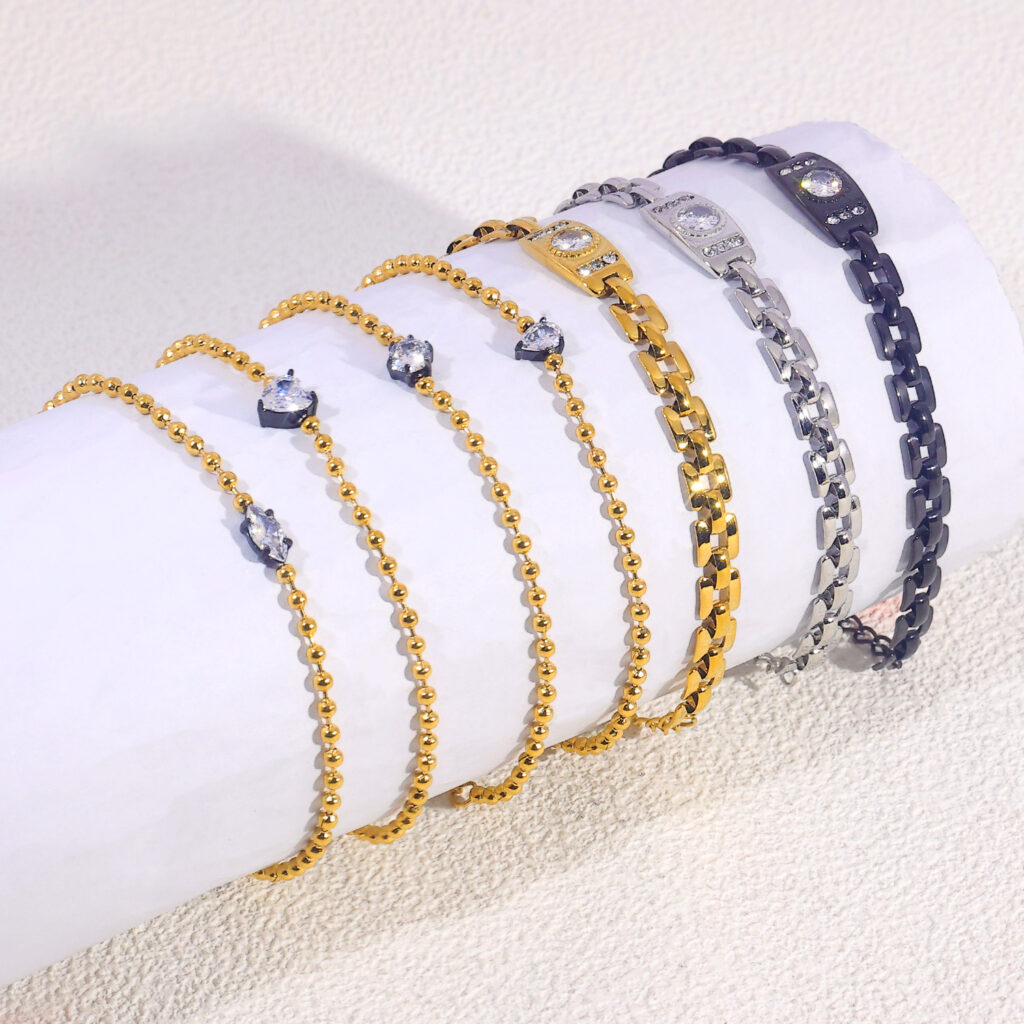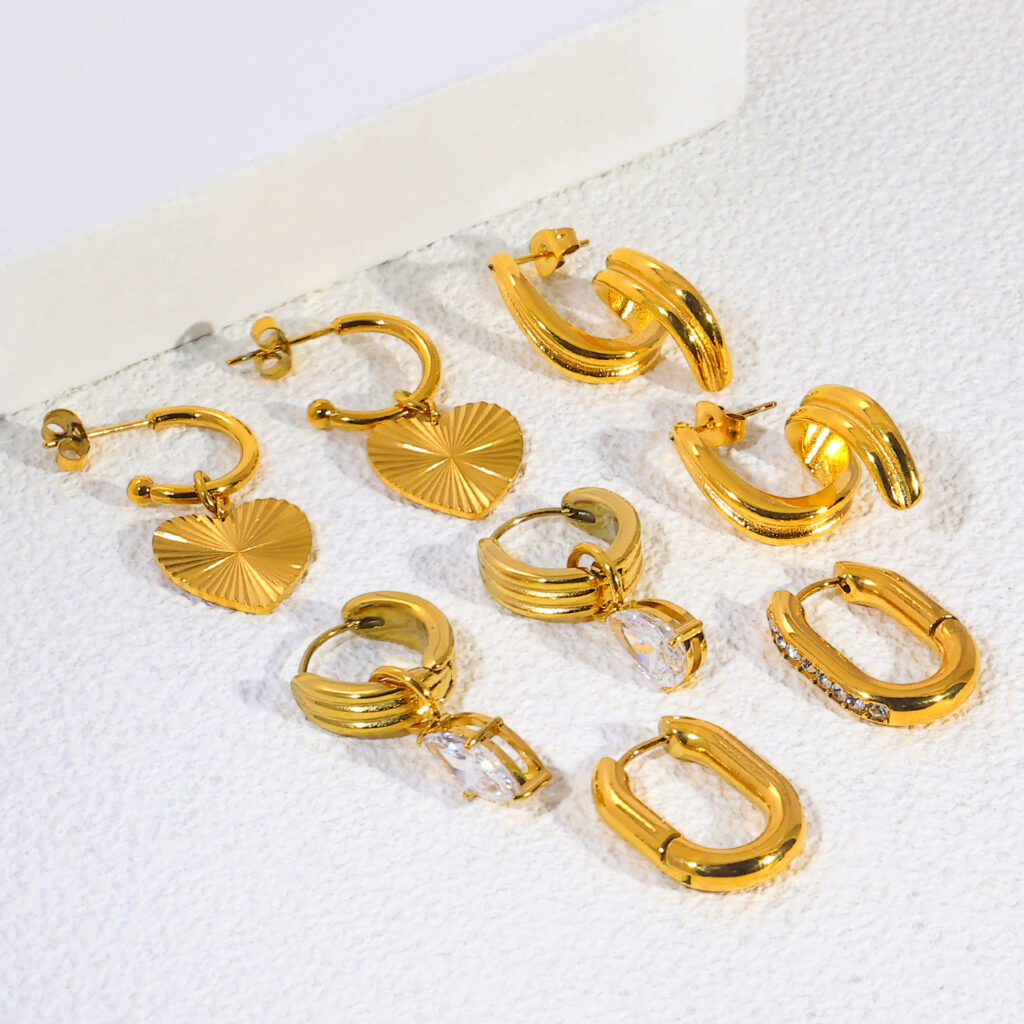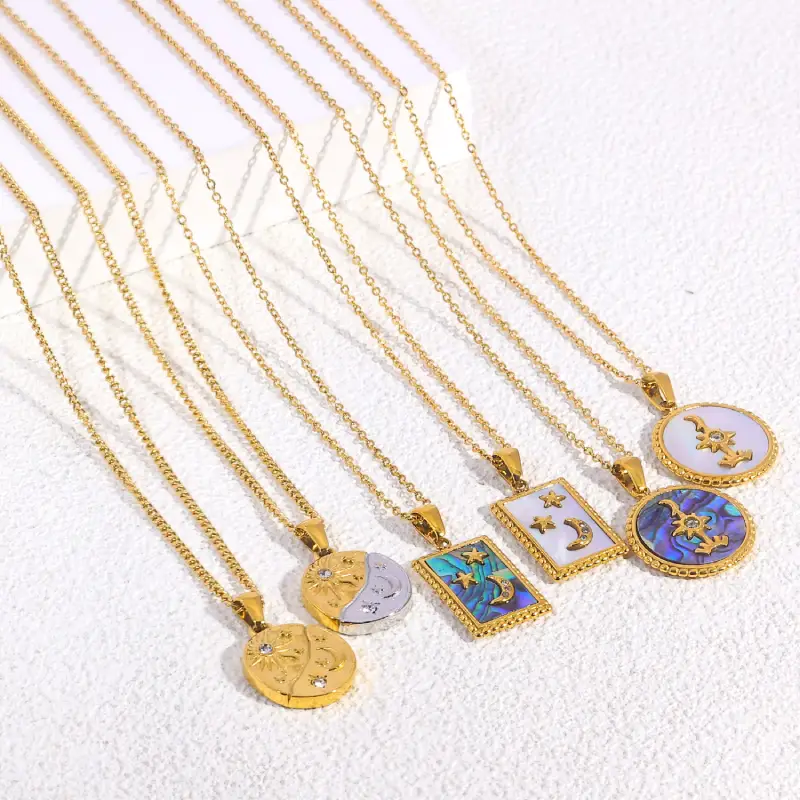
Die Beschaffung der besten Basismetalle für PVD-Schmuck wirkt sich direkt auf die Produkthaltbarkeit und Hautsicherheit aus, Wenn sie vernachlässigt werden, bergen sie erhebliche Risiken wie erhöhte Garantieansprüche und ein geschwächtes Markenvertrauen.
Diese Analyse bewertet führende Basismetalle wie Edelstahl 316L, Titan, und Messing. Wir bewerten ihren Einfluss auf die Langlebigkeit der PVD-Beschichtung, hypoallergene Leistung, und Kosteneffizienz zur Sicherung zuverlässiger Produktlinien.
Warum ist unedles Metall bei PVD-Schmuck wichtig??
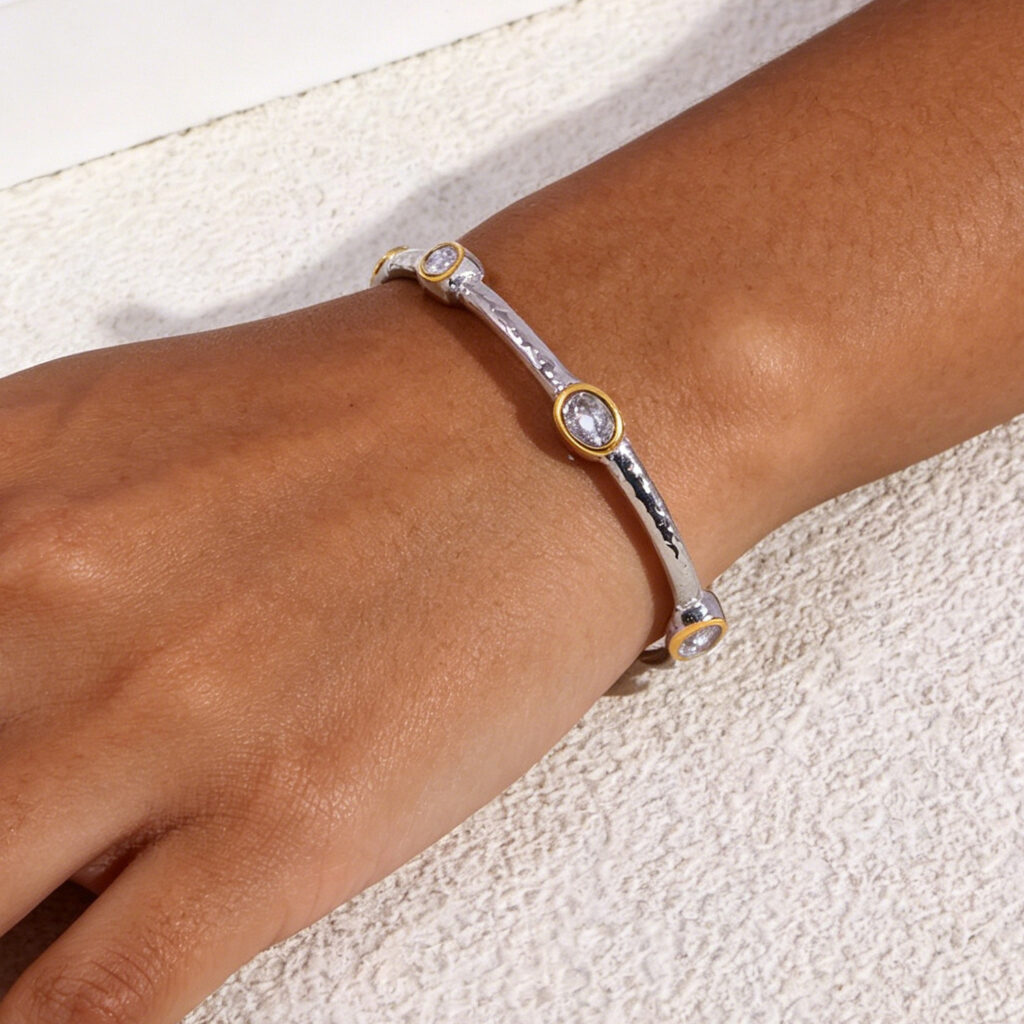
Das Grundmetall in PVD-Schmuck steuert direkt die Haltbarkeit, Hautsicherheit, Korrosionsbeständigkeit, und Gesamtleistung. PVD-Schichten sind dünn, Daher sind die Eigenschaften des Untergrunds entscheidend für den langfristigen Verschleiß.
Direkter Einfluss unedler Metalle auf Haltbarkeit und Hautsicherheit
Unedles Metall bestimmt die Haltbarkeit, Hautsicherheit, Korrosionsbeständigkeit, und Gesamtleistung von PVD-Schmuck. Durch den PVD-Prozess entsteht eine molekulare Bindung, aber es ist eine dünne Schicht. Damit ist die mechanische Festigkeit des Grundmetalls gemeint, Gewicht, Korrosionsverhalten, und die Hautkontakteigenschaften bestimmen die Qualität des Endprodukts.
Ein weiches oder leicht korrodierendes Grundmetall kann dazu führen, dass die PVD-Schicht reißt oder sich ablöst. Jedoch, ein biokompatibles und stabiles Metall, wie Edelstahl 316L oder Titan in Implantatqualität, Trägt dazu bei, die PVD-Integrität über Jahre hinweg bei täglichem Tragen aufrechtzuerhalten. Wenn das Grundmetall allergen ist, wie nickelhaltige Legierungen oder billiges Messing, Jede Abnutzung der PVD-Schicht kann zu Hautreizungen oder Verfärbungen führen.
Unedles Metall steuert auch, wie der Schmuck auf Schweiß reagiert, Luftfeuchtigkeit, und Salzwasser. Edelstahl und Titan laufen nicht so leicht an. Dies verleiht ihnen eine hervorragende Korrosionsbeständigkeit, Dadurch bleibt die PVD-Beschichtung länger intakt. Für wasserbeständigen Schmuck, Die Wahl von 316L-Edelstahl oder Titan minimiert das Risiko von Unterschichtkorrosion.
PVD-Schichten sind härter als herkömmliche Beschichtungen, Sie verlassen sich jedoch immer noch auf die mechanischen Eigenschaften des Grundmetalls. Eine harte, Das robuste Grundmetall widersteht Verformungen, wodurch die PVD-Schicht intakt bleibt. Weiche Metalle können verbeulen, Risse im harten Film. Für Hautschutz, Titan in Implantatqualität (ASTM F-136) oder Chirurgenstahl (316L) sind bei hochwertigem PVD-Schmuck üblich. Diese Materialien verhindern Reizungen, wenn die Beschichtung mit der Zeit dünner wird.
Strategische Faktoren: Ästhetik, Kosten, und Marktpositionierung
Die Wahl unedler Metalle wirkt sich auf die Ästhetik aus, kosten, und Marktpositionierung. Hochwertige Basen wie 316L-Edelstahl und Titan sorgen für eine glatte Oberfläche, stabile Untergründe. Dies ermöglicht eine gleichmäßige PVD-Farbe und einen gleichmäßigen Glanz, fleckiges Ausbleichen wird vermieden. Schlechte Untergründe, wie grobe Messinggussteile, kann zu ungleichmäßiger Schichtdicke und sichtbaren Mängeln führen.
Messing bietet Kosteneffizienz und Designflexibilität, was gut für komplizierte Stücke ist. Jedoch, es birgt ein höheres Oxidationsrisiko, trüben, und Hautreaktionen, wenn das PVD getragen wird. Sterlingsilber bietet einen wahrgenommenen Wert, Es ist jedoch weicher und anfälliger für Dellen und Anlaufen, wenn die PVD-Schicht beschädigt ist.
Die Verwendung von Edelstahl 316L oder Titan in Implantatqualität erhöht die Materialkosten. Aber es gibt eine mehrjährige Haltbarkeit, hypoallergene Eigenschaften, und ein stärkerer Markenruf. Messing oder minderwertige Legierungen halten die Kosten für trendiges PVD niedrig, Aber Marken müssen die begrenzte Langlebigkeit klar kommunizieren. Dadurch wird eine Unzufriedenheit der Kunden vermieden.
Transparente Offenlegung unedler Metalle, B. die Angabe von 316L-Edelstahl oder Titan in Implantatqualität, ist ein wichtiger Qualitätsindikator für hochwertigen PVD-Schmuck. Marken, die sich auf die Reputation konzentrieren, standardisieren häufig auf diesen Grundlagen. Designentscheidungen sollten das Grundmetall mit der gewünschten Produktpositionierung in Einklang bringen. Zum Beispiel, Verwenden Sie 316L oder Titan für den täglichen Gebrauch, hypoallergen, und wasserdichte Leitungen. Verwenden Sie Messing für einen modischen Look, preissensible Stücke, mit klaren Botschaften über Pflege und erwartetes Leben.
316L Edelstahl für PVD-Schmuck
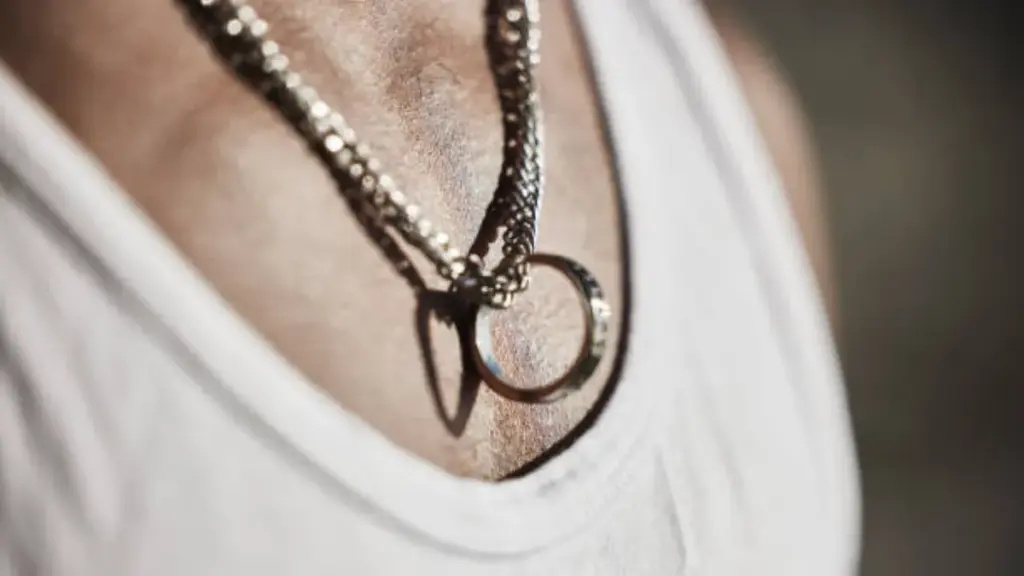
316L-Edelstahl ist die erste Wahl für PVD-Schmuck. Es bietet eine hervorragende Korrosionsbeständigkeit, hohe Festigkeit, und Hautverträglichkeit, Gewährleistung langlebiger Oberflächen und langlebiger Werte.
Hauptmerkmale und Vorteile von 316L für PVD
- Materialprofil: 316L ist ein kohlenstoffarmer Edelstahl, enthält bis zu 0.03% Kohlenstoff und 2–3 % Molybdän.
- Verbesserte Korrosionsbeständigkeit: Molybdän verbessert die Salzbeständigkeit deutlich, Schweiß, Chlor, Rost, trüben, und Verfärbungen.
- Stärke und Haltbarkeit: Es bietet eine gute Zugfestigkeit und Zähigkeit, Dadurch ist es für alltagstauglichen Schmuck geeignet.
- Hautverträglichkeit: Es gilt weithin als hypoallergen, Reduzierung des Risikos von Reizungen und grüner Haut für Benutzer.
- Stabiles PVD-Substrat: Es sorgt für eine dauerhafte, korrosionsbeständige Basis, Dadurch erzielen PVD-Oberflächen eine bessere Leistung und eine längere Lebensdauer.
- Kostengünstiger Wert: Es bietet ein erstklassiges Gefühl und eine starke optische Attraktivität als erschwingliche Alternative zu Edelmetallen.
Praxisnahe Leistung und Verwendung in PVD-Schmuck
- Alltagstauglichkeit: Es behandelt Schweiß, Luftfeuchtigkeit, und allgemeine Wassereinwirkung gut, beständig gegen Rost und Verfärbung.
- Geringer Wartungsaufwand: Es ist dafür bekannt, anlaufgeschützt zu sein und nur minimale Pflege zu erfordern. Dies macht es ideal für den täglichen Gebrauch von PVD-Schmuck.
- Langlebigkeit der PVD-Schicht: PVD erzeugt dekorative und schützende Beschichtungen (wie Gold, Schwarz). PVD-beschichteter 316L-Schmuck kann mindestens halten 2 Jahre bei häufigem Gebrauch.
- Einschränkungen: Während langlebig, 316L hat nicht den inneren Wert von Edelmetallen, und PVD-Beschichtungen sind nicht dauerhaft.
- Pflegeempfehlungen: Zur Verlängerung der PVD-Lebensdauer, Vermeiden Sie längeren Kontakt mit chloriertem Wasser, scharfe Reinigungsmittel, und starker Abrieb.
- Ideale Anwendungen: Es eignet sich am besten für Alltagsgegenstände wie Ringe, Ketten, Armbänder, Ohrringe, und Modeuhren.
Erschließen Sie hohe Margen: Brauch & Langlebiger Schmuck
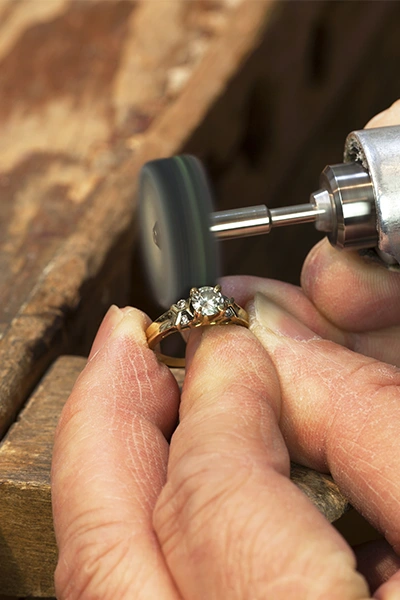
304 Edelstahl für PVD-Schmuck
304 Edelstahl bietet eine kostengünstige Möglichkeit, robuste Basis für PVD-Schmuck. Es bietet eine gute Korrosionsbeständigkeit und ist ideal für modebewusste Menschen, Moderate Stücke, mit PVD, das die Haltbarkeit und Hautsicherheit erhöht.
Eigenschaften und PVD-verbesserte Eigenschaften
304 Edelstahl ist ein austenitischer Edelstahl, auch bekannt als 18/8. Es enthält ca 18% Chrom und 8-10% Nickel. Chrom bildet eine schützende Oxidschicht, verleiht ihm Korrosionsbeständigkeit. Nickel trägt zur Zähigkeit und Duktilität bei.
Dieses Metall bietet im Vergleich zu weicheren Edelmetallen eine gute Härte und Festigkeit. Es widersteht Verformungen und Kratzern im täglichen Gebrauch gut. Unter normalen Innen- und Trockenbedingungen ist es von Natur aus korrosionsbeständig. Jedoch, Es ist in sehr korrosiven oder chloridreichen Umgebungen wie Schweiß beim Sport nicht so beständig wie 316L, Meerwasser, oder Pools.
PVD (Physikalische Gasphasenabscheidung) trägt eine dünne Schicht auf, Hartbeschichtung auf die 304 Base. Der Schmuck wird gereinigt und entfettet, geht dann in eine Vakuumkammer. Dort, Beschichtungsmaterialien wie Titan oder Chrom verdampfen und verbinden sich auf molekularer Ebene mit dem Edelstahl. PVD-Beschichtungen liegen typischerweise im Mikrometerbereich, zeichnen sich aber durch eine hohe Härte und starke Haftung aus. Mit diesem Verfahren kann eine PVD-Beschichtung erfolgen 304 Schmuckstücke halten bis zu zehnmal länger als herkömmliche Nassvergoldungen.
Die PVD-Schicht bildet eine Schutzbarriere. Dadurch wird das Anlaufen reduziert, bewahrt die Farbe, und schützt die rostfreie Oberfläche vor Feuchtigkeit und Chemikalien. Es verbessert deutlich die Wasserbeständigkeit des Metalls, Helfen Sie dabei, dass Schmuck bei richtiger Pflege jahrelang sein Aussehen behält. Während 316L in aggressiven Umgebungen eine bessere Leistung erbringt, PVD erhöht die Haltbarkeit von 304 in typischen Umgebungen mit gelegentlichem Kontakt mit Wasser oder Kosmetika erheblich.
PVD-Beschichtungen sind hart, bieten geringe Reibung, und verschleißfest. PVD-vergoldeter Edelstahl bleibt länger glänzend und lichtbeständig als herkömmliches galvanisiertes Gold. PVD-Beschichtungen behalten ihre Farbe und ihren Glanz, auch bei häufiger Handhabung.
Die PVD-Beschichtung fungiert als starker Schutz gegen Feuchtigkeit. Schmuck verträgt regelmäßiges Händewaschen, Regen, und gelegentliche Schauer, wenn Sie es anschließend gut trocknen. PVD schützt vor Schweiß, milde Reinigungsmittel, und Kosmetika durch Minimierung des direkten Kontakts mit dem Metall.
304 Edelstahl enthält 8-10% Nickel. Wenn das blanke Metall die Haut berührt, Es kann bei Personen mit hoher Nickelempfindlichkeit zu Reaktionen führen. PVD erzeugt eine Dichtheit, inerte Barriereschicht, Reduzierung des direkten Kontakts mit der nickelhaltigen Basis. Dadurch wird es PVD-beschichtet 304 Schmuck wird für die meisten Träger oft als hypoallergen beschrieben. Für alle mit schwerer Nickelallergie oder für Piercings, 316L oder wirklich nickelfreie Optionen sind immer noch eine sicherere Wahl.
Strategische Anwendung und Marktkontext
304 Edelstahl eignet sich gut für leichtere und trendorientierte Schmuckstücke. Hersteller setzen es dort ein, wo Kosteneinsparungen und eine gute Innenraumleistung wichtiger sind als maximale Korrosionsbeständigkeit. Man sieht es oft bei modischen Ohrringen, Anhänger, Halsketten, und Ringe für gelegentliches oder mäßiges Tragen. Dadurch können Marken stilvollen Schmuck zu erschwinglichen Preisen für saisonale Kollektionen anbieten.
304 ist eine preiswerte Option für Stil, leichter verwendbare Stücke, vor allem, wenn Budget und schnelle Modezyklen entscheidend sind. Es bietet eine angemessene Haltbarkeit. Im Gegensatz, 316L steht für Premium-PVD-Schmuck, Geeignet für ständiges Tragen, einschließlich Sport oder Schwimmen, und wird oft als das bezeichnet „Goldstandard“ für langlebigen Schmuck. 304 hat geringere Materialkosten, Unterstützung erschwinglicherer Produkte.
Marken verwenden 304 in ihren PVD-Einstiegs- oder Mittelklasselinien. Dadurch können sie sich auf trendorientierte Designs und größere Stücke konzentrieren, bei denen sich die Materialkosten summieren. Im Vergleich zu nicht rostfreien Untergründen wie Messing oder Zinklegierungen, 304 Bietet eine bessere Korrosionsbeständigkeit und weniger Anlaufen. PVD eingeschaltet 304 verleiht Kunden langanhaltende Farbe, Glanz, und verbesserte Hautfreundlichkeit im Vergleich zu blanken Legierungen oder einfacher Beschichtung. Es ist ideal für modebewusste Kunden, die Langlebigkeit wünschen, Gut aussehender Schmuck zu erschwinglichen Preisen. Sie wissen, dass die Spitzenleistung unter extremen Bedingungen normalerweise den 316L-Leitungen vorbehalten ist.
Die richtige Untergrundvorbereitung ist von entscheidender Bedeutung. Dies erfordert eine gründliche Reinigung und Entfettung, um eine starke PVD-Haftung zu gewährleisten. Poliert oder fein gebürstet 304 Oberflächen verbessern die PVD-Gleichmäßigkeit und die optische Attraktivität. Eventuelle Kratzer oder Vertiefungen auf dem Grundmetall werden durch dünne PVD-Beschichtungen sichtbar, unterstreicht die Notwendigkeit einer hochwertigen Endbearbeitung. 304 kann mit den thermischen und mechanischen Bedingungen des PVD-Prozesses umgehen. Sie können einen Goldton erzielen, Roségold, und schwarze Oberflächen mit verschiedenen Nitrid- und Karbidsystemen. Durch den Einsatz abgestufter oder mehrschichtiger Beschichtungen werden die Verschleißeigenschaften weiter verbessert.
PVD-beschichtet 304 Edelstahlschmuck ist wasserbeständig. Es hält den täglichen Aktivitäten stand. Jedoch, Fordern Sie die Kunden auf, Teile zu entfernen, bevor sie starken Chemikalien ausgesetzt werden, wie starke Reinigungsmittel oder Chlor, um ihr Leben zu verlängern. Reinigen Sie es mit milder Seife, Wasser, und ein weiches Tuch. Bewahren Sie die Artikel einzeln in weichen Beuteln auf, um Abrieb zu vermeiden. Mit guter Pflege, PVD-beschichtet 304 Edelstahlschmuck behält über Jahre hinweg sein Aussehen, übertrifft traditionellen vergoldeten Modeschmuck bei weitem.
304 Edelstahl ist kostengünstig, korrosionsbeständig, und mechanisch robuste Basis für PVD-beschichteten Schmuck. Es eignet sich besonders für trendorientierte und leichter einsetzbare Produkte. Die PVD-Schicht erhöht den Wassergehalt deutlich, kratzen, und Anlaufbeständigkeit. Es verlängert die Haltbarkeit des Finishs um viele Jahre und verbessert die hypoallergene Leistung, indem es die Haut vor der nickelreichen Basis schützt. Während 316L der Maßstab für Hochbelichtung bleibt, täglich, und Premium-Segmente, 304 mit PVD ist ein starkes, kommerziell kluge Wahl für Modeschmuck.
Titan für PVD-Schmuck
Titan ist ein erstklassiges Grundmetall für PVD-Schmuck. Es verfügt über einzigartige Eigenschaften, die die Gesamtleistung und Attraktivität beschichteter Teile verbessern.
Eigenschaften und Vorteile der PVD-Beschichtung von Titan
Titan bietet klare Vorteile, sowohl allein als auch in Kombination mit PVD. Seine Kerneigenschaften machen es zu einer guten Wahl, und PVD steigert diese Vorteile durch verbesserte Ästhetik und Verschleißfestigkeit.
- Titan ist hypoallergen, geeignet für empfindliche Haut.
- Es widersteht Korrosion durch Feuchtigkeit, Schweiß, und verschiedene Chemikalien.
- Es bietet leichte Festigkeit für angenehmes Tragen von Schmuck.
- Es bietet eine hervorragende Haftung für PVD-Beschichtungen.
- PVD-Beschichtungen ermöglichen langlebige metallische Farben, die bei Titan nicht vorkommen.
- Es erhöht die Verschleißfestigkeit, Minimierung der sichtbaren täglichen Reibung.
- Es verbessert die Anlaufbeständigkeit, hilft dabei, das Aussehen des Schmucks zu erhalten.
Anwendungsfälle und Branchenrelevanz für Titan-PVD-Schmuck
Titan-PVD-Schmuck passt gut zu spezifischen Marktanforderungen. Seine einzigartige Kombination von Eigenschaften hilft Marken, die Nachfrage nach langlebigem Material zu befriedigen, hautfreundlich, und vielseitige Produkte.
- Aufgrund seiner Biokompatibilität und Farbstabilität wählen Marken häufig Titan für Körperschmuck.
- Designer verwenden es in Modeschmuck, bei dem langlebige Farben im Vordergrund stehen.
- Es bietet eine robuste Option für Träger empfindlicher Haut.
- Marken positionieren Titan-PVD-Produkte als langlebig, wartungsarm, und hautfreundlich.
- Teile mit hohem Kontakt wie Ringe und Piercings profitieren von der zusätzlichen Festigkeit und Verschleißfestigkeit von Titan.
- PVD ermöglicht Farbvielfalt, wie goldfarben und schwarz, zur Produktdifferenzierung ohne den Einsatz von massiven Edelmetallen.
Messing für PVD-Schmuck
Messing bietet kostengünstige Designflexibilität für PVD-Schmuck. Jedoch, Es bedarf einer sorgfältigen Vorbereitung und Sperrschichten, um seine natürliche Weichheit und Korrosionsprobleme zu überwinden.
Eigenschaften und Einschränkungen von Messing als Schmuckbasis
Messing ist ein häufig verwendetes unedles Metall für Modeschmuck. Es besteht größtenteils aus Kupfer (ca. 60–70 %) und Zink (ca. 30–40 %). Das gibt ihm eine warme Note, goldener Look, gute Stärke, und erleichtert die Arbeit damit.
Marken entscheiden sich oft für Messing, weil es weniger kostet als Edelmetalle, und Hersteller können daraus problemlos komplizierte Designs gießen oder bearbeiten. Seine natürliche goldähnliche Farbe hilft auch dabei, kleinere Abnutzungserscheinungen zu verbergen, wenn die PVD-Beschichtung irgendwann dünner wird.
Messing hat als PVD-Schmuckbasis erhebliche Nachteile:
- Korrosion und Anlaufen: Messing läuft an, wenn es Feuchtigkeit ausgesetzt wird, Schweiß, oder Schadstoffe. Ohne guten Schutz, es verdunkelt sich und kann innerhalb von Monaten Grünspan entwickeln.
- Bedarf an Barriereschichten: Direktes PVD auf Messing bietet normalerweise keine ausreichende Korrosionsbeständigkeit. PVD auf Messing erfordert galvanische Sperrschichten, um Korrosion und die Diffusion von Oberflächenmetallen zu verhindern. Ohne diese, Korrosion, Delaminierung, und es kann zu intermetallischer Diffusion kommen.
- Allergene: Galvanische Unterschichten enthalten häufig Nickel, ein gemeinsames Allergen. Messing selbst kann aufgrund seines Kupfer- und Zinkgehalts Hautreaktionen wie grüne oder schwarze Flecken verursachen. Während die PVD-Deckschicht inert ist, Durch Verschleiß werden diese reaktiven Elemente freigelegt.
- Weichheit: Messing ist weicher als Edelstahl oder Titan. Es verbeult oder verformt sich leicht. Dies kann dazu führen, dass dünne PVD-Schichten reißen.
- Thermische Empfindlichkeit: Hohe PVD-Prozesstemperaturen können dünne Messingbauteile verziehen, besonders komplizierte oder hohle Teile.
- Haftung: Messing hat im Vergleich zu Edelstahl oder Titan eine weniger stabile Oberflächenstruktur. Dies führt dazu, dass die PVD-Haftung schwächer wird und sich mit der Zeit eher ablöst.
- Haltbarkeit: PVD-Schmuck auf Messingbasis funktioniert in rauen Umgebungen wie Wasser oder Schweiß nicht so gut wie PVD-Schmuck aus Edelstahl. Es passt besser zu gelegentlichem Tragen.
Optimierung von Messing mit PVD für Haltbarkeit und Ästhetik
Die Optimierung von Messing für PVD erfordert einen mehrstufigen technischen Prozess, um seine Haltbarkeit und ästhetischen Qualitäten zu verbessern. Dies trägt dazu bei, eine bessere Leistung als herkömmliche Beschichtungen zu erzielen.
Der Standardprozess funktioniert so:
- Mechanische Vorbereitung: Polieren Sie das Messing auf den gewünschten Glanz (Spiegel oder Satin). Dadurch werden Oberflächenfehler beseitigt.
- Reinigung und Oxidentfernung: Reinigen und entfetten Sie das Messing gründlich mit Ultraschallbädern und elektrochemischen Verfahren. Oxide mit verdünnter Schwefelsäure entfernen. Dadurch entsteht eine saubere Oberfläche für eine starke Haftung.
- Galvanische Barriereschichten: Tragen Sie galvanische Schichten auf das Messing auf. Glanznickel wird häufig zum Korrosionsschutz und zur Oberflächennivellierung eingesetzt. Zu den nickelfreien Optionen gehört Kupfer, Weißbronze, oder Palladium. Diese Schichten blockieren korrosive Stoffe, eine glatte Oberfläche schaffen, und die Diffusion kontrollieren.
- Abschließende PVD-Beschichtung: Tragen Sie die PVD-Deckschicht im Vakuum auf. Materialien wie Titannitrid (Zinn) Erzeugen Sie warme Goldtöne, Zirkoniumnitrid (ZrN) für sattes Gelbgold, oder Chromnitrid (CrN) für Silbergrau. Diese PVD-Schicht sorgt für die endgültige Farbe, hohe Härte, und verbesserte Kratzfestigkeit.
Mehrere Faktoren beeinflussen die Lebensdauer von PVD-Beschichtungen auf Messingschmuck. Hierzu zählen unter anderem die Qualität und Dicke der galvanisch aufgebrachten Barriereschichten, die Dicke der PVD-Beschichtung, Oberflächenvorbereitung, und die Verschleißumgebung. Ein ausgereiftes PVD-System auf Messing kann die funktionale und ästhetische Lebensdauer erheblich verlängern, die über das übliche modische galvanisierte Messing hinausgeht.
Für Hautschutz, die PVD-Schicht selbst ist inert. Probleme treten auf, wenn die PVD-Beschichtung abgenutzt ist oder die Unterschichten Nickel enthalten. Um PVD-Schmuck auf Messingbasis für empfindliche Haut geeignet zu machen, Verwenden Sie nickelfreie Unterschichten und achten Sie auf eine ausreichende PVD-Dicke, um den Verschleiß zu minimieren. Beschränken Sie die PVD-Beschichtung von Messing auf Artikel mit geringem Verschleiß wie Ohrringe oder Anhänger.
Hier sind einige Best Practices für Messing-PVD-Schmuck:
- Galvanische Sperr-/Ausgleichsschichten aufbringen.
- Führen Sie vor der PVD eine gründliche Reinigung durch.
- Verwenden Sie für die gewünschten Farbtöne geeignete PVD-Materialien.
- Kontrollieren Sie die Designgeometrie, Vermeiden Sie scharfe Kanten, wenn die Beschichtung dünn sein kann.
- Auf ausreichende Schichtdicke achten, dicker für stark beanspruchte Artikel.
Beim Positionieren von Messing + PVD-Schmuck, Ziel ist ein hohes Volumen, preissensible Modelinien oder große Dekorationsstücke. Vermarkten Sie es als kostengünstig, modische Option mit verbesserter Oberflächenhärte. Jedoch, Vermeiden Sie starke Haltbarkeitsaussagen wie z „lebenslang wasserdicht“ die für Edelstahl PVD gelten. Betonen Sie, dass PVD auf Messing eine hypoallergene Barriere bietet, bessere Kratzfestigkeit, und ästhetische Flexibilität, Denken Sie jedoch daran, dass eine durchbrochene Beschichtung das darunter liegende reaktive Messing freilegt.
Edelstahl vs. Titan: Was ist besser für PVD-Schmuck??
Edelstahl bietet Wert und Haltbarkeit, Titan bietet hypoallergenen Tragekomfort und leichten Komfort. Die beste Wahl für PVD-Schmuck hängt von Ihren Prioritäten ab.
| Faktor | Edelstahl (316L) | Titan |
|---|---|---|
| Gewicht | Schwerer, ein substanzielleres Gefühl. | Viel leichter, gut für langes Tragen. |
| Korrosionsbeständigkeit | Gut, insbesondere 316L in chirurgischer Qualität; widersteht Schweiß, Salz. | Vorgesetzter; Reagiert kaum auf Schweiß, Feuchtigkeit, Chemikalien. |
| Nickelrisiko | Enthält Nickel, aber 316L hat eine sehr niedrige Freisetzung; Für die meisten Benutzer in Ordnung. | Normalerweise nickelfrei; am sichersten bei Nickelallergien. |
| Biokompatibilität | Gut in 316L-Chirurgiequalitäten; für viele Piercings akzeptiert. | Vorgesetzter; Implantatqualität für Erstpiercings, hoch biokompatibel. |
| Haltbarkeit | Stark, dauerhaft; ausgezeichnetes Preis-Leistungs-Verhältnis für den Alltag. | Stark, dauerhaft, Behält die Integrität auch bei geringerem Gewicht. |
| Kosten | Normalerweise niedriger, kostengünstig für die Massenproduktion. | Normalerweise höher; Positionen für Prämie. |
| Beste Anwendungsfälle | Kostengünstiger Modeschmuck, allgemeine Alltagskleidung, viele verheilte Piercings. | Empfindliche Haut, Premium-Komfort, Körperschmuck, kritische Langzeitanwendungen. |
Wichtige Materialeigenschaften für PVD-Schmuck
Die Auswahl des Grundmetalls für PVD-Schmuck ist entscheidend für dessen Gesamtleistung. Es wirkt sich auf die Haltbarkeit aus, Korrosionsbeständigkeit, und Hautsicherheit. Edelstahl und Titan zeichnen sich durch ihre inhärenten Eigenschaften aus.
- Haltbarkeit und Langlebigkeit: Sowohl Edelstahl als auch Titan sind hochkompatible PVD-Substrate. Eine PVD-Beschichtung auf 316L-Edelstahl kann lange halten 3-5 Jahrelanges tägliches Tragen ohne Absplittern oder Ausbleichen. Aufgrund seiner Stabilität verlängert Titan auch die Lebensdauer der Beschichtung. Harte Grundmetalle verhindern die Ablösung der Beschichtung.
- Korrosionsbeständigkeit: Edelstahl und Titan laufen leicht an. 316L-Edelstahl in chirurgischer Qualität ist die erste Wahl für Korrosionsbeständigkeit gegen Schweiß, Luftfeuchtigkeit, und Salz. Titan bietet eine hervorragende Korrosionsbeständigkeit, Funktioniert gut in rauen Umgebungen, feucht, oder chemische Umgebungen.
- Kratzfestigkeit und mechanische Festigkeit: PVD-Schichten sind sehr hart, Ihre Wirksamkeit hängt jedoch von der Festigkeit des Grundmetalls ab. Edelstahl und Titan sind hart, zähe Metalle, die Verformung widerstehen, die PVD-Schicht bleibt intakt. Weichere Metalle können verbeulen, Dadurch reißt die PVD-Folie.
- Hypoallergen und Biokompatibilität: Titan in Implantatqualität (ASTM F-136) und Chirurgenstahl (316L) sind aufgrund ihrer Biokompatibilität bei Körperschmuck üblich. Die PVD-Schicht selbst ist inert. Wenn die Beschichtung abgenutzt ist, Die Allergenität des Grundmetalls ist wichtig. Titan ist nickelfrei, Damit ist es am sichersten für Nickelallergien. 316L-Edelstahl weist eine sehr geringe Nickelfreisetzung auf, Dadurch ist es für viele empfindliche Benutzer geeignet.
Die Wahl treffen: Beste Verwendungsmöglichkeiten und Überlegungen
Bei der Entscheidung zwischen Edelstahl und Titan für PVD-Schmuck kommt es darauf an, die Kosten auszugleichen, Zielmarkt, und spezifische Leistungsanforderungen.
- Kosten- und Marktpositionierung: 316L-Edelstahl bietet eine kostengünstige Lösung für Langlebigkeit, hypoallergener PVD-Schmuck. Es eignet sich für Massenmarkt- und Alltagskollektionen. Titan hat höhere Materialkosten, was es für Premium positioniert, leistungsorientierte Linien.
- Gewicht und Komfort: Titan ist ungefähr 45% leichter als Stahl. Es passt bequem, langlebige Stücke, Körperschmuck, oder große Designs, bei denen das Gewicht eine Rolle spielt. Edelstahl ist schwerer, Bereitstellung eines substanziellen Gefühls, das einige Designs oder Kunden bevorzugen.
- Empfindliche Haut: Titan ist die erste Wahl bei empfindlicher Haut und Nickelallergien, da es nickelfrei und hoch biokompatibel ist. 316L-Edelstahl eignet sich für die empfindlichsten Benutzer. Jedoch, Titan bleibt bei schweren Allergien oder Erstpiercings sicherer.
- Design und Ästhetik: 316L-Edelstahl hat eine helle Oberfläche, Silberähnlicher Glanz und lässt sich leicht polieren, um ein hochreflektierendes Aussehen zu erzielen. Titan hat einen dunkleren Grau-/Rotgusston, oft als Ergänzung zu matten oder dunkleren PVD-Oberflächen. Beide Metalle akzeptieren verschiedene PVD-Farben gut.
- Praktikabilität der Fertigung: Edelstahl ist weit verbreitet und im Allgemeinen einfacher zu bearbeiten und zu bearbeiten. Dadurch ist es für die Massenproduktion geeignet. Die Verarbeitung von Titan kann schwieriger sein.
Welches unedle Metall eignet sich am besten für empfindliche Haut??
Titan und Niob sind die erste Wahl für empfindliche Haut, da sie kein Nickel enthalten. 316L-Edelstahl funktioniert für die meisten, Vermeiden Sie jedoch Messing und nicht spezifizierte Legierungen.
Empfohlene Basismetalle für empfindliche Haut
Für empfindliche Haut, Entscheidend ist das Grundmetall unter der PVD-Beschichtung. Sie wünschen sich Materialien, die nickelfrei sind, korrosionsbeständig, und chemisch stabil. Dies beugt Hautirritationen und Verfärbungen vor. PVD-Beschichtungen sind dünn, Daher kommt es schließlich zu einer Wechselwirkung des unedlen Metalls mit der Haut, insbesondere an Stellen mit hoher Reibung.
- Titan (Rein / Implantatqualität): Dies ist die beste Wahl für empfindliche Haut und Piercings. Es ist völlig nickelfrei und hoch biokompatibel. Titan minimiert die Ionenfreisetzung und Reizungen. Priorisieren Sie PVD-beschichteten Schmuck auf Titanbasis für Kunden mit diagnostizierter Nickelallergie oder für Stücke, die ständig mit dem Schmuck in Berührung kommen, wie Ohrstecker und Körperschmuck.
- Niob: Ein reiner, Nickelfreies Metall, Niob bietet eine ähnliche hypoallergene Leistung wie Titan. Es ist für schwere Metallallergien geeignet. Niob eignet sich hervorragend für Nischenprodukte, die sich an besonders empfindliche Verbraucher richten, speziell für Piercingschmuck oder leichte Ohrringe.
- Edelstahl in Implantatqualität (316L / 316LVM): Dieser Stahl hat eine sehr geringe Nickelfreisetzung. Wir verwenden es für medizinische Implantate und Schmuck für allgemein empfindliche Haut. Die meisten Menschen vertragen es gut. Jedoch, Wer unter einer schweren Nickelallergie leidet, sollte sich dennoch für Titan oder Niob entscheiden, da 316L Nickel enthält.
- Sterlingsilber (925): Echt 925 Sterlingsilber ist normalerweise nickelfrei. Dies macht es zu einer guten Option für Menschen, die empfindlich auf Nickel reagieren. Manche Menschen reagieren möglicherweise auf den geringen Kupfergehalt. Als PVD-Basis ist es weniger verbreitet, funktioniert aber für hochwertigere Stücke, bei denen ein Silberkern gewünscht ist.
Bei empfindlicher Haut sollten unedle Metalle vermieden werden
Einige unedle Metalle sind für empfindliche Haut keine gute Wahl, auch unter einer PVD-Beschichtung. Sie bergen ein höheres Reizungsrisiko, Verfärbung, oder Allergien aufgrund ihrer Zusammensetzung oder Instabilität.
- Messing und kupferhaltige Legierungen: Diese Legierungen, reich an Kupfer und Zink, verursachen häufig grüne Verfärbungen und Reizungen der Haut. Sobald sich die PVD-Beschichtung abnutzt, Diese reaktiven Metalle kommen mit der Haut in Kontakt. Verwenden Sie sie nicht für Schmucklinien mit empfindlicher Haut.
- Generisch / Nicht spezifizierter Edelstahl: Ohne Angabe einer Note, Sie kennen weder den Nickelgehalt noch die Freisetzungsrate. Einige rostfreie Zusammensetzungen können so viel Nickel freisetzen, dass eine Kontaktdermatitis ausgelöst wird. Vermeiden Sie nicht spezifizierte Qualitäten für alle Produkte für empfindliche Haut.
- Unbekannte Legierungen: Vage Beschreibungen wie „Legierungsvergoldung“ oder „Basis aus Metalllegierung“ sind Warnsignale. Sie verbergen oft den Nickelgehalt und instabile Legierungen, Daher sind sie für empfindliche Haut ungeeignet.
- Minderwertige Edelstähle (Z.B., 304): Diese Sorte hat einen höheren und weniger kontrollierten Nickelgehalt als 316L. Es ist kein empfohlenes Basismetall für Kunden mit empfindlicher Haut.
Welches unedle Metall bietet die beste Haltbarkeit??
316L Edelstahl und Titan bieten die beste Haltbarkeit für PVD-Schmuck. Messing und Sterlingsilber sind weitaus weniger haltbar.
Führende Haltbarkeit: 316L Edelstahl und Titan
Wenn Sie die Haltbarkeit von PVD-Schmuck bewerten, Das Grundmetall ist der Hauptfaktor. Eine dünne, Auf der Oberseite sitzt eine harte PVD-Beschichtung, Aber das Metall darunter bestimmt wirklich die Gesamtleistung. Als klare Spitzenreiter sehen wir hier Edelstahl 316L und Titan.
316L-Edelstahl ist der Maßstab für PVD-Schmuck. Es ist unglaublich schwer, dichtes Metall, das Dellen und Verformungen widersteht. Diese strukturelle Integrität verhindert, dass der dünne PVD-Film reißt. Es weist außerdem eine hervorragende Korrosionsbeständigkeit auf, besonders gegen Schweiß und Salz. Auch wenn ein kleiner Defekt das Metall freilegt, es wird unter der Beschichtung nicht schnell korrodieren oder anlaufen. PVD auf 316L-Edelstahl hält bei häufigem Tragen oft mindestens zwei Jahre, und oft drei bis fünf Jahre oder länger. Tests haben gezeigt, dass es Hunderte von Stunden lang Salznebel standhält, während die Standardvergoldung anderer Metalle in weniger als fünfzig Fällen versagt. Dies macht Edelstahl 316L zu einer optimalen Wahl für Alltagsgegenstände wie Ringe, Ketten, Armbänder, und Uhren, insbesondere für aktive Benutzer.
Titan ist auch ein erstklassiges Basismetall für PVD-Schmuck. Es ist sehr stark, dennoch bemerkenswert leicht. Dies macht es zu einer großartigen Wahl für Stücke, die Haltbarkeit ohne übermäßiges Volumen erfordern, insbesondere Körperschmuck oder sportorientierte Designs. Titan bietet eine außergewöhnliche Korrosionsbeständigkeit, auch in hart, chloridreiche Umgebungen. Die PVD-Beschichtung auf Titan kann hinsichtlich der Kratzfestigkeit mit Edelstahl mithalten oder diese sogar übertreffen, Schweiß, und Umweltkorrosion. Die Bearbeitung und Endbearbeitung kann jedoch teurer sein als bei Edelstahl, Die Leistung von Titan bei hohem Verschleiß, Kontaktsituationen mit hohem Schweißanteil machen es ideal für Premium-Linien, bei denen Leistung und leichter Komfort wichtige Verkaufsargumente sind.
Weniger optimale Grundlagen: Messing und Sterlingsilber
Einige Hersteller verwenden Messing und Sterlingsilber als PVD-Schmuckbasis. Beide Metalle haben im Vergleich zu Edelstahl oder Titan erhebliche Nachteile, insbesondere wenn Haltbarkeit im Vordergrund steht. Ihre inhärenten Eigenschaften begrenzen die Gesamtlebensdauer und Leistung der PVD-Beschichtung.
Messing ist eine Kupfer-Zink-Legierung. Es ist ein weicheres Metall, Dadurch ist es anfälliger für Dellen und Verformungen als Edelstahl. Wenn sich das Grundmetall verformt, Die dünne PVD-Schicht kann reißen oder die Haftung verlieren. Messing läuft außerdem leichter an und korrodiert, vor allem, wenn man Schweiß ausgesetzt ist, Feuchtigkeit, und Kosmetika. Dies bedeutet, dass ein Kratzer das darunter liegende Messing freilegt, Lokale Korrosion kann den PVD-Film schnell untergraben. Während PVD auf Messing eine bessere Leistung bietet als herkömmliche Galvanisierung, Im Vergleich zu PVD auf Edelstahl ist die effektive Lebensdauer kürzer und verschleißempfindlicher. Normalerweise empfehlen wir Messing-PVD für gelegentlich getragene Modestücke oder trendgesteuerte Artikel, bei denen Kosten und Designflexibilität wichtiger sind als eine mehrjährige Haltbarkeit.
Sterlingsilber, ein weiteres weicheres Metall, weist auf ähnliche Probleme hin. Es zerkratzt und verformt sich leichter als Edelstahl, Es besteht die Gefahr von Rissen in der PVD-Schicht. Silber neigt außerdem dazu, durch Schwefelverbindungen in der Luft und auf der Haut anzulaufen. Obwohl PVD Silber zunächst vor dem Anlaufen schützen kann, wenn die Beschichtung verschleißt oder reißt, Darunter kann sich örtlich ein Anlauf bilden. Dadurch verkürzt sich die Lebensdauer der PVD-Veredelung, insbesondere für Ringe oder Armbänder, die stark beansprucht werden. Für PVD-Schmuck, Silber eignet sich am besten für kontaktarme Teile wie Ohrringe oder Anhänger. Auf lange Sicht ist es nicht die ideale Wahl, PVD-Anwendungen mit hohem Missbrauch.
Wie wirkt sich unedles Metall auf die PVD-Beschichtungsleistung aus??
Das Grundmetall ist entscheidend für die Leistung von PVD-Schmuck. Es bestimmt die Haltbarkeit, Korrosionsbeständigkeit, Hautsicherheit, und Haftung, Dies wirkt sich direkt auf die Produktlebensdauer und die Gesamtqualität aus.
Einfluss der Eigenschaften unedler Metalle auf die PVD-Beschichtungsleistung
Die PVD-Beschichtung ist dünn, harte Schicht, kein Strukturmetall. Das Grundmetall bestimmt die Leistung des endgültigen Schmuckstücks. Die durch PVD erzeugte Bindung ist molekular, Daher haben die Eigenschaften des Grundmetalls direkten Einfluss darauf, wie gut die Beschichtung langfristig funktioniert. Dies beeinflusst alles von Haftung und Verschleiß bis hin zur Korrosionsbeständigkeit und Hautsicherheit. Ohne geeignete Basis, Selbst die beste PVD-Beschichtung wird vorzeitig versagen.
- Mechanische Unterstützung: PVD-Beschichtungen sind dünn, bei Schmuck oft 0,03–0,08 µm. Eine harte, Das robuste Grundmetall widersteht Dellen und Verformungen. Wenn das Grundmetall weich ist, es kann Dellen verursachen, Dies führt dazu, dass der harte PVD-Film reißt oder sich ablöst. [1, 4, 6]
- Korrosionsbeständigkeit: Die Korrosionsbeständigkeit des Grundmetalls ist von größter Bedeutung. Wenn das darunter liegende Metall durch mikroskopische Defekte in der PVD-Schicht rostet oder anläuft, es kann die Beschichtung ablösen oder verfärben. Edelstahl und Titan sind beständig gegen Anlaufen, Dadurch bleibt die PVD länger intakt. [1, 3, 4, 6, 9, 10]
- Haftungsqualität: Eine starke Haftung zwischen der PVD-Schicht und dem Grundmetall ist für die Haltbarkeit unerlässlich. Dies hängt von der chemischen Verträglichkeit und Oberflächenenergie des Grundmetalls ab. Schlechte Haftung führt zu vorzeitigem Abplatzen oder Abblättern. [1, 5, 9, 10]
- Hypoallergenes Verhalten: Das Grundmetall bestimmt die Hautsicherheit. Während die PVD-Schicht selbst inert ist, wenn es dünn ist, allergene unedle Metalle (wie nickelhaltige Legierungen oder billiges Messing) kann Hautkontakt haben, Dies kann zu Reizungen oder Verfärbungen führen. [4, 6, 10]
- Thermische Stabilität: PVD erfordert Hochvakuum und erhöhte Temperaturen (150–450°C). Das Grundmetall muss diesen Bedingungen standhalten, ohne sich zu verziehen oder auszugasen, was zu Beschichtungsfehlern oder Haftungsproblemen führen würde. [3, 9, 10]
- Oberflächenvorbereitung: Die Qualität des Grundmetalls beeinflusst die Oberflächenreife. Porosität, Rauheit, oder Verunreinigungen auf dem Grundmetall können zu einer schlechten PVD-Haftung führen, Nadellöcher, und unebene Oberflächen, auch bei sorgfältiger Reinigung. [1, 6, 9]
Die Beschichtung kann eine schwache oder reaktive Base nicht ausgleichen. Ein hochwertiges Basismetall ist die Grundlage für langlebigen PVD-Schmuck.
PVD-Eignung gängiger Schmuck-Basismetalle
Das beste Grundmetall für PVD-Schmuck hängt von der gewünschten Leistung ab, kosten, und Marktpositionierung. Jedes Material bietet eine einzigartige Reihe von Vorteilen und Einschränkungen.
316L Edelstahl
Dies ist der Industriestandard und wird oft als optimale Basis für PVD-Schmuck angesehen. Es ist chemisch inert, enthält kein Kupfer oder Zink (Verhindert grüne Hautflecken), und weist eine hohe Schweißbeständigkeit auf, Feuchtigkeit, und allgemeine atmosphärische Bedingungen. 316L ist auch stark, bietet guten mechanischen Halt für dünne PVD-Folien, und ist klassifiziert als „Operationsstahl“ aufgrund seiner Biokompatibilität und seines geringen Allergierisikos. Es bietet eine hervorragende Balance zwischen Haltbarkeit, hypoallergene Leistung, und Wirtschaftlichkeit, Dadurch ist es wasserfest, Alltagsschmuck. [1, 2, 3, 4, 6, 9, 10, 11]
Titan
Titan ist eine erstklassige Wahl, speziell für leistungsstarken und leichten Schmuck. Es verfügt über ein hohes Verhältnis von Festigkeit zu Gewicht, ausgezeichnete Korrosionsbeständigkeit, und ist hoch biokompatibel, Daher ist es ideal für empfindliche Haut und Körperpiercings. PVD verbindet sich außergewöhnlich gut mit Titan, hart erschaffen, dauerhaft, und farbstabile Lackierungen. Die Bearbeitung ist zwar teurer als bei Edelstahl, Es wird für Komfortorientierte bevorzugt, technisch, oder PVD-Schmuck in medizinischer Qualität. [1, 2, 3, 4, 6, 9, 10, 11]
Messing
Aufgrund seiner geringen Kosten und der einfachen Guss- und Bearbeitungsmöglichkeit wird Messing häufig in Modeschmuck verwendet. PVD kann auf Messing aufgetragen werden, Für eine langfristige Haltbarkeit ist es jedoch technisch gesehen weniger geeignet als Edelstahl oder Titan. Messing ist eine Kupfer-Zink-Legierung, anfällig für Anlaufen und Korrosion, und kann zu grüner Hautverfärbung führen, wenn die PVD-Schicht beschädigt ist. Um die Leistung zu verbessern, Messing erfordert oft galvanische Barriereschichten (Z.B., Nickel, Weißbronze) vor PVD. Es eignet sich am besten für kostenbewusste Personen, trendorientierte Stücke, bei denen extreme Haltbarkeit nicht im Vordergrund steht. [1, 2, 4, 5, 6, 10, 11]
Sterlingsilber
Wird verwendet, wenn Marken einen Edelmetallkern mit PVD-Oberflächen wünschen. Sterlingsilber ist weicher als Stahl oder Titan, Dies macht es anfällig für Dellen, die zu Rissen in PVD-Folien führen können. Es läuft auch an, und wenn die PVD-Schicht dünner wird oder beschädigt ist, zugrundeliegender Anlauf kann die Ästhetik beeinträchtigen. PVD auf Silber erfordert häufig eine spezielle Barriereschicht wie Palladium, um die Migration unedler Metalle zu verhindern und die strukturelle Integrität während der Verarbeitung aufrechtzuerhalten. Man findet es typischerweise in höherpreisigen Designerstücken, bei denen Materialprestige mit modernen Oberflächen kombiniert wird. [1, 6]
Ungeeignete unedle Metalle
Minderwertige Legierungen, insbesondere solche mit hohem Kupfergehalt, Zink, oder unkontrollierte Nickelwerte, sind für hochwertigen PVD-Schmuck grundsätzlich ungeeignet. Diese Metalle sind anfällig für Korrosion, Ausgasung während der PVD, und es mangelt ihnen an der strukturellen Integrität, die zur Unterstützung dauerhafter Beschichtungen erforderlich ist. Sie werden oft mit preisgünstigem Modeschmuck in Verbindung gebracht, bei dem die Haltbarkeit zweitrangig ist gegenüber der anfänglichen Ästhetik und den Kosten. [1, 2, 3, 6, 11]
| Aspekt | Edelstahl (304/316L) | Messing (Messing) |
|---|---|---|
| Korrosionsbeständigkeit | Hoch; inert, widersteht Schweiß, Wasser, Chlor mit PVD [1, 3, 5, 9, 10] | Mäßig; neigt dazu, anzulaufen, wenn die Beschichtung beschädigt ist [1, 2] |
| Kupfer-/Zinkgehalt | Keiner (304/316L enthalten kein Cu/Zn) [1] | Enthält Kupfer und Zink (Gefahr grüner Flecken) [1] |
| Gefahr der Hautverfärbung | Sehr niedrig; keine Grünverfärbung [1] | Höher; Grüne Verfärbung bei Freilegung [1] |
| Allergieprofil | Gut, insbesondere 316L „Operationsstahl“ [1, 3] | Variable; Kupfer/Zink kann empfindliche Haut reizen |
| Haltbarkeit der Beschichtung mit PVD | Exzellent; optimal für 0,03–0,08 µm dichte Beschichtungen [1, 9] | Gut, wenn die Beschichtung intakt bleibt; schwächer bei hartem Einsatz [1, 2] |
| Eignung für wasserdichte Leitungen | Sehr hoch; unterstützt „duschsicher“ Und „Poolsicher“ Ansprüche [3, 5] | Begrenzt; höheres Risiko, wenn es ständig im Wasser getragen wird |
| Kosten und Herstellung | Mäßig; Hervorragendes Preis-Leistungs-Verhältnis für den mittleren bis oberen Markt [1, 4, 5] | Geringere Materialkosten; Geeignet für kostengünstige kunstvolle Designs [2] |
| Marktpositionierung | Alltagskleidung, Mittelklasse bis barrierefreier Luxus, Langzeitgebrauch [4, 5, 9] | Mode-/Trendschmuck, Preissensible Kollektionen |
So wählen Sie das richtige Basismetall für Ihre Schmuckkollektion aus?
Die Wahl des richtigen Grundmetalls bestimmt die Leistung Ihres PVD-Schmucks, Sicherheit, und Markterfolg. Passen Sie die Haltbarkeitsanforderungen Ihrer Sammlung an, Hautsicherheit, und Kosten mit dem richtigen Substrat.
Bewertung Ihrer Sammlungsbedürfnisse und -prioritäten
Das von Ihnen gewählte Basismetall hat großen Einfluss auf Ihre PVD-Schmuckkollektion. Vor dem Begehen, Bewerten Sie diese kritischen Faktoren für Ihre Marke und Ihren Zielmarkt sorgfältig.
- Haltbarkeit und Langlebigkeit: PVD-Schichten sind dünn. Das Grundmetall bestimmt, wie lange Ihr Schmuck hält. Wenn der Untergrund weich ist oder leicht korrodiert, Die PVD-Schicht versagt schnell. Hart, Biokompatible Basen unterstützen die Beschichtung bei jahrelangem täglichem Tragen.
- Angaben zur Hautsicherheit und Hypoallergenität: Ihr Grundmetall wirkt sich auf die Hautsicherheit aus, wenn sich die PVD schließlich abnutzt. Nickel und Kupfer sind häufige Reizstoffe. Wenn das Grundmetall allergen ist, Freiliegende Bereiche können Reizungen oder Verfärbungen verursachen. Sie benötigen Klarheit über den Nickelgehalt und die Risiken einer Kupferexposition.
- Kosten- und Marktpositionierung: Die Auswahl unedler Metalle wirkt sich direkt auf Ihre Materialkosten und die Positionierung Ihrer Sammlung aus. Billigere Legierungen ermöglichen Massenmarktpreise für trendige Stücke. Hochwertigere Metalle unterstützen Premium-Linien und einen besseren Markenruf.
- Designflexibilität und Ästhetik: Verschiedene Grundmetalle bieten unterschiedliche Bearbeitbarkeit. Für komplizierte Designs lässt sich Messing leicht gießen, aber weicher. Edelstahl eignet sich besser für Strukturteile. Das Grundmetall beeinflusst auch die endgültige Farbgleichmäßigkeit und die wahrgenommene Qualität der PVD-Oberfläche.
- Umweltbelastung: Überlegen Sie, wie die Menschen den Schmuck tragen werden. Ist es für den täglichen Gebrauch?, Baden, oder einfach nur gelegentliche Mode? Edelstahl und Titan sind von Natur aus schweißbeständig, Luftfeuchtigkeit, und Salzwasser, Damit sind sie ideal für „wasserdicht“ Ansprüche. Reaktive Metalle wie Messing erfordern eine strengere Pflege.
Zuordnung unedler Metalle zu bestimmten Sammelzielen
Sobald Sie die Anforderungen Ihrer Sammlung definiert haben, Wählen Sie das Basismetall aus, das diese Ziele direkt unterstützt. Bei jedem Metall gibt es Kompromisse bei den Kosten, Haltbarkeit, und Leistung.
- Für alltägliche Haltbarkeit und Wasserbeständigkeit: Ihre beste Wahl sind Edelstahl 316L und Titan in Implantatqualität. Diese Metalle sind korrosionsbeständig, stark, und weitgehend hypoallergen. Sie unterstützen PVD-Beschichtungen für mehrjähriges tägliches Tragen, auch im Wasser oder bei Schweißeinwirkung.
- Für empfindliche Haut oder Piercings: Priorisieren Sie Titan oder Niob in Implantatqualität. Sie sind völlig nickelfrei und hoch biokompatibel. 316L chirurgischer Edelstahl ist eine starke zweite Wahl, akzeptabel für die empfindlichsten Benutzer, sofern sie nicht an einer schweren Nickelallergie leiden.
- Für kostengünstige Mode und aufwendige Designs: Messing ist eine brauchbare Option, wenn Sie niedrige Materialkosten und hohe Designflexibilität für kunstvolle Stücke benötigen. Jedoch, erwarten Sie eine kürzere Lebensdauer. Auch, Messing benötigt vor der PVD-Beschichtung galvanische Barriereschichten, um Korrosion und Hautreaktionen zu verhindern.
- Für Premium, Leicht, oder Technische Linien: Titan bietet ein hervorragendes Verhältnis von Festigkeit zu Gewicht und eine hervorragende Korrosionsbeständigkeit. Verwenden Sie es für leichte Ringe, Körperschmuck, oder technisch inspirierte Kollektionen, bei denen Komfort und hohe Leistung die wichtigsten Verkaufsargumente sind.
- Für Ultrahart, „Unzerstörbar“ Ringe: Wolframcarbid ist eine extrem harte Basis. Verwenden Sie es, wenn maximale Kratzfestigkeit und Verformungsbeständigkeit die wichtigsten Verkaufsargumente sind, speziell für Herrenringe und -bänder.
- Vermeiden Sie es wegen der langfristigen Leistung oder wegen der Behauptung, es sei hypoallergen: Verwenden Sie kein minderwertiges Messing, Kupfer, Zinklegierungen, oder nicht spezifizierter Edelstahl für Produkte, die Haltbarkeit erfordern oder für empfindliche Haut geeignet sind. Bei diesen Metallen besteht ein hohes Anlaufrisiko, Reizung, und früher Ausfall, wenn die PVD-Schicht schließlich verschleißt.
Häufig gestellte Fragen
Welches ist das beste Metall für PVD-Schmuck??
Für modernen PVD-beschichteten Schmuck, Die besten unedlen Metalle sind Edelstahl (besonders 304 und 316L) und Titan. Zu den sekundären oder begrenzt einsetzbaren Optionen gehören Zirkonium und andere Stähle. Metalle werden im Allgemeinen nicht als Basis für eine lange Haltbarkeit empfohlen, wasserdicht, und hypoallergene Anwendungen sind Messing, Kupfer, und minderwertige Legierungen. Der ‚am besten‘ Bei Metall kommt es auf die Haltbarkeit an, hypoallergene Sicherheit, Farbstabilität, kosten, und beabsichtigter Markt (Alltagskleidung versus Mode).
Beeinflusst das Grundmetall die PVD-Haltbarkeit??
Ja, Die PVD-Haltbarkeit hängt maßgeblich vom Grundmetall ab, obwohl die PVD-Schicht selbst ihre chemischen Eigenschaften beibehält. Das Grundmetall beeinflusst die Langlebigkeit der Beschichtung durch mehrere Mechanismen: 1. Mechanische Unterstützung: PVD-Beschichtungen sind sehr dünn, oft 0,03–00,08 μm. Ein härteres Basismetall (wie Edelstahl 316L oder Titan) unterstützt diese dünne Schicht besser, Widersteht Beulen und Verformungen, die andernfalls zu Rissen oder einer Delaminierung des PVD führen könnten. Weichere Metalle, wie Messing oder Sterlingsilber, bieten weniger Unterstützung, Dadurch wird die Beschichtung anfälliger für mechanische Beschädigungen. 2. Haftungsqualität: Verschiedene Metalle verbinden sich mit PVD-Schichten unterschiedlich. Metalle wie Edelstahl 316L sorgen für Stabilität, Reinigen Sie die Oberfläche nach der Vorbereitung, Dies führt zu einer starken und gleichmäßigen Haftung. Metalle von schlechter Qualität oder solche mit instabilen Oberflächenoxiden können zu einer schwächeren Haftung führen, wodurch das PVD anfälliger für Abblättern oder Abblättern wird. 3. Korrosionsverhalten: Wenn die PVD-Beschichtung einen Mikrodefekt aufweist oder sich an einer Kante abnutzt, Das darunter liegende Grundmetall wird freigelegt. Eine korrosionsbeständige Basis (wie Edelstahl 316L oder Titan) wird nicht aggressiv korrodieren, verhindert, dass der PVD-Film durch Korrosionsprodukte untergraben oder angehoben wird. Umgekehrt, reaktive Metalle wie Messing, Kupfer, oder Sterlingsilber kann unter der PVD-Schicht korrodieren, wenn es Schweiß ausgesetzt wird, Feuchtigkeit, oder Chemikalien, was zur Blasenbildung führt, Verfärbung, und vorzeitiges Versagen der Beschichtung. Letztlich, Unedle Metalle wie Edelstahl 316L und Titan bieten den besten Halt und die beste Korrosionsbeständigkeit für PVD-Beschichtungen, Dies führt zu den langlebigsten Schmuckstücken. Weicher, reaktivere Metalle wie Messing, Kupfer, und Sterlingsilber verkürzen die effektive PVD-Lebensdauer aufgrund mechanischer Verformung und Unterschichtkorrosion an Defekten.
Letzte Gedanken
Generische Basismetalle bieten niedrigere Vorabkosten, Sie gefährden jedoch den Ruf Ihrer Marke durch Produktfehler und Unzufriedenheit der Kunden. Die Bevorzugung von Edelstahl 316L oder Titan schützt Ihre Investition, um sicherzustellen, dass PVD-Schmuck wirklich langlebig ist, Hautsicherheit, und dauerhafte Qualität. Diese Wahl wirkt sich direkt auf Ihre Marktposition und das langfristige Vertrauen Ihrer Kunden aus.
Gehen Sie bei der Grundlage Ihres Produkts keine Kompromisse ein; Überprüfen Sie es. Wir empfehlen, mit einer Musterbestellung zu beginnen, um unsere hochwertigen Basismetalle und PVD-Oberflächen aus erster Hand zu testen. Kontaktieren Sie unser Team, um Ihre spezifischen OEM-Anforderungen zu besprechen und Ihre Schmucklinie zu erweitern.