Aller au contenu

A flawed custom jewelry sample approval process is a direct risk to your production budget and profit margins. Approving a sample with incorrect dimensions, weak clasps, or inconsistent plating guarantees these defects will be replicated across the entire bulk order, leading to costly rework and customer returns.
This checklist moves beyond subjective visual checks to establish a formal verification standard. We detail the acceptance criteria for every attribute, from dimensional drift and plating thickness to the functional performance of clasps and the security of stone settings. Using this framework ensures your final approved piece becomes a reliable ‘golden sample’ pour la production de masse.
What Should a Jewelry Sample Prove?
A jewelry sample proves a design is accurate, functional, and manufacturable. It’s the physical standard for approving aesthetics, construction, and sizing before committing to bulk production.
Design and Material Accuracy
A sample’s primary job is to confirm that what was approved on paper or screen can be physically created. This is the first real test of whether the manufacturer has correctly translated the design intent into a tangible object. It confirms the physical piece matches the approved concept in shape, proportions, and dimensions; that the specified metal, pierres précieuses, and finish meet the product grade and intended appearance; that plating color, niveau de polissage, and surface tone are consistent across the entire piece; and that logos, hallmarks, and other required markings are correctly placed and legible.
Workmanship and Functional Performance
Beyond looking right, the sample must prove it is made well and works as intended. This is where you catch flaws that don’t appear in CAD renders, like sharp edges or loose stones. A piece can be visually perfect but functionally useless if a clasp is weak or it’s uncomfortable to wear. The check covers finish defects such as scratches, bosses, casting bubbles, and sharp edges; stone settings that are secure, aligned, and free of chips or cracks; and functional parts like clasps, articulations, and closures that work smoothly and reliably.
Physical Specifications and Production Readiness
Enfin, the sample serves as the bridge from a one-off prototype to a mass-produced item. It validates the technical details that impact cost, consistency, and customer satisfaction. Confirm the final weight and balance for comfort and a proper fit; verify that dimensions like ring size, longueur de la chaîne, and post thickness are correct for the target market; check that the construction withstands normal wear; and prove the design can be manufactured consistently in a bulk production environment.
Compare It with the Drawing and Specifications
Comparing a physical jewelry sample to its drawings isn’t just a visual check. It is the technical verification of every attribute before committing to production and budget.
| Key Checkpoints for Sample Verification | Common Discrepancies That Cause Rejection | Formal Acceptance Criteria |
|---|---|---|
| Dimensional Accuracy: Verify length, largeur, épaisseur, and profile against CAD drawings and stated tolerance limits. | Dimension Drift: The sample’s measurements for ring size, pendant proportions, or chain thickness fall outside the drawing’s tolerance. | Match with Control Documents: The sample must meet all critical dimensions in the approved drawing and specifications. |
| Material and Finish: Confirm the base metal, alliage, placage, and surface texture (par ex., polonais, brush) match the specification sheet. | Finish and Workmanship Flaws: Uneven plating, visible tooling marks, rayures, or rough edges not permitted by the standard. | Adherence to Workmanship Standards: Free of visual defects like pits, solder marks, or scratches under the agreed viewing conditions. |
| Stone and Setting Details: Check that stone count, taille, couleur, spacing, and setting security align with the approved design. | Stone Mismatches: Incorrect stone size, couleur, or cut, or poor alignment and setting security. | Compliance with Legal and Material Requirements: Meets all standards for metal purity, hallmarking, and restricted substances. |
| Functionality and Markings: Test clasps, hinges, or closures and inspect hallmarks, logos, and engravings for accuracy and quality. | Incorrect Markings: Logos, hallmarks, or purity stamps in the wrong position, poorly stamped, or not matching the specified artwork. | Approval Based on Official Records: Acceptance must be tied to version-controlled CAD files and spec sheets, not just photos or verbal agreements. |
Check Size, Poids, and Function
Checking a jewelry sample’s physical size, poids, and function is non-negotiable. It verifies the piece matches specs, controls costs, and stops widespread production defects before they start.
Verify Sizing, Dimensions, and Weight
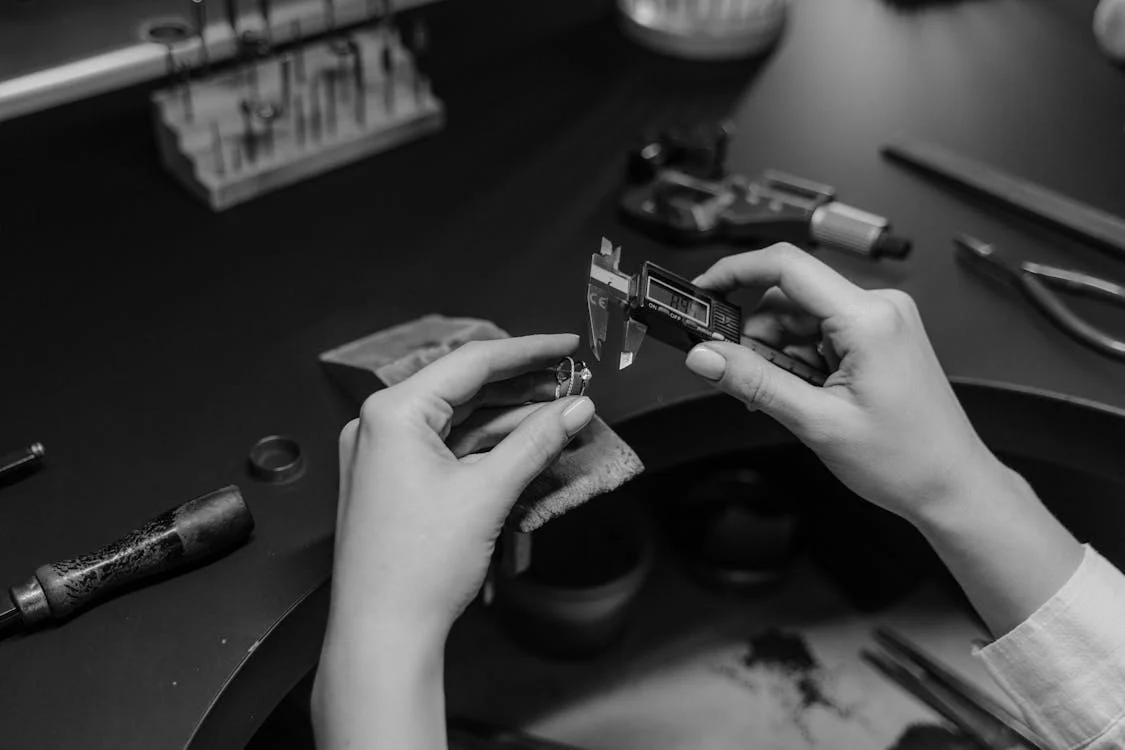
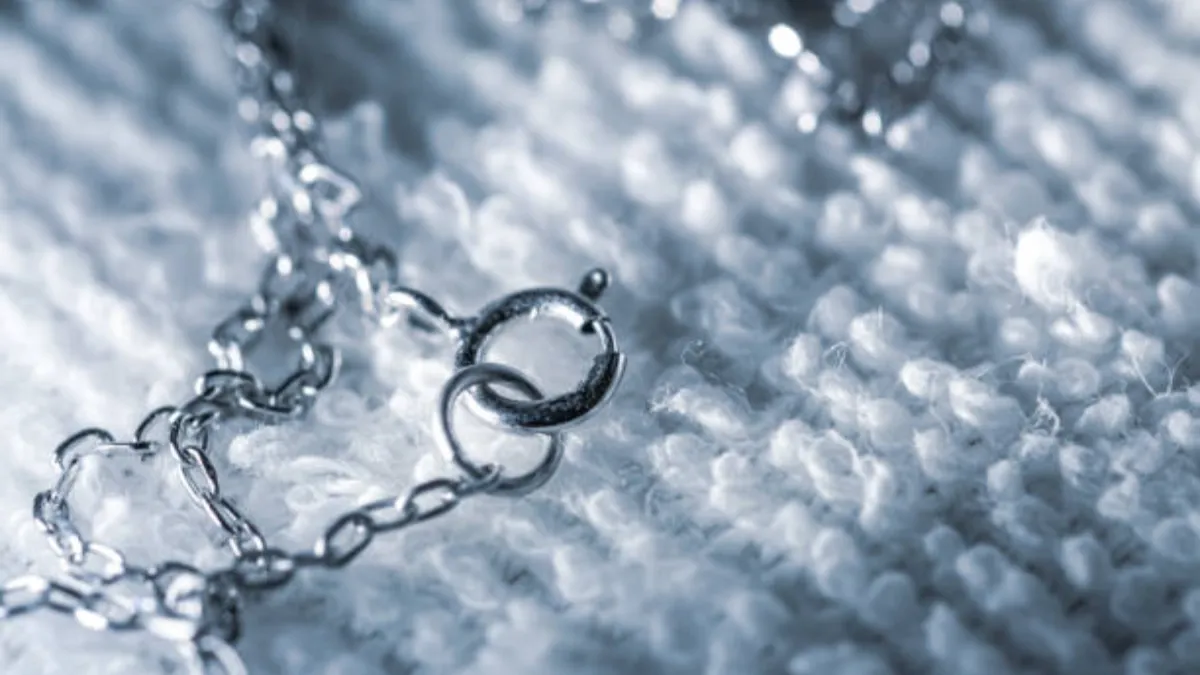
A CAD file looks perfect on screen, but it doesn’t tell you how a piece actually feels or fits. Use precision tools to measure every labeled dimension against the specification sheet, including functional measurements like the usable chain length when clasped, the exact ring size, and earring post thickness (typically around 0.70 mm). Check critical clearances such as a pendant bail’s internal diameter, and verify against tolerances—some standards allow +1/4 inch on chain length but zero tolerance for under-measurement. Weigh the sample on a calibrated scale and compare it to the spec sheet or CAD target, since the approved weight becomes the benchmark for pricing and material cost.
Inspect Construction and Common Failure Points
How a piece is put together determines its durability and perceived quality. Examine every joint, setting, and surface for manufacturing shortcuts like visible porosity, open seams, or excessive solder, and run your fingers over all skin-contact surfaces to find sharp edges. Common failures that should stop an approval include dimensional drift from the CAD file, weight outside the agreed tolerance, clasps that are difficult to operate or prongs too weak to hold stones, and structural flaws such as cracks, open seams, or casting porosity.
Wear-Test the Working Parts
A sample can look perfect but fail in a customer’s hands. Physically test every part that moves, flexes, or secures the piece: perform repeated open-and-close cycles on clasps, flex joints to simulate body movement, wear the item to check fit and comfort, and gently shake or pull it to confirm stones and charms stay secure. For approval, all moving parts must operate smoothly without excessive force, and nothing may loosen, stick, or feel flimsy. This check is your best defense against customer complaints and returns caused by field failures like broken clasps or lost stones.

Inspect the Finish, Placage, and Stones
Inspecting a sample’s finish, placage, and stones confirms it meets appearance, durabilité, et normes de qualité, preventing widespread defects before committing to full production.
Check for Surface Finish and Polish Consistency
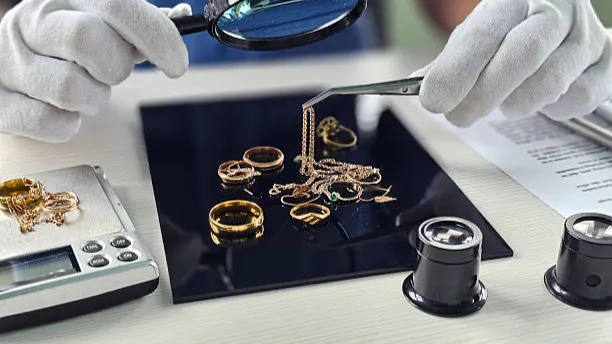
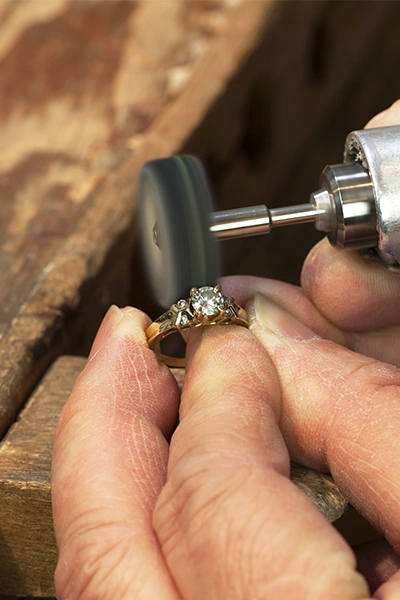
A flawless finish is a non-negotiable mark of quality. Inspect all surfaces for scratches, burrs, tool marks, or sharp edges, and use 4x to 10x magnification to catch subtle defects like pitting, haze, swirl marks, or visible porosity. Compare the sample directly against the approved golden sample or reference photos to confirm the correct polish level and texture, and make sure the finish is uniform across the entire piece, especially in recessed areas, settings, and findings like clasps or bails.
Verify Plating Thickness, Adhésion, and Color
Plating determines the look, longévité, and compliance of a piece. Confirm the plating color is uniform with no shading, traces, or haziness, and check for adhesion failures like peeling, cloquant, ou métal de base exposé. Measure épaisseur du placage with an XRF machine to verify it meets specified minimums, tel que 0.3 microns for gold or 0.2 microns for rhodium. Where required, confirm the sample passes nickel-release tests and complies with restricted substance regulations like REACH or RoHS.
Confirm Stone Security, Paramètre, and Alignment
Loose or poorly set stones are a critical failure point. Apply gentle pressure to each stone to confirm it is securely set and does not move, rattle, or feel loose. Inspect alignment to ensure all stones are centered, level, and uniformly spaced per the design, examine prongs, bezels, and channel walls for tightness and symmetry, and check the stones themselves for chips, fissures, rayures, or cloudiness before giving final approval.
Check Logos and Packaging
Logo and packaging checks verify brand accuracy and product protection. This step is critical for building brand recognition and preventing shipping damage before mass production begins.
Verify Logo Accuracy and Application
Your logo is your signature, and it must be reproduced perfectly. Confirm the logo on the sample matches the approved vector file in spelling, proportion, and spacing, and inspect the application method—hot foil stamping, gaufrage, or screen printing—to ensure it is clean and sharp. Check readability at the final production size, especially on small items like tags or pouches, and verify that printed colors and metallic foils match the specified Pantone references from your brand palette.
Assess Packaging Fit and Physical Tests
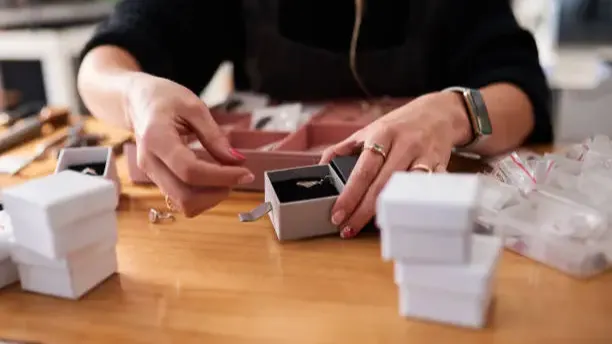
The unboxing experience is part of the product. Test that each piece fits securely within its box or pouch insert without rattling, and confirm the packaging structure is sturdy enough to prevent scratches, tangling, or breakage during shipping. Conduct a side-by-side visual inspection against approved artwork and dielines, then perform a simple shipping test—shake it, drop it lightly—to check for movement and scuffing. Watch for common failures: logos too small to reproduce cleanly, color drift across packaging components, off-center logo placement, and poor structural fit that lets jewelry shift or tangle in transit.
Record Changes and Keep a Golden Sample
Documenting every revision before sample approval is critical. The written record plus the physically approved golden sample becomes the production standard, preventing costly errors and disputes over the final product.
Document Revisions Before Sign-Off
The moment you approve a sample, it stops being a prototype and becomes the official production standard. Your change log must be specific—vague notes like “fixed the clasp” are useless. Record design and dimensional changes, material and finish updates, functional adjustments to clasps or posts, and compliance or packaging revisions. Use a version-controlled change log with the reason and date for each revision, attach annotated photos, and require formal physical sign-off on the final sealed sample from both parties. Without this paper trail, the factory may produce the bulk order from an outdated file, and quality disputes become impossible to resolve.
What a Golden Sample Defines
A golden sample is the final, physically approved reference piece—the tangible benchmark all production units must match. It locks in design, dimensions, matériels, finition, and the quality of stone settings, and it defines functional performance from clasp feel and hinge movement to overall comfort. It also serves as the definitive reference for resolving disagreements over finish, couleur, or construction, and as the basis for inspection checkpoints on every production batch.
Manage the Sample and Its Documentation
Properly managing golden samples is as important as creating them. Create at least two identical samples—one for the brand’s records and one for the factory floor—and label each with the product name, UGS, and approval date, signed by both parties. Store samples in a protected environment to prevent damage or wear, and pair them with a documentation package: final CAD files, measurement sheets with tolerances, high-resolution photos from multiple angles, and material certificates or compliance test results. Reference the golden sample explicitly in the manufacturing agreement as the binding quality standard.
Pensées finales
A disciplined custom jewelry sample approval process is the cheapest quality insurance you can buy. Each check on this list—dimensions, function, finition, image de marque, and documentation—removes one source of error that would otherwise multiply across your entire bulk order.
The result is a sealed golden sample that both you and the factory treat as the binding standard for every production batch. Share your next design with Jusnova, and our team will guide the full OEM sample process step by step—from first prototype to signed-off golden sample—before production begins.
Foire aux questions
What is a jewelry sample?
A jewelry sample is a representative piece of a design created for review before full production begins. It is used to verify the design, matériels, finition, and construction, serving as the physical benchmark that all subsequent pieces in an order must match.
What is a golden sample in manufacturing?
A golden sample, also known as an approval sample, is the final, officially approved physical unit that sets the quality and manufacturing standard for mass production. Pour des bijoux personnalisés, it is the tangible reference for metal color, serti de pierre, finition, and dimensions that the factory must replicate.
What should I check in a jewelry sample?
When reviewing a jewelry sample, you should verify that it matches the approved specifications for dimensions, poids, matériels, et la couleur. Inspect the surface quality for defects, check stone settings for security, test all clasps or mechanisms, and confirm the piece is comfortable and free of sharp edges.
Can a custom jewelry sample be changed?
Oui, a custom jewelry sample can be changed during the review process before you grant final approval for production. Revisions to details like finish, proportions, or stone placement are common. Once you approve the sample, it becomes the official standard, and any further changes typically require a new revision cycle.
Should I approve a sample before mass production?
Approving a sample before mass production is a critical quality control step. It allows you to identify and correct any issues with the design, matériels, or workmanship before committing to a full order. The approved sample serves as a clear agreement with your manufacturer, reducing the risk of errors and ensuring the final product meets your standards.