Is PVD Jewelry Waterproof

Home

>

Is PVD Jewelry Waterproof

Is PVD jewelry waterproof? The market’s demand for durable, water-resistant pieces is clear, given the high rate of returns and customer dissatisfaction caused by traditional gold plating’s rapid tarnishing and fading in everyday wear.

This article presents empirical data. PVD coatings, especially on stainless steel, prove up to 10 times more durable than standard plating. This allows for superior water resistance and significantly reduces tarnish, safeguarding brand reputation and reducing warranty costs.

Is PVD Jewelry Really Waterproof?

PVD jewelry is highly water-resistant and functions as ‘waterproof’ for daily use, especially when applied to stainless steel. Its long-term performance still depends on chemical exposure, wear, and proper care.

Jewelry type Water resistance in everyday use Tarnish behavior Typical base metal
18K gold PVD on stainless steel Highly water‑resistant; marketed as waterproof, sweat‑proof, ocean‑safe Very low tarnish; resists fading and greening 316L stainless steel or similar
Traditional gold plated fashion jewelry Poor–moderate; plating often wears off with water and sweat Frequently tarnishes, flakes, turns green Brass, copper, mixed alloys
Gold‑filled (not PVD) Good; multiple users and jewelers consider it genuinely waterproof in practice Better than plating; more gold content Brass core with thick gold layer
Pure gold (solid) Excellent; essentially non‑tarnishing and water‑safe Minimal tarnish under normal conditions Solid gold
Simple stainless steel (no PVD) Good water resistance; can handle moisture and light water Low tarnish; long‑term salt/chemical exposure can mark it Stainless steel

PVD Jewelry’s Practical Water Resistance for Daily Wear

7 Gold Cuban Link Chain Necklace

PVD jewelry offers robust water resistance, making it functionally “waterproof” for everyday activities. Brands and labs describe PVD jewelry as waterproof because its PVD layer forms a barrier against water, air, and chemicals. This protects the base metal from corrosion and oxidation. It is designed to tolerate regular exposure to water, sweat, humidity, perfumes, lotions, swimming pools, and salt water without tarnishing or fading.

Consumers can wear PVD jewelry for daily water contact, like showers, handwashing, workouts, and in the rain. Certified PVD lines are tested to handle perfumes, lotions, swimming pool water (chlorine), salt water, and perspiration. High-quality 18K PVD gold on stainless steel performs like waterproof jewelry in typical daily settings.

This means you can wear it in the shower, for swimming in pools and the ocean, and during workouts without issue. Its resistance to sweat and chlorine makes it suited for everyday active use. This real-world performance justifies the “waterproof” label for regular daily wear and typical water exposure.

Extending PVD Jewelry’s Waterproof Lifespan Through Proper Care

PVD jewelry is engineered for water exposure, but proper care significantly extends its effective lifespan. Regular maintenance helps preserve its aesthetic quality and functional integrity over time. Here are some guidelines to keep your PVD jewelry performing its best.

  • Safe Exposure: You can generally wear PVD jewelry during daily showers and handwashing. It handles sweat from workouts, everyday wear, rain, humidity, and casual beach or pool use well. Light perfumes and lotions are also fine, especially if they dry before you wear the jewelry.
  • Exposure to Minimize: Avoid strong detergents, bleaches, ammonia, and other harsh household or industrial chemicals. Limit time in highly chlorinated hot tubs and prolonged pool sessions, as extended exposure speeds up wear. Also, protect your jewelry from abrasive surfaces or tools such as scrubbing pads, rough sand, or constant metal-on-metal grinding.
  • Cleaning: Wipe your pieces periodically with a soft, non-abrasive cloth. This removes skin oils and residues. If needed, rinse with lukewarm water and a small amount of mild soap, then gently pat dry. Avoid ultrasonic cleaners and harsh jewelry dips, unless the manufacturer explicitly approves them.
  • Storage: Store pieces separately to prevent scratching. Use a jewelry roll, soft pouch, or box. Keep your jewelry away from environments with corrosive vapors or chemical aerosols, like areas near cleaning products.

PVD jewelry is not completely invincible. Very long immersion, strong chemicals, or repeated abrasive wear can degrade the surface. Still, with these care steps, PVD jewelry remains a durable, water-friendly option for routine daily use, as long as you do not abuse it or expose it to extreme environments.

What Makes PVD Jewelry Water Resistant?

What Is 18K Yellow Gold Colored Pvd Plated

PVD jewelry is water-resistant. A hard, dense PVD coating bonds to corrosion-resistant metals, forming a barrier that blocks water and chemicals from the base.

How PVD Technology Creates a Water-Resistant Layer

PVD, or Physical Vapor Deposition, is a vacuum process. It vaporizes a metal, often gold, then bonds it at a molecular level to a base metal. Stainless steel or titanium are common choices.

This process forms a thin, very hard, and dense coating. It acts as a continuous barrier, or shell, around the base metal. This layer is much more durable than standard electroplating, often ten times tougher.

The PVD coating blocks moisture, air, and chemicals from reaching the underlying metal. This prevents corrosion, oxidation, and tarnish. That’s why PVD jewelry performs well in wet environments.

Practical Water Resistance and Longevity of PVD Jewelry

PVD jewelry offers high water resistance for everyday use. People wear it safely in showers, when washing hands, during workouts, and in the rain. Brands often market it as “waterproof,” “sweat-proof,” or “ocean-safe.”

Certified PVD lines undergo tests to resist perfumes, lotions, swimming pool chlorine, salt water, and sweat. This means they tolerate frequent water contact without tarnishing or fading.

No coating is indestructible. Extreme conditions like prolonged immersion, very harsh chemicals, or repeated abrasive wear can eventually affect the surface or base metal. Yet, with normal wear and reasonable care, PVD jewelry stays shiny and water-resistant for years.

How long it lasts depends on the coating’s quality and thickness, the specific materials used, your wear patterns, and exposure intensity. Gentle cleaning and proper storage extend its lifespan.

Unlock High-Margin Jewelry: Custom, Durable, Fast

Partner with Jusnova for durable, hypoallergenic stainless steel and sterling silver jewelry that stands out. Benefit from low MOQs, full customization, and a 150,000+ pcs/month capacity to boost your brand’s profitability.

Request a Free Consultation →

CTA Image

Can You Shower With PVD Jewelry?

PVD jewelry is highly water-resistant and generally shower-safe on stainless steel. Minimize harsh chemicals and dry it properly for the best lifespan.
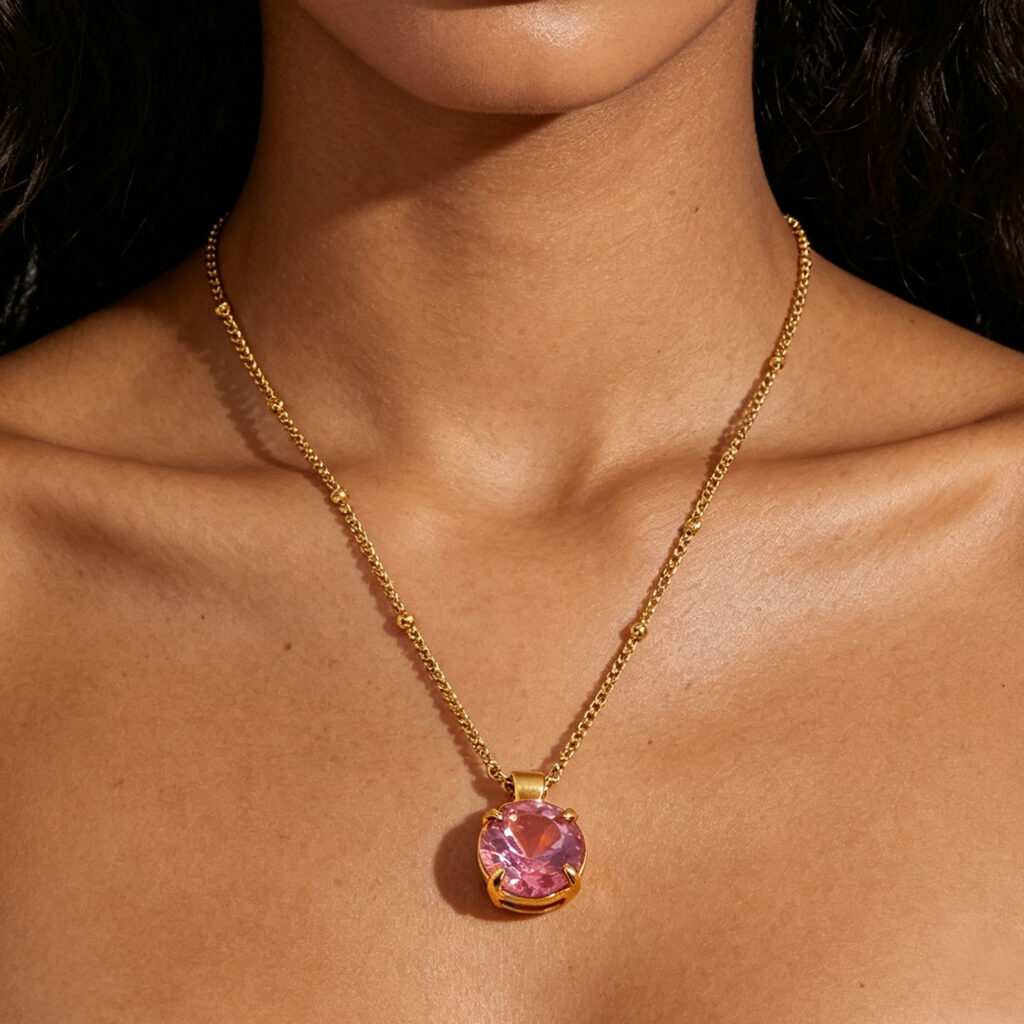
PVD Jewelry’s Water-Resistant Qualities

PVD, Physical Vapor Deposition, applies a thin metal layer to base metals like stainless steel. This process results in a bonded coating with strong adhesion, forming a protective layer that blocks moisture.

Many brands say PVD jewelry, especially 18K gold on stainless steel, is shower-safe. PVD is water-resistant, but “waterproof” isn’t a universal promise for every piece. PVD is more durable than traditional gold plating, so it resists wear better and holds color longer. Lots of PVD-coated items, especially those with stainless steel bases, are hypoallergenic or nickel-free.

Safeguarding PVD Jewelry in the Shower

  • Minimize exposure to harsh chemicals. This includes chlorine, strong soaps, shampoos, detergents, bleach, and ammonia.
  • Take off jewelry before frequent exposure to chlorinated pools, saltwater, heavy soaps, lotions, or cleaning chemicals.
  • Check that the item is PVD-coated stainless steel before showering.
  • Look for specific “shower-safe” or “sweatproof” claims from the brand for your item.
  • Follow cleaning and drying care instructions to keep it in good shape.
  • Even with “waterproof” claims, long-term exposure can still cause wear.
  • Gentle use and avoiding chemicals best keeps the color and finish.

Can You Swim While Wearing PVD Jewelry?

PVD jewelry, especially on stainless steel, is largely water-resistant and handles swimming well. Just follow basic care and avoid harsh chemicals to keep it looking good.
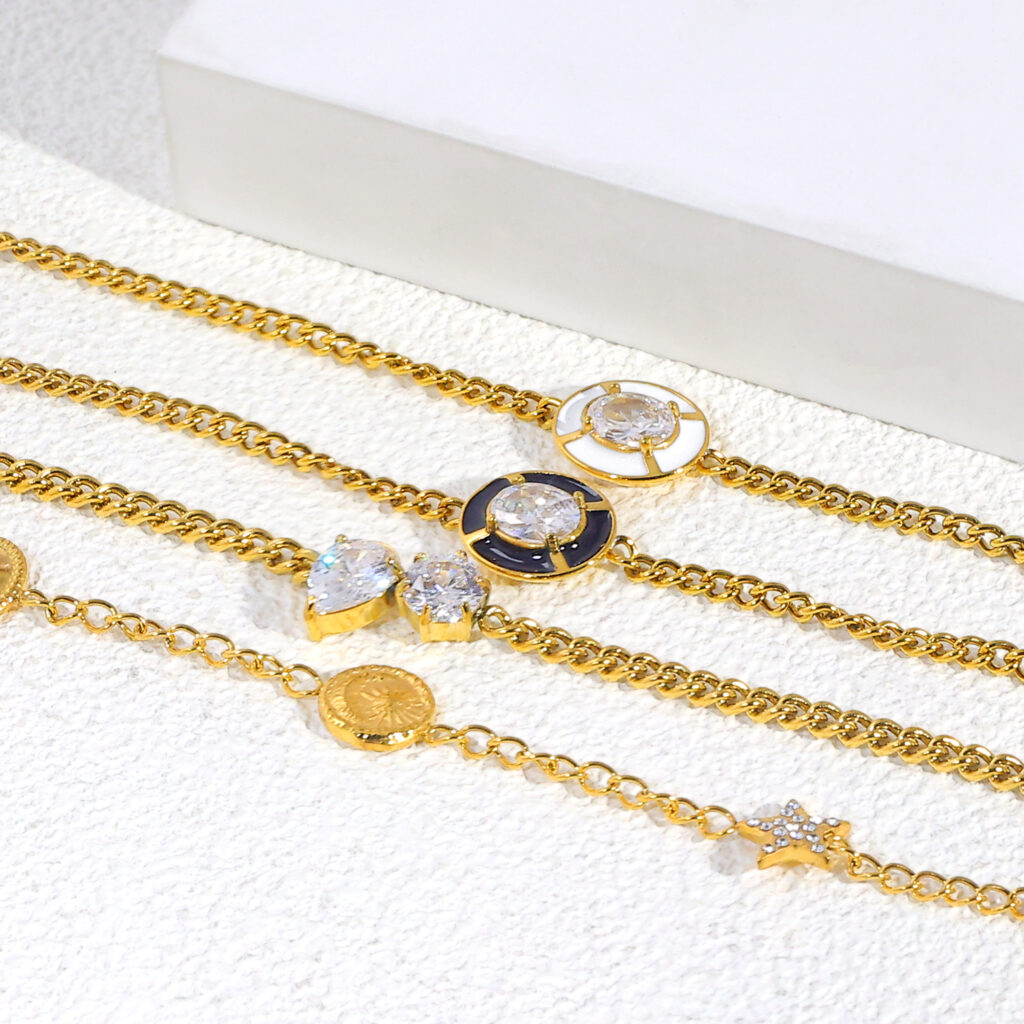
Understanding PVD Jewelry’s Water Capabilities

PVD, or Physical Vapor Deposition, bonds a thin, hard metal layer, typically 18K gold, onto a base metal. This process occurs in a vacuum, forming a dense, durable coating. Jewelry often uses 316L stainless steel as the base. This combination makes PVD jewelry significantly more resistant to wear and elements than traditional electroplating.

Brands generally market PVD jewelry as “waterproof,” “sweat-proof,” and “tarnish-resistant.” That’s because the PVD layer creates a barrier. This barrier shields the base metal from corrosion and oxidation. It effectively withstands daily exposure to water, sweat, humidity, perfumes, lotions, swimming pools, and salt water without quick tarnishing or fading. While no coating is absolutely indestructible, PVD jewelry performs as “highly water-resistant and functionally waterproof for normal use.”

The 316L stainless steel base itself is naturally corrosion-resistant, thanks to its chromium content forming a passive oxide layer. This blocks rust. PVD adds an extra layer of defense, making the jewelry even more resilient. This coating is hard and scratch-resistant, acting as a physical barrier against moisture and chemicals. This stops water from reaching the base metal under normal circumstances. It also maintains color and shine longer and often helps with hypoallergenic performance.

Best Practices for Swimming with PVD Jewelry

You can swim with PVD jewelry. For occasional, short freshwater swims, high-quality PVD on stainless steel is usually fine. Many waterproof PVD collections are laboratory-tested to withstand chlorinated pool water and salt water without issues. However, continuous or prolonged exposure to harsh chemicals or extreme conditions can accelerate wear.

Several factors influence how PVD jewelry holds up during swimming:

  • Base Metal: Always look for PVD on 316L stainless steel. This base is naturally corrosion-resistant and hypoallergenic. PVD on less robust metals might not perform as well.
  • Coating Quality: Thicker, well-applied PVD coatings offer superior barrier protection and color retention. Cheaply made pieces with very thin layers are more vulnerable.
  • Water Type and Chemicals: Freshwater is low risk. Chlorinated pool water and ocean saltwater are harsher, containing chemicals that can attack coatings over time. Strong detergents, bleaches, and ammonia are also very damaging.
  • Mechanical Wear: Sand, rough pool surfaces, or contact with other hard objects can scratch the PVD layer. This opens up pathways for water and chemicals to reach the base metal.

To maintain your PVD jewelry, especially after swimming, follow these steps:

  • Rinse Immediately: After swimming, rinse your jewelry thoroughly with clean, fresh water. This removes chlorine, salt, and other chemical residues.
  • Dry Completely: Pat dry with a soft, non-abrasive cloth. Don’t leave it to air dry, as water spots or chemical residues can cause damage.
  • Limit Exposure: Minimize prolonged periods in heavily chlorinated pools, hot tubs, or saltwater, especially if you want maximum lifespan.
  • Avoid Harsh Chemicals: Keep your jewelry away from strong detergents, bleaches, ammonia, and abrasive cleaning agents.
  • Store Properly: Store pieces individually in a soft pouch or jewelry box to prevent scratching. Make sure they are completely dry before storing.

PVD-coated stainless steel jewelry is one of the most water-resilient options available, especially compared to traditional plated jewelry. It allows you to enjoy daily activities like showering and occasional swimming without constant worry. However, understanding its practical limits and following a simple care routine helps maintain its appearance for years.

How Does Salt Water Affect PVD Jewelry?

PVD jewelry resists saltwater, but prolonged exposure accelerates wear. Proper care, like rinsing and gentle cleaning, extends its lifespan, especially on 316L stainless steel.
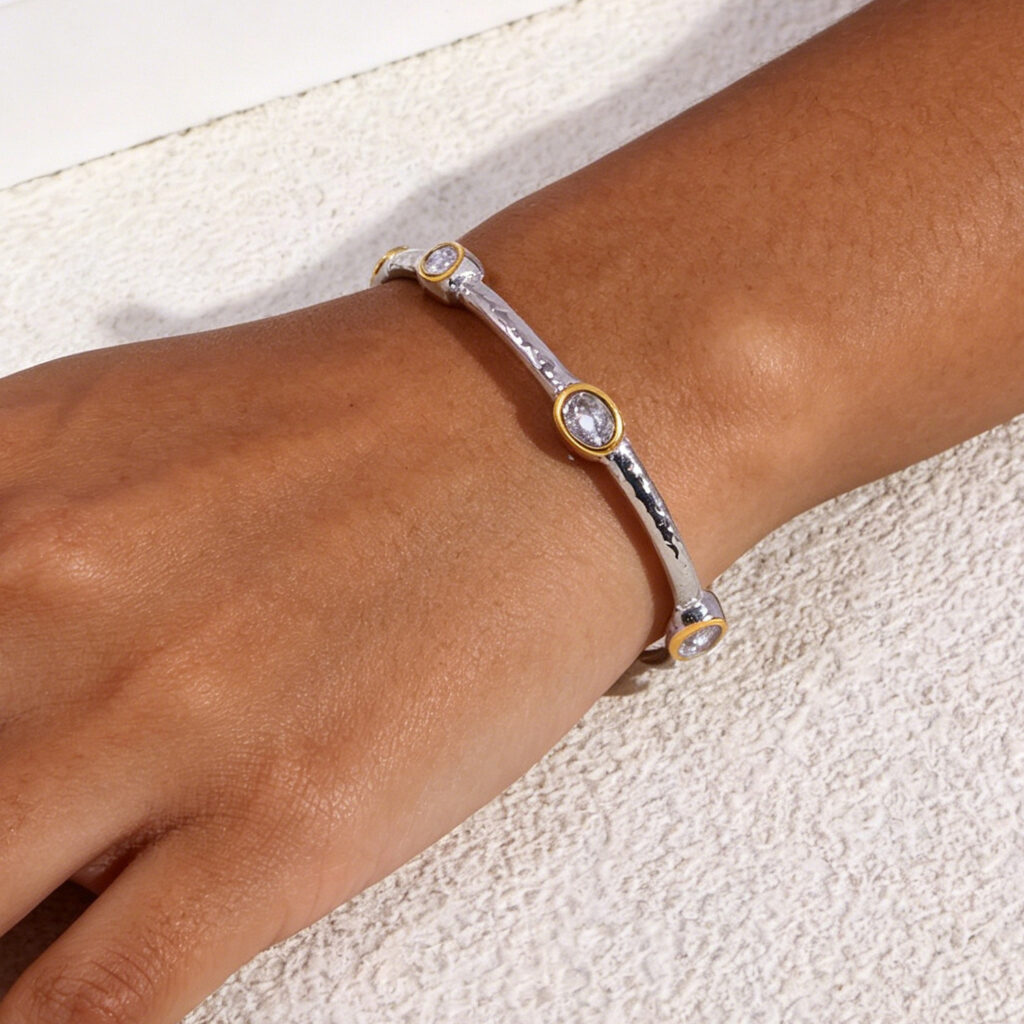
Effects of Saltwater Exposure on PVD Jewelry

  • PVD coatings inherently resist moisture and salt, significantly outperforming traditional plated jewelry in durability.
  • Saltwater contains dissolved minerals and abrasive micro-particulates, such as sand, which contribute to micro-scratches and accelerate wear, particularly on high-friction areas.
  • Repeated or prolonged saltwater contact can lead to a dulling of the finish, slight color shifts, and localized thinning of the coating over years of heavy use.
  • PVD effectively protects robust base metals like 316L stainless steel. A compromised coating on more reactive bases (e.g., brass) allows saltwater to cause under-film corrosion and flaking.
  • While marketed as “waterproof” for swimming and daily wear, minimizing prolonged saltwater exposure helps maximize the coating’s effective lifespan.

Strategies for Maintaining PVD Jewelry in Saltwater

  • Rinse PVD jewelry thoroughly with fresh water immediately after any saltwater exposure to remove corrosive salt and mineral deposits.
  • Clean gently using mild soap and lukewarm water with a soft cloth or brush. Avoid abrasive cleaners, scouring pads, or harsh chemicals.
  • Minimize mechanical abrasion. Remove PVD jewelry during activities involving heavy sand or strong surf where friction is intense.
  • Users with frequent, heavy saltwater exposure (e.g., daily ocean swimming) might see noticeable surface changes within 6-12 months. Occasional use allows for several years of appearance retention.
  • The quality and thickness of the PVD layer, the choice of base metal (316L stainless steel offers superior performance), and consistent user care significantly influence longevity in saltwater environments.
  • Solid stainless steel or high-karat gold remain the top choices for constant, extreme saltwater conditions. PVD-coated stainless steel jewelry, though, provides an excellent durability-to-cost ratio for regular saltwater use.

How Does Chlorine Affect PVD Coating?

Chlorine is a major threat to PVD jewelry’s finish. It can dull, discolor, or damage coatings over time, especially with frequent or prolonged exposure.
Chlorine’s Interaction with PVD Coatings

Chlorine acts as an oxidizer, chemically attacking surfaces over time.

It can penetrate PVD coatings through defects, edges, or wear points.

Once compromised, the underlying metal becomes vulnerable to reaction.

Observable Impacts and Risk Factors

Common visual signs include color fading, dullness, or loss of shine.

Spotty discoloration and tarnish on exposed base metal can occur.

Higher chlorine concentration and longer immersion times increase risk.

Mechanical wear also creates entry points for chemical damage.

Waterproof vs Water Resistant Jewelry: What Is the Difference?

Waterproof jewelry resists full submersion and heavy moisture due to its materials and construction. Water-resistant jewelry tolerates some contact, but not extended wet conditions. PVD-coated stainless steel closes the gap between plated and solid gold for daily water exposure.
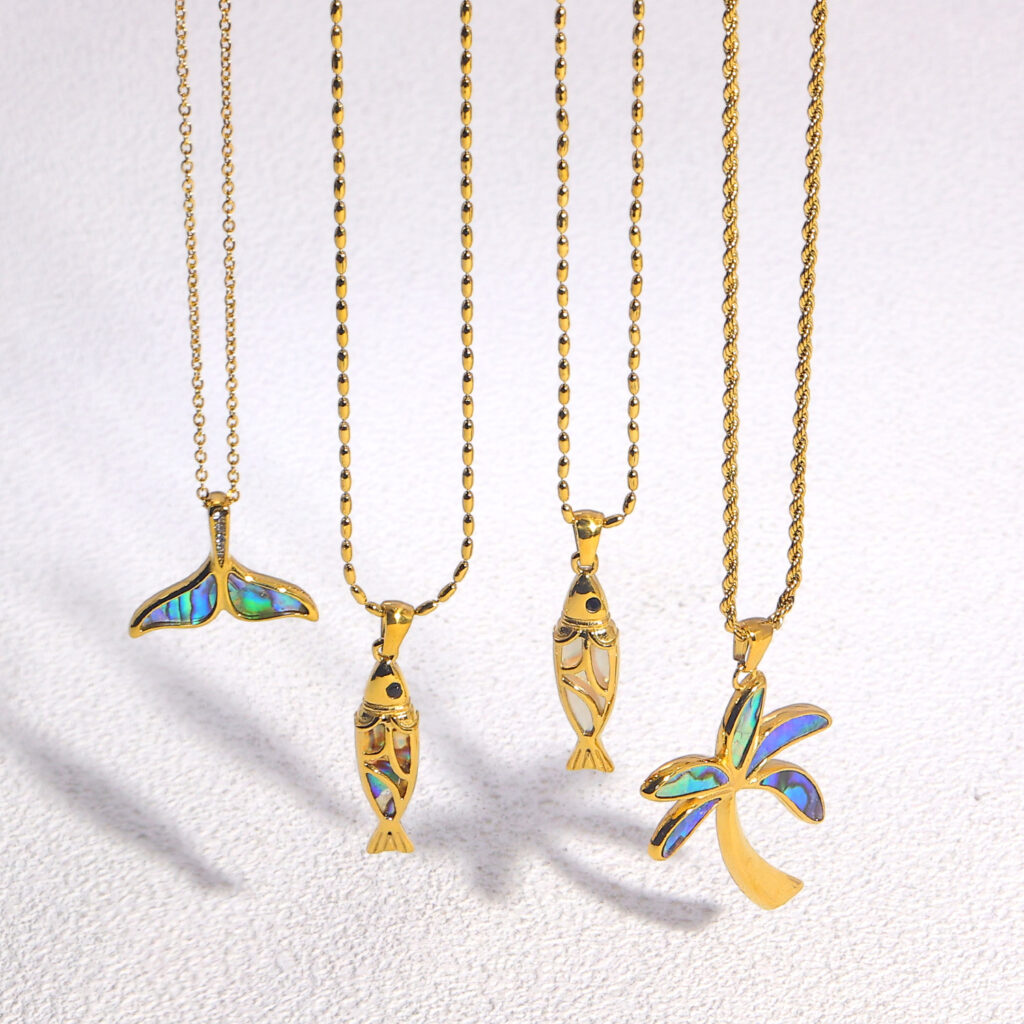
Fundamental Distinctions: Design, Materials, and Performance

The terms “waterproof” and “water-resistant” are often used in jewelry marketing. They indicate different levels of protection against water. No piece is truly immune to all forms of wear over time. These terms reflect practical usability in various wet conditions.

Waterproof Jewelry

Waterproof jewelry handles full, repeated submersion without structural damage, tarnishing, or losing its finish. This means you can wear it continuously in showers, pools, or the ocean with minimal degradation. This capability comes from the materials and construction.

Water-Resistant Jewelry

Water-resistant jewelry tolerates brief, occasional contact with water. Think handwashing, light rain, or accidental splashes. It is not made for ongoing or prolonged immersion. Repeated water exposure on these pieces can lead to tarnishing, oxidation, or dulling, especially if the base metal reacts with water.

Materials Make the Difference

Jewelry’s waterproof performance depends heavily on the base metal and any surface treatments.

  • Waterproof Base Metals: Solid gold (10k–24k), stainless steel, titanium, platinum, and palladium are common. These metals resist corrosion and generally do not rust or turn green.
  • PVD Coatings: PVD (Physical Vapor Deposition) applies a thin, hard, wear-resistant layer onto metals like stainless steel. This method creates a gold-colored coating widely used in affordable “waterproof” jewelry. Compared to traditional plating, PVD offers higher hardness, better adhesion, and more resistance to sweat, water, and abrasion.
  • Water-Resistant Materials: Gold-plated, vermeil, and other plated base metals are typical for water-resistant jewelry. The thin plating layer eventually wears away with repeated exposure. Reactive base metals such as brass, copper, or low-grade alloys are prone to corrosion and skin reactions when wet.

How They Perform in Water

The functional difference comes down to water exposure tolerance.

  • Water-Resistant Jewelry: Handles washing hands, light rain, or brief, infrequent immersion.
  • Waterproof Jewelry: Is designed for daily showers, swimming in pools or the ocean, exercise, and sweat. It shows minimal cosmetic change, especially when users minimize chemical exposure.

Waterproof jewelry usually relies on corrosion-resistant metals and high-quality surface treatments. Water-resistant pieces depend on platings or coatings that degrade over time. That means a moderate to high risk of tarnish or oxidation with continuous water contact.

PVD Jewelry in 2026: Performance, Expectations, and Practical Care

PVD jewelry has established itself as a reliable option for daily wear, even with water exposure. It offers a blend of performance and affordability that bridges the gap between traditional plated fashion jewelry and solid gold.

Performance in Everyday Conditions

PVD-coated stainless steel jewelry consistently performs well in wet environments. Brands market these pieces as waterproof, sweat-proof, and tarnish-resistant for daily use. Consumers report PVD jewelry can withstand:

  • Daily Showers: Most manufacturers confirm PVD jewelry is safe for showering. It resists peeling or discoloration with regular showering and hand-washing.
  • Workouts and Sweat: PVD gold jewelry is designed to be sweatproof. It resists fading or turning green during workouts and in hot conditions.
  • Swimming: Certified waterproof PVD collections are tested to withstand swimming pool chlorine and salt water without tarnishing or peeling. That said, prolonged, heavy exposure to harsh pool chemicals or ocean water with sand can accelerate wear.
  • Chemicals and Cosmetics: PVD shows resistance to perfumes, lotions, and perspiration. Avoid concentrated or harsh chemicals, though, as they can degrade the coating.

The PVD layer creates a dense, continuous barrier. This blocks water, air, and chemicals from reaching the base metal. This significantly reduces corrosion, oxidation, and tarnish.

Durability and Lifespan

PVD coatings on jewelry last much longer than standard gold plating. They are thicker and harder, often cited as up to 10 times more durable. With normal wear and reasonable care, PVD stainless steel jewelry can remain shiny and water-resistant for years, even with frequent water exposure.

Key factors influencing lifespan include coating thickness, the quality of the PVD process, and user habits. Heavy, continuous exposure to harsh chemicals or abrasive conditions can shorten its life.

Practical Care for PVD Jewelry

Even with PVD’s durability, proper care extends its effective lifespan and maintains its appearance.

  • Rinsing: Rinse jewelry with fresh water immediately after exposure to chlorinated pools or salt water. This removes residues that can cause long-term damage.
  • Drying: Pat dry thoroughly with a soft, non-abrasive cloth. Do not let water sit on the surface, especially in crevices.
  • Cleaning: Use mild soap and lukewarm water for routine cleaning. Avoid abrasive pads, stiff brushes, ultrasonic cleaners, and harsh jewelry dips.
  • Chemicals: Minimize contact with strong detergents, bleaches, ammonia, and other aggressive cleaning agents. Apply perfumes and lotions before putting on jewelry.
  • Storage: Store pieces separately in a jewelry roll, soft pouch, or box to avoid scratching. Keep them away from corrosive vapors.

PVD jewelry on 316L stainless steel offers a reliable, practical choice for active, water-heavy lifestyles. It holds up well for everyday wear, but users should understand its limitations under extreme chemical or mechanical stress.

Which Base Metals Improve PVD Water Resistance?

316L stainless steel and titanium significantly boost PVD water resistance. Brass and copper need specific barrier layers for similar water protection.
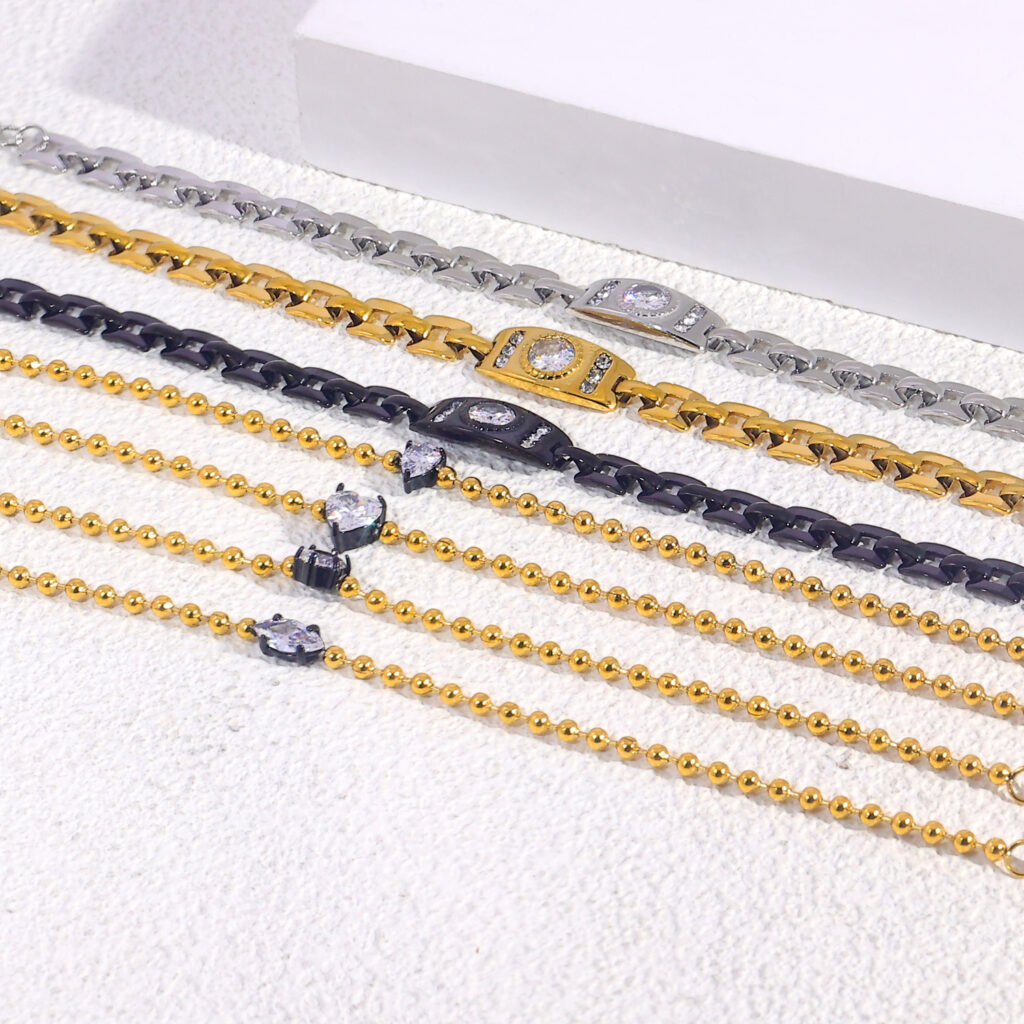
Primary Base Metals for High Water Resistance

  • 316L Stainless Steel: Forms a protective passive oxide film, creating a dual barrier with PVD; highly resistant to corrosion in water, sweat, and mild chemicals.
  • Titanium: Develops a stable, self-healing TiO₂ oxide film, offering excellent corrosion resistance in wet and chloride environments; also lightweight and hypoallergenic.
  • When PVD-coated, these metals provide strong durability for daily wear, including showers and occasional swimming.

Base Metals Requiring Intermediate Layers for Water Resistance

  • Brass and Copper Alloys: Possess lower intrinsic corrosion resistance and are prone to discoloration when exposed directly to water or sweat.
  • Essential Barrier Layers: Require electroplated layers (e.g., bright nickel, white bronze, palladium) applied before PVD to prevent corrosion and improve water tolerance.
  • This multi-layer approach enhances water resistance, but these items are generally better suited for intermittent rather than continuous water exposure.

How to Maintain PVD Jewelry After Water Exposure?

PVD jewelry needs simple care after getting wet. Gently clean, dry promptly, and store it right to keep it looking good long-term. Harsh chemicals are its enemy.
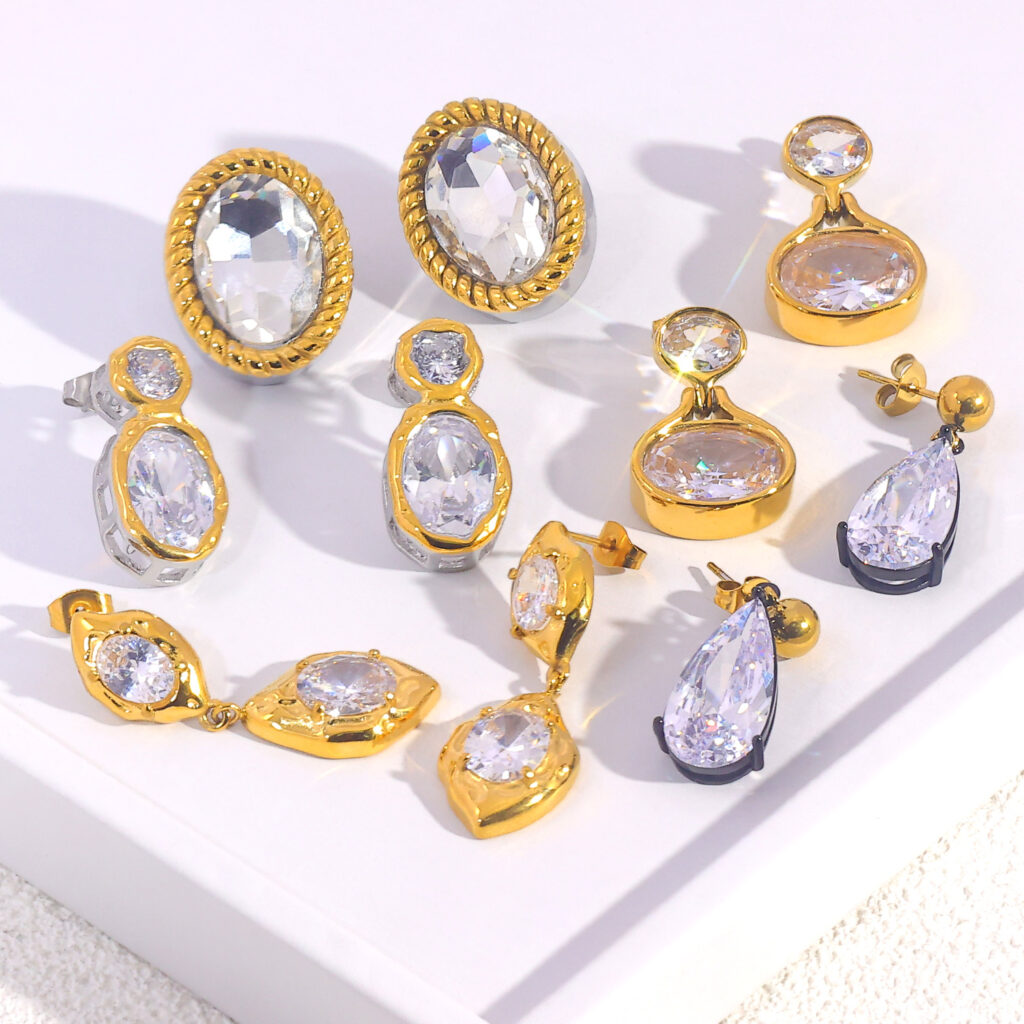
Immediate Care Following Water Exposure

After any water exposure, pat your PVD jewelry dry right away with a soft, lint-free cloth. This prevents water from sitting on the surface. Make sure you check tricky spots like chain links, clasps, and stone settings. Water can get trapped there. If the piece was in pool or saltwater, give it a quick rinse under clean tap water before drying. This removes chlorine or salt residue. If you need to, let it air dry completely on a clean towel, especially for hidden areas.

Long-Term Preservation and Preventive Habits

For long-term preservation, make good habits. Don’t leave your PVD jewelry wet for long stretches; constant moisture wears down the finish. If you want maximum life, avoid regular exposure to chlorinated pools, hot tubs, and saltwater. These cause faster fading. Also, stay clear of harsh soaps, shampoos, lotions, perfumes, bleach, ammonia, and alcohol-based cleaners. They dull or erode the surface. Never scrub with abrasive materials, as friction damages the coating.

Always store your PVD jewelry completely dry. Use a soft pouch or a lined jewelry box to prevent scratching. Store items separately so they don’t rub against each other. If you live in a humid place, anti-moisture silica packs in storage can help.

For best results, take off your jewelry before repeated exposure to water, harsh chemicals, or abrasion. This means before swimming, showering, serious cleaning, or working out. Apply cosmetics, perfumes, and body products first. Let them dry, then put on your jewelry. This prevents residue buildup. If you wear certain pieces daily, rotate them. This reduces continuous wear on specific contact points.

Frequently Asked Questions

Is PVD jewelry waterproof?

PVD jewelry is highly water‑resistant and functionally “waterproof” for everyday use, especially when applied to stainless steel, but its longevity still depends on chemistry exposure, wear, and care.

1. What PVD Jewelry Is

  • PVD (Physical Vapor Deposition) is a vacuum process where metal (often 18K gold) is vaporized and bonded as a thin, dense layer to a base metal such as 316L stainless steel or titanium.
  • The PVD layer adheres at a molecular level, creating a much stronger finish than conventional electroplated gold.
  • Typical PVD jewelry in the market:
  • 18K gold PVD on stainless steel (necklaces, rings, bracelets, earrings, anklets)
  • Often marketed as waterproof, sweat‑proof, ocean‑safe, tarnish‑free, and hypoallergenic.

2. Is PVD Jewelry Waterproof?

Everyday water exposure
  • 18K gold PVD jewelry on stainless steel is described as waterproof, sweatproof, and highly tarnish‑resistant.
  • Brands using PVD on stainless steel state that their jewelry:
  • Can be worn in the shower and with frequent hand‑washing without peeling or discoloration.
  • Is designed for daily wear in humid conditions, with sweat and moisture.
  • One brand reports its gold PVD jewelry has been certified as waterproof and withstands:
  • Perfumes
  • Lotions
  • Swimming pools (chlorine)
  • Saltwater
  • Perspiration
Performance vs. traditional plating
  • PVD coatings are repeatedly described as up to 10× more durable than standard gold plating.
  • Unlike traditional gold plating, PVD does not easily flake, fade, or turn green with water and sweat exposure.
  • For stainless steel plus PVD:
  • Stainless steel itself is naturally corrosion‑resistant due to a chromium oxide layer.
  • The PVD layer adds an extra moisture and chemical barrier, enhancing water resistance.

Practical takeaway: For normal use (showering, hand‑washing, sweat, occasional swimming), PVD jewelry on stainless steel behaves as effectively waterproof and is widely marketed and tested.

3. Limits of “Waterproof” in Real Use

Even though PVD jewelry is marketed as waterproof, long‑term performance still depends on conditions:

Chemical and environmental stress
  • Stainless steel, though corrosion‑resistant, can be affected by long, repeated exposure to saltwater or harsh chemicals, which may eventually compromise its protective layer.
  • Care guides for waterproof PVD jewelry still advise:
  • Avoid or limit contact with detergents, bleaches, ammonia, and high chlorine.
  • Avoid abrasive scrubbing or harsh chemical cleaners.
  • Some jewelry professionals note that:
  • There is no metal that is truly immune to all forms of wear and chemical attack.
  • Any coating can be affected over time by continuous abrasion and strong chemicals.
Mechanical wear
  • The PVD layer is scratch‑resistant but not scratch‑proof.
  • Deep scratches, impacts, or heavy friction can penetrate the coating and expose the base metal, reducing both water resistance and appearance over time.

Practical implication: PVD jewelry is reliably waterproof for normal daily moisture and sweat, but constant exposure to aggressive environments (strong chemicals, industrial cleaners, very frequent ocean swimming plus sand abrasion) can shorten its lifespan.

4. How PVD Achieves Water Resistance

Barrier function
  • The PVD coating forms a dense, continuous barrier over the base metal:
  • It blocks water, air, and common chemicals from reaching the substrate.
  • It prevents corrosion and oxidation, key drivers of tarnish and color change.
  • On 316L stainless steel, PVD:
  • Reinforces the steel’s intrinsic resistance to rust and pitting.
  • Helps maintain surface integrity and shine under repeated wet/dry cycles.
Structure and durability
  • PVD processes in jewelry use:
  • Vacuum chambers and controlled deposition for uniform thickness and strong adhesion.
  • A coating that is thick and more tightly bonded than traditional electroplated gold, its 10× durability claim.
  • The result is a finish that:
  • Resists water penetration, sweat, and humidity.
  • Maintains color and gloss significantly longer than typical plated fashion jewelry.

5. Tarnish, Discoloration, and Skin Reactions

Tarnish and color stability
  • 18K gold PVD jewelry on stainless steel is consistently described as:
  • Tarnish‑resistant and anti‑tarnish.
  • Does not turn green like standard gold‑plated pieces.
  • Because the coating is bonded at a molecular level, it is highly resistant to oxidation and corrosion, even with frequent water and sweat exposure.
Hypoallergenic performance
  • PVD jewelry on high‑quality stainless steel or titanium is often nickel‑free or uses metals that are low‑irritation.
  • PVD coatings are described as hypoallergenic, suitable for sensitive skin, and can prevent direct contact between skin and any reactive base metal.

6. Comparison: PVD vs Other “Waterproof” Jewelry Options

Jewelry type Water resistance in everyday use Tarnish behavior Typical base metal
18K gold PVD on stainless steel Highly water‑resistant; marketed as waterproof, sweat‑proof, ocean‑safe Very low tarnish; resists fading and greening 316L stainless steel or similar
Traditional gold plated fashion jewelry Poor–moderate; plating often wears off with water and sweat Frequently tarnishes, flakes, turns green Brass, copper, mixed alloys
Gold‑filled (not PVD) Good; multiple users and jewelers consider it genuinely waterproof in practice Better than plating; more gold content Brass core with thick gold layer
Pure gold (solid) Excellent; essentially non‑tarnishing and water‑safe Minimal tarnish under normal conditions Solid gold
Simple stainless steel (no PVD) Good water resistance; can handle moisture and light water Low tarnish; long‑term salt/chemical exposure can mark it Stainless steel

PVD jewelry occupies a high‑performance segment of waterproof fashion jewelry: more durable than typical plating, competitive with or approaching gold‑filled in daily water resistance, and far more affordable than solid gold.

7. Typical Use Cases for Waterproof PVD Jewelry

Brands and users position PVD jewelry for:

  • Continuous wear:
  • Everyday necklaces, rings, bracelets, anklets, and earrings designed to be kept on.
  • Active lifestyles:
  • Workouts, sports, and hot climates where sweat and humidity are constant.
  • Water‑rich environments:
  • Showering, frequent hand‑washing, beach days, and pool use (with some caution about strong chlorine). This positioning relies directly on the PVD layer’s waterproof and anti‑tarnish performance combined with stainless steel’s corrosion resistance.

8. Care Guidelines to Maximize Waterproof Performance

Even for certified waterproof PVD jewelry, care practices are recommended to preserve the coating:

  • Rinse and dry after strong exposure:
  • After swimming (especially in chlorinated pools or saltwater), rinse with clean water and pat dry.
  • Limit harsh chemicals:
  • Avoid detergents, bleaches, ammonia, and concentrated chlorine.
  • Put jewelry on after applying perfumes, lotions, and cosmetics to reduce residue buildup.
  • Gentle cleaning only:
  • Wipe regularly with a soft cloth and mild water; avoid abrasive materials that can scratch the PVD layer.
  • Proper storage:
  • Store pieces separately in jewelry rolls or boxes to prevent tangling and surface abrasion.

These practices do not negate the waterproof nature of PVD jewelry; they extend the functional life of the coating and its aesthetic quality under continuous wet and dry cycles.

9. Industry Context: Why “Waterproof PVD Jewelry” Is Trending

Within the jewelry industry and social media market:

  • Waterproof PVD jewelry has become a popular category marketed as:
  • “Waterproof,” “sweat‑proof,” “ocean‑safe,” and “tarnish‑free.”
  • Influencer‑driven fashion jewelry often uses:
  • Stainless steel base plus PVD yellow/gold color to provide the look of gold at a low cost.
  • Some professionals caution that:
  • Certain low‑cost “waterproof gold” pieces may use PVD only as color coating, sometimes with no real gold content.
  • Despite marketing, all jewelry is subject to wear; claims should be balanced with realistic expectations about lifespan.

From an industry standpoint, PVD offers brands a scalable, cost‑effective way to deliver jewelry that can be worn in water daily without quick tarnish, filling the gap between fragile plated jewelry and expensive solid gold.

10. Actionable Points for Evaluating and Using PVD Jewelry as Waterproof

  • Material check:
  • Prefer PVD jewelry on 316L stainless steel or titanium for maximum corrosion resistance.
  • Label and claims:
  • Look for mentions of “PVD,” “waterproof,” “tarnish‑resistant,” “sweat‑proof,” and “hypoallergenic.”
  • Use environment:
  • Safe for:
  • Daily showers
  • Sweat and workouts
  • Occasional pool and ocean use
  • Use caution with:
  • Prolonged exposure to strong chlorine, harsh cleaners, and abrasive sand.
  • Maintenance:
  • Routine gentle cleaning and sensible chemical avoidance will help keep PVD jewelry functionally waterproof and visually intact for years.

Overall, within the jewelry industry context, PVD‑coated stainless steel jewelry is a recognized waterproof, anti‑tarnish solution for everyday and active wear, offering durability and moisture resistance far beyond conventional plated fashion pieces.

Can I shower with PVD jewelry?

PVD jewelry is generally waterproof and shower-safe, especially when the coating is applied to stainless steel, but its longevity depends on water quality, exposure to chemicals, and care practices.

1. What PVD Jewelry Is

  • PVD (Physical Vapor Deposition) is a vacuum-coating process that bonds a thin layer of metal (often 18k gold) onto a base such as stainless steel or titanium at a molecular level.
  • Compared with traditional electroplated gold, PVD creates a harder, more durable, corrosion‑resistant and tarnish‑resistant surface.
  • Most “waterproof gold” fashion jewelry on the market is stainless steel with a PVD coating of a gold-colored metal or actual 18k gold.

2. Waterproof vs. Water-Resistant in PVD Jewelry

  • Many brands describe PVD jewelry as “waterproof”, meaning it can withstand regular contact with water such as showering, sweat, humidity, pools, and even salt water.
  • Technically, PVD jewelry is better described as highly water-resistant, tarnish-resistant, and corrosion-resistant, rather than absolutely impervious under all conditions.
  • Stainless steel, the most common PVD base metal, naturally resists rust and corrosion due to its chromium oxide layer, and the PVD coating further improves its ability to resist water and chemicals.

3. Can You Shower With PVD Jewelry?

General Answer
  • Multiple jewelry brands explicitly state that you can safely shower with PVD jewelry, especially 18k gold PVD on stainless steel.
  • PVD-plated stainless steel is marketed as “shower-safe,” “waterproof,” “sweat-proof,” and “life-proof”, designed for daily wear without removing it for showers.
Brand and Industry Statements
  • 18k gold PVD on stainless steel is described as waterproof, sweatproof, and highly tarnish-resistant, suitable for showering and daily wear.
  • PVD gold-plated stainless steel jewelry is promoted as safe to wear in the shower, with the caveat to avoid strong soaps or shampoos to preserve the coating.
  • PVD-plated stainless steel pieces are described as “designed for daily wear – including showers” and able to handle water, steam, and sweat without significant fading.
  • Waterproof PVD jewelry from some brands is lab-tested to withstand:
  • Perfumes
  • Lotions
  • Swimming pools (chlorine)
  • Salt water
  • Perspiration
  • and comes with color warranties (e.g., 2 years).
  • Marketing and product listings emphasize that PVD “waterproof toe rings,” necklaces, and other pieces can be worn in shower, ocean, and pool without removal.

4. How Showering Affects PVD Jewelry Over Time

Even though showering is considered safe, several factors influence long‑term durability:

4.1. Water Exposure
  • Fresh tap water and steam: PVD-coated stainless steel is engineered to withstand daily exposure without peeling, rusting, or rapid discoloration.
  • Extended immersion (e.g., long baths, frequent swimming) can, over many cycles, gradually stress the protective layers of stainless steel and its chromium oxide film, especially in chlorinated or mineral-rich water.
4.2. Soaps, Shampoos, and Chemicals
  • Strong soaps, shampoos, and body washes can shorten the life of the PVD coating, especially products containing harsh surfactants or chemical exfoliants.
  • Jewelry care guides recommend limiting contact with detergents, bleaches, ammonia, chlorine, and strong cleaning agents to avoid damage or accelerated wear of the coating.
  • Chlorinated pool water and heavily chlorinated tap water can, over time, attack underlying metal layers and surface finishes, even on stainless steel with PVD.
4.3. Mechanical Wear in the Shower
  • In the shower, jewelry can be exposed to friction from washcloths, loofahs, scrubs, or rough towels, which can physically scratch or thin the PVD coating over time.
  • Abrasive scrubs or tools can produce micro-scratches, making the surface duller and, eventually, exposing base metal on heavily worn areas.

5. Comparison: PVD vs Other Gold Jewelry in the Shower

Jewelry Type Shower Suitability Typical Behavior in Water
Solid gold (14k–18k) Generally safe Waterproof; may accumulate soap film, needs cleaning.
Traditional gold-plated (electroplated on brass/copper) Not recommended Thin plating wears down, fades, tarnishes, may cause skin discoloration with repeated water exposure.
Gold-filled Often water-resistant Thicker gold layer mechanically bonded; typically withstands water better than standard plating.
PVD-plated stainless steel Designed for shower and daily wear Highly water- and sweat-resistant; durable coating resists tarnish and fading with proper care.

6. Practical Guidelines for Showering With PVD Jewelry

6.1. Safe Practices
  • Leave on for normal showers: It is considered safe to shower while wearing 18k gold PVD on stainless steel, and most waterproof PVD lines are built for this use.
  • Rinse after contact with products: If exposed to soaps, shampoos, or conditioners, lightly rinse the jewelry with clean water to remove residues that may dull the finish over time.
  • Gently dry after showering: Pat dry with a soft, non-abrasive cloth, such as a microfiber, to prevent water spots and reduce risk of corrosion in crevices.
6.2. Things to Avoid in the Shower
  • Strong or highly perfumed soaps and shampoos: These can degrade or cloud the coating faster; milder formulations are less aggressive.
  • Abrasive scrubs and tools on or around jewelry: Avoid rubbing the jewelry with loofahs, pumice, exfoliating gloves, or harsh brushes.
  • Heavy exposure to chlorinated water: If your shower water is heavily chlorinated or you often move directly from shower to pool, periodic removal or extra rinsing will help preserve the finish.

7. Care and Maintenance After Shower Use

Regular care extends the life of PVD jewelry that is frequently worn in the shower:

  • Routine cleaning
  • Use lukewarm water and a small amount of gentle, unfragranced soap to clean off body oils, sweat, and product residue.
  • Soak briefly (around 10 minutes) to loosen dirt, then use a very soft brush (e.g., baby toothbrush) only if necessary on intricate designs.
  • Rinse thoroughly and dry completely with a microfiber cloth to prevent moisture retention in joints and clasps.
  • Surface care
  • For additional shine, use a non-abrasive polishing cloth in light circular motions; avoid aggressive polishing compounds that could scratch the PVD layer.
  • Storage
  • When not in use, store pieces individually in pouches, jewelry rolls, or boxes to minimize scratching from contact with other items.
  • Keep away from high humidity storage environments; even corrosion-resistant metals benefit from dry, stable conditions.

8. Factors That Influence Real-World Longevity

Even with shower-safe design, durability varies by:

  • Quality of PVD process
  • Better PVD applications use controlled thickness, high-purity metal, and optimized deposition time (e.g., ~20+ minutes per coating cycle) for stronger adhesion and wear resistance.
  • Higher-quality coatings are less prone to color change and flaking under repeated showers.
  • Base metal
  • Stainless steel provides superior corrosion resistance and mechanical strength; it is the most common base for waterproof PVD jewelry.
  • PVD on less corrosion-resistant bases (e.g., ordinary brass without adequate protection) may be more vulnerable over time if water penetrates through scratches.
  • Frequency of showering with the jewelry on
  • Daily showers with mild products and careful handling are generally compatible with long-term use.
  • Very frequent hot showers plus harsh products increase cumulative stress on the coating and underlying metal.
  • Individual skin chemistry and environment
  • High acidity in sweat, use of many cosmetic products, or very hard/chemically treated water can accelerate surface dulling and minor color shifts.

9. Skin Safety While Showering With PVD Jewelry

  • PVD coatings on stainless steel are typically hypoallergenic, suitable for sensitive skin, and designed to minimize irritation compared with low-quality platings containing nickel or reactive base metals.
  • Because the coating is tightly bonded, there is reduced risk of metal leaching or green skin discoloration that occurs with unstable copper- or brass-based platings.
  • Regular rinsing after exposure to soaps, perfumes, and lotions helps keep the jewelry surface clean and decreases the chance of irritation.

10. When It May Be Prudent to Remove PVD Jewelry

Although PVD jewelry is marketed as “never-take-off” or “life-proof,” certain conditions warrant extra caution:

  • Strong chemical exposure
  • During tasks involving cleaning agents, bleaches, ammonia, heavy-duty detergents, or hair-dye chemicals, removal is advisable.
  • High-chlorine or saltwater environments
  • For prolonged swimming sessions in pools or the ocean, especially when combined with sand abrasion, removing or rinsing soon after is recommended to reduce wear.
  • Professional or mechanical work
  • Situations where jewelry can be heavily scratched, dented, or impacted (e.g., construction, certain sports) may damage even durable PVD coatings.

11. Summary of Actionable Points

  • Yes, you can shower with PVD jewelry, particularly 18k gold PVD on stainless steel, which is engineered to be waterproof, sweatproof, and tarnish-resistant.
  • To maximize lifespan while showering with PVD jewelry:
  • Use mild soaps and shampoos and avoid harsh chemicals.
  • Rinse and gently dry pieces after showering.
  • Avoid abrasive contact (scrubs, rough towels) directly on the jewelry.
  • Store properly when not worn to prevent scratching and environmental stress.
  • PVD-plated stainless steel offers a significant durability and water-resistance advantage over traditional gold-plated fashion jewelry, making it one of the most practical choices for jewelry that is worn continuously in showers and everyday wet conditions.

Can I swim with PVD jewelry?

PVD jewelry and water exposure: core facts

  • PVD (Physical Vapor Deposition) jewelry, especially on 316L stainless steel, is engineered to be highly water‑resistant and is widely marketed as “waterproof,” including for swimming.
  • In normal use, you can generally swim with high‑quality PVD‑coated stainless steel jewelry (pools, ocean, shower, gym) without immediate tarnishing or color loss.
  • Lifespan still depends on chemistry (chlorine, strong detergents), time in water, abrasion, and overall build quality; “waterproof” is functional, not absolute.

1. What PVD jewelry is and why it’s used for “waterproof” pieces

  • PVD = Physical Vapor Deposition, a vacuum coating method where gold‑colored or other metal vapors are bonded to a base metal (commonly stainless steel) at the molecular level.
  • This creates a thin but very dense, hard, and adherent surface layer that is:
  • More durable and long‑lasting than standard electroplating.
  • Highly tarnish‑resistant and color‑stable.
  • Often hypoallergenic when applied over stainless steel or similar alloys.
  • Compared with conventional plating, PVD coatings show:
  • Higher durability and scratch resistance.
  • Significantly better resistance to moisture and chemicals. These properties are why brands position PVD jewelry as “waterproof jewelry for everyday wear, beach, and pool”.

2. Is PVD jewelry “waterproof” for swimming?

2.1 Marketing and certification claims
  • Multiple waterproof jewelry lines (necklaces, bracelets, earrings, rings) are made from stainless steel with 18k gold PVD coating and are explicitly marketed to be worn:
  • In the shower
  • In swimming pools
  • In the ocean / saltwater
  • At the gym (sweat)
  • One major collection of 18k gold PVD‑coated jewelry is certified waterproof by an assay office, reported to withstand:
  • Perfumes
  • Lotions
  • Swimming pools
  • Salt water
  • Perspiration
  • Several brands guarantee “lifetime color” or “never fades” for PVD‑coated pieces in normal daily use that includes swimming and showering.

Practical implication: In the current waterproof jewelry market, PVD‑coated stainless steel is treated as the standard for swim‑safe, all‑day‑wear jewelry.

2.2 What “waterproof” means in jewelry context

Industry discussions define truly water‑resistant / waterproof jewelry as pieces that can withstand prolonged contact with:

  • Fresh water (showers, pools)
  • Saltwater (ocean, sweat)
  • Chlorine (swimming pools, hot tubs)
  • Humidity and moisture over extended periods

Stainless steel, especially 316L surgical‑grade, is highlighted as the standout base metal for this use because:

  • It forms a chromium‑rich passive layer that resists corrosion from fresh water, saltwater, chlorine, and sweat.
  • It does not rust or tarnish in normal aquatic conditions. When combined with a robust PVD coating, this creates jewelry that is effectively waterproof in everyday scenarios, including repeated swimming.

3. Swimming conditions: freshwater, pools, and ocean

3.1 Freshwater (lakes, rivers, showers)
  • PVD‑coated stainless steel jewelry is widely described as safe for 24/7 wear, including showers and freshwater swimming.
  • The combination of stainless steel’s corrosion resistance and PVD’s hard, stable surface means freshwater exposure on its own is unlikely to cause tarnish or discoloration over normal timeframes.

Actionable use:

  • Swimming in lakes or wearing PVD jewelry in the shower is generally considered acceptable for well‑made pieces.
  • Routine rinsing and gentle drying after exposure helps maintain appearance.
3.2 Chlorinated pools & hot tubs
  • Chlorine is chemically aggressive and commonly damages standard plated jewelry (fading, peeling, corrosion).
  • High‑grade 316L stainless steel resist chlorine exposure significantly better than softer, reactive alloys.
  • PVD coatings are designed to resist chemicals and abrasion better than electroplated gold, so they tolerate pool exposure relatively well. Some waterproof PVD lines explicitly endorse use in swimming pools and hot tubs, with testing against chlorinated conditions and warranty coverage for normal pool use.

Actionable use:

  • Occasional and even regular swimming in chlorinated pools is typically compatible with high‑quality PVD stainless jewelry.
  • To maximize longevity:
  • Rinse jewelry with clean water after pool use.
  • Pat dry with a soft cloth.
  • Avoid combined stresses (chlorine + strong detergents + hard abrasion).
3.3 Saltwater (ocean) and sweat
  • Saltwater and sweat are both saline environments that accelerate corrosion in many base metals.
  • Stainless steel (especially 316L) is specifically noted as resisting corrosion from saltwater and sweat, remaining functionally “waterproof.”
  • PVD‑coated stainless steel jewelry is often marketed as “ocean‑proof,” “beach‑proof,” or “wear in the ocean or at the gym” without color change. Some sources state that PVD‑over‑stainless pieces can withstand multiple ocean trips without noticeable damage, and are positioned as an affordable alternative to solid gold for beach and gym wear.

Actionable use:

  • Swimming in the ocean and heavy sweating during sports are typical use cases for PVD waterproof jewelry.
  • Rinse with fresh water after ocean or intense sweat exposure to prevent salt deposits and maintain shine.

4. Limitations and risk factors when swimming with PVD jewelry

Even when marketed as waterproof, durability is not infinite. Key stressors:

4.1 Abrasion and impact
  • PVD is hard and adherent but still a thin surface layer; repeated abrasion from:
  • Sand (beaches)
  • Rough pool edges
  • Sports equipment
  • Other jewelry pieces
  • can produce micro‑scratches over time.
  • Deep scratches can eventually expose the base metal under the PVD layer, potentially affecting appearance.

Practical safeguard:

  • Avoid wearing PVD jewelry during high‑impact water sports or where pieces will regularly rub against hard, gritty surfaces.
4.2 Chemicals and cleaning agents
  • While PVD jewelry lines test and certify resistance to perfumes, lotions, sweat, and basic pool chemistry, they still recommend avoiding:
  • Strong detergents
  • Bleach
  • Ammonia
  • Undiluted chlorine or harsh cleaners
  • Harsh chemicals can attack both the stainless base and the PVD layer, especially at edges, prong tips, and clasp joints.

Practical safeguard:

  • Do not wear PVD jewelry while cleaning with strong chemicals or using concentrated bleach or ammonia.
  • For regular post‑swim care, use plain water and a soft cloth only.
4.3 Temperature and prolonged immersion
  • Very hot water (hot tubs, saunas) can accelerate chemical reactions and mechanical fatigue around joints and stone settings.
  • Although PVD survives heat well in industrial applications, jewelry is a small, complex component with multiple materials (stones, adhesives, springs).

Practical safeguard:

  • Brief hot‑tub use is generally tolerated for PVD stainless pieces certified for pool use, but limiting time in very hot, heavily chlorinated water will extend life.
4.4 Build quality variables

Water‑resistance depends on more than the coating method:

  • Steel grade: 316L (surgical grade) is preferred for maximum corrosion resistance.
  • Finish quality: Smooth, even surfaces and clean edges reduce crevices where moisture and salts accumulate.
  • Coating quality:
  • Uniform PVD thickness and good adhesion are critical.
  • Low‑cost mass production may still use very thin coatings that are more vulnerable to long‑term wear.

Actionable check‑points before swimming:

  • Look for 316L stainless steel or “surgical‑grade stainless steel” in specs.
  • Confirm the piece is described as PVD‑coated (or ion‑plated) rather than simple electroplated.
  • Prefer brands that explicitly state “safe for swimming / shower / ocean / pool” and back it with warranties or certifications.

5. How PVD compares to other “water‑safe” jewelry options for swimming

Jewelry type Swim suitability (pools/ocean) Key notes
PVD on 316L stainless steel High – commonly marketed as swim‑safe Durable, corrosion‑resistant, affordable, widely used in waterproof lines.
Standard gold plating on base metals Low – tends to fade/peel with water & chlorine Electroplating is thin and less adherent; not recommended for frequent swimming.
Gold‑filled (not PVD) Moderate–High – more durable than plating Substantial gold layer; can tolerate water better but still benefits from removal in harsh conditions.
Solid gold (high karat) Very High – chemically inert, especially in 18k+ Excellent for water resistance; may scratch but not corrode or tarnish easily.
Titanium / niobium Very High – naturally corrosion‑resistant Good for sensitive skin and long‑term water wear.

PVD jewelry occupies a high‑performance segment of waterproof fashion jewelry: more durable than typical plating, competitive with or approaching gold‑filled in daily water resistance, and far more affordable than solid gold.

6. Practical care guidelines when swimming with PVD jewelry

To maximize lifespan while still taking advantage of PVD’s water‑resistance:

  • Before swimming
  • Confirm piece is stainless steel with PVD coating and specified as waterproof or swim‑safe.
  • For pieces with stones, hinges, or moving parts, expect these mechanical areas to age faster than the metal surface itself.
  • During swimming
  • Acceptable environments for quality PVD stainless jewelry:
  • Pools (moderate chlorine)
  • Ocean and beaches (salt + sun + sand, but avoid direct abrasion in sand)
  • Freshwater and showers
  • Prefer removal for:
  • Heavy contact with sand, sharp rocks, or equipment.
  • Activities with high risk of impacts or losing the item (surfing, diving).
  • After swimming
  • Rinse gently with clean fresh water to remove chlorine or salt.
  • Pat dry with a soft, non‑abrasive cloth; avoid rough towels or scrubbing pads.
  • Routine maintenance
  • Avoid frequent contact with harsh cleaning chemicals, strong detergents, or concentrated chlorine/bleach.
  • Apply lotions, sunscreens, and perfumes first, let them absorb fully, then put jewelry on to reduce buildup on surfaces.
  • Store in a dry, separate compartment or soft pouch/box to minimize scratching between pieces.

7. Overall answer to “Can I swim with PVD jewelry?”

  • Yes, you can generally swim with well‑made PVD‑coated stainless steel jewelry.
  • It is specifically engineered and marketed as waterproof, sweat‑proof, and life‑proof for everyday wear including pools, ocean, shower, and gym.
  • Effectiveness depends on quality and care.
  • Pieces made from 316L stainless steel with high‑quality PVD coating and clean finishing provide the best performance in chlorinated and saltwater environments.
  • Rinsing after swimming, avoiding harsh chemicals, and minimizing abrasive contact will extend the useful life and preserve appearance.

For users seeking jewelry that can be worn continuously without removing it for swimming, PVD‑coated stainless steel is one of the most practical and cost‑effective “waterproof” solutions in the jewelry industry today.

Does water damage PVD coating?

PVD jewelry, particularly PVD‑coated stainless steel, is highly water‑resistant and designed to withstand frequent contact with water without immediate damage or rapid wear. Water does not normally damage the PVD coating under typical use, but very long, repeated exposure to aggressive water environments (saltwater, chlorinated pools, harsh cleaners) can gradually affect the underlying metal and, over time, the overall finish.

1. What PVD Coating Is (In Jewelry Context)

  • PVD (Physical Vapor Deposition) is a vacuum‑based process that deposits a thin, solid metal film onto a substrate such as stainless steel.
  • In jewelry, PVD is commonly used to deposit gold, titanium nitride, or other decorative/functional metals onto stainless steel to create durable colored finishes (e.g., gold, rose gold, black).
  • Unlike classic electroplated gold, PVD produces a hard, thin, tightly bonded layer at the micron level, altering the surface properties rather than just laying a soft coating on top.

Key functional changes relevant to water exposure:

  • Increased hardness and wear resistance.
  • Enhanced corrosion resistance and tarnish resistance.
  • Improved chemical resistance, including resistance to sweat and mild household chemicals.

2. Is PVD Jewelry Waterproof?

2.1 Waterproof vs. Water‑Resistant

In the jewelry industry, PVD‑coated stainless steel is routinely described as:

  • Water‑resistant / waterproof for everyday use:
  • PVD gold‑plated stainless steel jewelry “effectively keeps water at bay” and “withstands elements such as water and weather.”
  • PVD gold coating is described as waterproof compared to classic gold plating, with enhanced longevity.

This means:

  • Safe for:
  • Hand washing, showering
  • Sweat during exercise
  • Humid climates
  • Occasional pool or beach exposure
  • The coating is designed not to wash off or peel simply from getting wet.

But, “waterproof” in marketing terms does not mean immune to all water‑related stress indefinitely. In practice, PVD jewelry is highly water‑resistant, not indestructible.

3. Does Water Damage PVD Coating?

3.1 Direct Effect of Water on PVD Layer
  • PVD coatings are engineered for anticorrosive performance and used in harsh environments like seawater and body fluids.
  • Industrial and architectural applications use PVD specifically to greatly improve corrosion resistance and durability in coastal and marine environments.
  • PVD‑coated metal “will not patina” and maintains its appearance with simple cleaning.

Implications for jewelry:

  • Fresh water (tap, rain) alone does not chemically attack the PVD layer under normal conditions.
  • The PVD film is:
  • Chemically resistant and corrosion‑protective.
  • Stable and adherent, so it does not dissolve or swell in water.

Therefore, water by itself does not normally damage PVD coating on jewelry during routine wear such as washing hands or showering.

3.2 Indirect Effects: Long Exposure, Salt, Chlorine, Chemicals

Although the PVD layer is robust, water often carries corrosive agents (salts, chlorine, cleaning chemicals) that can affect the overall system (coating + substrate):

  • Stainless steel’s corrosion resistance comes from a chromium oxide passive film that protects against rust in normal moisture.
  • Long‑term exposure to saltwater or aggressive chemicals can damage this passive layer over time.
  • PVD is added to improve this durability and water resistance, but it does not make the underlying metal invulnerable.

For jewelry, that means:

  • Repeated, prolonged immersion in saltwater (e.g., daily surfing, long sea swims) can slowly attack:
  • Micro‑defects or edges in the coating
  • Exposed parts like clasps, joints, engraving cuts, or contact points
  • Chlorinated pool water plus mechanical wear (friction with tiles, sand, other jewelry) can accelerate:
  • Microscopic abrasions in the PVD layer
  • Corrosion of exposed stainless steel at any uncoated or damaged areas

So while water does not directly strip or dissolve the PVD coating, water containing salt, chlorine, or strong cleaners, combined with mechanical wear, can gradually lead to:

  • Localized discoloration around edges or high‑wear points
  • Dulling of gloss over long periods
  • Possible under‑film corrosion at defects, which can eventually compromise the coating if severe enough.

4. Durability and Service Life of PVD in Wet Environments

4.1 Relative Longevity vs. Conventional Plating
  • PVD coatings can last up to ten times longer than older plating methods because they are thicker (functionally) and stronger.
  • PVD is explicitly described as more water‑resistant and long‑lasting than classic gold plating, which tends to wear off with friction and moisture.

In practice for jewelry:

  • With normal, mixed exposure (water + sweat + air + friction), PVD‑coated stainless steel shows:
  • Very slow color change
  • Minimal tarnishing
  • Good retention of shine for years of daily wear, given reasonable care.
4.2 Industrial and Marine Context Supporting Jewelry Use

The same technology is trusted in:

  • Marine and coastal hardware where constant humidity, salt spray, and rain are present.
  • Medical implants exposed permanently to body fluids.
  • Aerospace and automotive components under harsh thermal and chemical conditions.

These sectors rely on PVD for:

  • High adhesion and high hardness of the coating film.
  • Corrosion protection in seawater and similar environments.

This broader context demonstrates that PVD coatings are engineered for long‑term performance in wet, corrosive environments, supporting their suitability for “waterproof” jewelry.

5. Mechanisms of Potential Water‑Related Degradation

Even though PVD is water‑resistant, the following mechanisms can gradually affect finish over time:

1. Mechanical Wear in Wet Conditions

  • Sand, grit, and friction (rings contacting surfaces, bracelets hitting objects) can abrade the outer surface while wet.
  • Over years, this can thin or micro‑scratch the PVD layer, making it slightly more matte and opening pathways for moisture to reach the substrate at high‑stress points.

2. Crevice and Edge Effects

  • At edges, seams, engraving lines, or under bezels and settings, coating thickness may vary slightly.
  • These micro‑regions can be more vulnerable to corrosion in salt or chlorinated water if frequently and long‑term exposed.

3. Aggressive Chemicals Dissolved in Water

  • Household cleaners, bleach, strong detergents, and high‑chlorine pools can interact with exposed stainless steel and any micro‑defects in the film.
  • Over long periods, this may cause:
  • Staining or spotting of the finish
  • Subtle color shift in decorative PVD layers if combined with UV and mechanical wear

Overall: normal water exposure does not damage PVD, but extended exposure to water plus salt/chlorine/chemicals plus wear can slowly degrade aesthetic quality and, in extreme cases, local protection.

6. Practical, Actionable Guidance for PVD Jewelry in Water

6.1 Safe Typical Uses

PVD‑coated stainless steel jewelry is suitable for:

  • Daily hand washing and showering:
  • Brief, repeated contact with fresh water is safe and does not harm the coating.
  • Sweat and skin contact:
  • PVD jewelry is resistant to sweat and is often hypoallergenic, preventing irritation.
  • Humid and rainy climates:
  • Moisture and humidity alone are not a problem; the coating and stainless steel substrate are designed for such environments.
6.2 Situations to Limit or Manage

To maximize coating life and appearance:

  • Saltwater (Sea, Ocean)
  • Occasional swimming is generally acceptable for quality PVD jewelry.
  • For frequent or long sessions:
  • Rinse jewelry with fresh water afterward to remove salt.
  • Dry with a soft cloth to minimize salt crystallization and crevice corrosion risk.
  • Chlorinated Pools and Hot Tubs
  • Short, infrequent exposure is usually tolerated.
  • For regular swimmers:
  • Prefer removing jewelry before entering high‑chlorine pools or hot tubs to reduce chemical stress and mechanical wear in water.
  • Cleaning Agents
  • Avoid prolonged contact with bleach, strong alkaline or acidic cleaners, and abrasive scouring agents dissolved in water.
  • Clean PVD jewelry with:
  • Mild soapy water
  • Soft cloth, non‑abrasive methods.
6.3 Maintenance Practices
  • Rinse and Dry After Harsh Water Exposure
  • After saltwater or chlorinated water, rinse with fresh water and dry thoroughly.
  • Avoid Abrasive Tools
  • No steel wool, scouring pads, or highly abrasive pastes on PVD surfaces.
  • Periodic Gentle Cleaning
  • Use mild soap and a soft cloth to keep the surface free of residues; this supports the visual “waterproof” appearance over time.

7. Comparison: PVD Jewelry vs. Traditional Plated Jewelry in Water

Property PVD‑Coated Stainless Steel Jewelry Traditional Electroplated Gold/Alloy Jewelry
Water resistance (daily use) High; effectively “waterproof” for normal washing, rain, sweat. Moderate; plating can thin and wear off from water + friction.
Saltwater / chlorine tolerance Better; coating designed for corrosive environments, but still benefits from rinsing and limited exposure. Poor–moderate; more prone to tarnish, color change, and peeling.
Corrosion resistance Strong; stainless steel + PVD used in marine and architectural hardware. Dependent on base metal; brass/copper bases corrode more easily.
Tarnish behavior Very low; PVD‑coated metal does not patina and resists tarnish. Higher; many plated finishes tarnish or patina over time.
Service life in wet wear Long; can last years of regular wear with minimal change, especially with simple care. Shorter; frequent water exposure accelerates fading and wear.

8. Summary of “Does Water Damage PVD Coating?” in Jewelry

  • Normal fresh‑water exposure (washing, showering, rain):
  • Does not damage PVD coating on jewelry.
  • PVD is specifically characterized as waterproof/water‑resistant with long‑lasting performance.
  • Water as a carrier of corrosive agents (salt, chlorine, detergents):
  • The PVD layer is resilient, but repeated, long exposure plus mechanical wear can gradually affect:
  • Underlying stainless steel at defects or edges
  • Overall gloss and color over very long periods
  • Engineering and industry context:
  • PVD is used in marine hardware, medical implants, and other high‑stress, fluid‑exposed environments because of its corrosion resistance, hardness, and adhesion.
  • This supports the classification of PVD jewelry as highly water‑resistant and effectively waterproof for typical consumer use, provided basic care guidelines are followed.

Is PVD jewelry safe for daily shower use?

PVD jewelry that uses high‑quality stainless steel (typically 316L) with a PVD (Physical Vapor Deposition) coating is generally water‑resistant enough for daily showers and marketed as “waterproof” and anti‑tarnish, but long‑term durability depends on water temperature, soaps/chemicals, and care practices.

1. What PVD Jewelry Is (Industry Context)

  • PVD (Physical Vapor Deposition) is a vacuum coating process that bonds a metallic layer (often 18K gold tone) to stainless steel at or near a molecular level.
  • Compared with traditional electroplating, PVD coatings are thicker, harder, and more wear‑resistant, often cited as lasting up to 10× longer than conventional plating.
  • In jewelry, “waterproof gold‑colored” pieces on social media are typically:
  • 316L stainless steel base
  • Gold‑colored PVD coating for the finish, sometimes with real gold, sometimes just a gold‑tone film.

2. Water Resistance vs. “Waterproof”

Stainless Steel Base
  • 316L stainless steel is highly corrosion‑resistant and safe for shower use, including regular contact with water, steam, and sweat.
  • Chromium in stainless steel forms a passive oxide layer that protects against rust and corrosion even in moist environments.
PVD Coating Performance in Water
  • PVD‑coated stainless steel jewelry is widely described as waterproof / shower‑safe, designed to handle:
  • Showers and hand‑washing
  • Sweat and humidity
  • In some tested brands: pools, salt water, perfumes, lotions, perspiration without immediate tarnish.
  • The PVD layer blocks moisture and oxygen from reaching the base metal and resists tarnish and corrosion.

But:

  • Brands and jewelers emphasize that pieces are waterproof, not chemical‑proof: chemicals eventually degrade the coating.
  • There is no absolute, permanent waterproof jewelry; all coatings and metals can be affected by long‑term wear, abrasion, and chemicals.

3. Daily Shower Use: Safety and Longevity

Is PVD Jewelry Safe to Wear in the Shower?
  • Multiple industry sources state “Yes, it’s safe to wear in the shower” for PVD‑gold plated stainless steel.
  • PVD jewelry is explicitly marketed and tested as “made for daily wear” and “everyday jewelry should survive the shower”.
  • High‑quality PVD jewelry is described as:
  • Waterproof / shower‑proof
  • Anti‑tarnish
  • Suitable for “live‑in” use (gym, shower, commuting, nights out).
Effect of Daily Showers on PVD Coating
  • Normal shower water alone (without harsh additives) is unlikely to rapidly damage PVD coatings on stainless steel.
  • But, daily shower habits influence lifespan:
  • Very hot water can accelerate wear and dulling of the coating; lukewarm showers are recommended to preserve color.
  • Strong soaps, shampoos, body washes, and detergents can shorten coating life and should be minimized.
  • Industry guidance often frames daily showering in PVD jewelry as acceptable, but not ideal if maximum aesthetic lifespan is the priority:
  • “Technically yes – but it is not the best long‑term habit” for any gold finish; limiting daily hot showers helps keep the color perfect longer.
  • “Yes, absolutely…waterproof and made for daily wear,” coupled with caveats about chemical exposure and gentle cleaning.

4. Durability: How Long Can It Last with Daily Showers?

  • PVD coatings are described as up to ten times longer‑lasting than traditional gold plating due to their thickness and hardness.
  • With proper care, PVD jewelry is expected to:
  • Stay shiny for years even with daily use and regular water exposure.
  • Remain tarnish‑free and corrosion‑resistant for extended periods.
  • Factors that reduce lifespan in daily shower scenarios:
  • Continuous exposure to hot water and surfactants (shampoo, soap, shower gels).
  • Abrasive scrubbing materials and friction from washcloths or exfoliating tools.
  • Salt water, chlorinated pools, and strong household chemicals (bleach, ammonia, detergents) that interact with the coating.

5. Skin Safety and Allergies in Daily Use

  • PVD coatings on stainless steel are generally hypoallergenic and marketed as safe for sensitive skin.
  • Because the PVD layer isolates the skin from nickel‑containing steel in many designs, risk of irritation is reduced versus some traditional plated fashion jewelry.
  • PVD jewelry is promoted specifically for “everyday, no‑worry wear”, including showers, workouts, and sweat.

6. Comparison to Other Jewelry Types for Shower Use

Material / Construction Shower Suitability (Industry Context) Key Notes
316L stainless steel (no coating) Highly shower‑safe Strong corrosion resistance; simple rinse and dry keeps shine.
PVD‑plated stainless steel (gold tone) Safe for daily showers, with care Designed for water exposure; more durable than traditional plating.
Traditional gold‑plated on brass/copper Not recommended for daily showers Thin plating wears off; leads to tarnish and skin discoloration.
Solid gold (14K–18K) Can be showered in, but not ideal for constant exposure Gold is waterproof; soaps and residues can dull and require cleaning.
Sterling silver Not completely waterproof; frequent showers can cause tarnish Needs more careful drying and maintenance.
Cheap “alloy” fashion jewelry Generally not shower‑safe Often discolors, rusts, and marks skin within months.

Within this context, PVD‑coated 316L stainless steel is one of the best options for jewelry that is worn daily in the shower while balancing cost, appearance, and durability.

7. Practical Care Guidelines for Daily Shower Use

To maximize lifespan and appearance while showering daily with PVD jewelry:

  • After showers
  • Rinse jewelry briefly with clean water to remove soap film.
  • Dry thoroughly using a soft, non‑abrasive cloth to prevent water spots and residue buildup.
  • Routine maintenance
  • Gently wipe pieces after wear to remove oils, sweat, perfumes, and lotions.
  • Clean weekly (for items never taken off) with lukewarm water and mild, unfragranced soap, then rinse and dry fully.
  • Avoid or limit
  • Very hot showers; choose lukewarm water to reduce thermal stress on the coating.
  • Strong detergents, bleaches, ammonia, chlorine, and highly acidic/alkaline cleaners.
  • Abrasive sponges, brushes, or scrubbing materials on the jewelry surface.
  • Storage when not worn
  • Keep jewelry in a cool, dry place, ideally in individual pouches or boxes to reduce scratching and environmental exposure.

8. Key Risk/Benefit Summary for Daily Showers

Benefits in daily shower use:

  • High water resistance and anti‑tarnish behavior compared to ordinary plated fashion jewelry.
  • Hypoallergenic, typically safe for sensitive skin.
  • Designed for “wear and forget” daily lifestyle including showering, sweating, and general moisture.

Risks / limitations:

  • Long‑term, heavy exposure to hot water, shampoos, soaps, chlorine, and saltwater can gradually dull or thin the PVD coating.
  • Marketing “waterproof” does not mean indefinite, zero‑maintenance durability; physical abrasion and chemicals will eventually affect appearance.

Overall, within the context of PVD jewelry, high‑quality PVD‑coated stainless steel is considered safe for daily shower use, provided users accept some gradual cosmetic wear over time and follow basic care practices to extend the coating’s life.

Can sweat damage PVD jewelry?

Sweat does not normally damage PVD jewelry in everyday use, but prolonged, harsh, or dirty sweat exposure can shorten coating life and dull the surface if the jewelry is not cleaned and cared for properly.

1. How PVD coating interacts with sweat

  • PVD (Physical Vapor Deposition) coatings form a dense, hard, inert barrier on metals such as stainless steel, making them highly resistant to corrosion, tarnish, and moisture.
  • This barrier blocks direct contact between sweat and the base metal, so the usual sweat‑related problems (green skin, rapid tarnish, pitting) are dramatically reduced compared with traditional plating.
  • Reputable PVD jewelry lines are often marketed and tested as “waterproof, sweatproof, and perfume-proof”, explicitly certified to withstand perspiration.

2. Can sweat damage PVD jewelry? (Direct answer)

Normal sweating during daily wear or workouts does not usually damage PVD jewelry:

  • PVD gold over stainless steel is described as “sweat-safe for everyday workouts” and “extremely durable, tarnish-resistant, and waterproof.”
  • Brands producing PVD-coated pieces commonly claim they “survive sweat, showers, and swimming” without fading or tarnishing when normally used.
  • Some manufacturers explicitly certify their PVD jewelry to withstand perspiration, salt water, and swimming pools under standard use conditions.

But, sweat can indirectly shorten the life or appearance quality of PVD jewelry if:

  • Sweat is left on the jewelry for long periods without cleaning, allowing buildup of salts, oils, and dirt films that dull the finish.
  • Sweat is combined with abrasion (e.g., tight bracelets rubbing during intense workouts), which can mechanically wear down or scratch the coating in high-friction spots over time.
  • Sweat exposure is combined with chemicals (chlorinated pools, harsh soaps, body washes, detergents), which are known to degrade coatings more quickly.

So, sweat alone is generally safe for PVD jewelry, but sweat + friction + chemicals + neglect can cumulatively damage the coating over years.

3. Why PVD jewelry is more sweat-resistant than traditional plating

Aspect Traditional electroplated jewelry PVD‑coated jewelry
Bond to metal Relatively thin, weaker bond Dense, strong, highly adherent layer
Sweat resistance Sweat accelerates tarnish and wear, especially on base metals; often “avoid sweating in plated jewelry” Described as sweat-safe and gym-friendly; resists tarnish and corrosion from perspiration
Water/chemical resistance Can show damage in days of regular water exposure; chlorine can damage in a single exposure Maintains appearance for years with daily water contact; more resistant to sweat, chlorine, and cosmetics, but not invincible
Typical longevity Months–few years depending on thickness and care Often quoted in industry as multi‑year durability (commonly 5–10 years) with normal wear and care before visible wear-through is likely

4. Conditions where sweat is more likely to cause problems

While normal sweat is not inherently damaging to PVD, risk increases in these scenarios:

  • High salt and acidity in sweat
  • Heavy exercise, hot climates, and individual body chemistry can produce more acidic or salty sweat, which is more aggressive on metal surfaces and any microscopic coating defects.
  • Over long periods, this can contribute to localized corrosion or dulling in areas where the coating is thinnest or most abraded.
  • Mixed exposure: sweat + chemicals
  • Sweat combined with chlorinated pool water, saltwater, strong soaps, shampoos, detergents, or cleaning agents increases chemical attack on the surface and on any small scratches in the coating.
  • Producers generally warn to avoid detergents, bleaches, ammonia, chlorine, and other strong chemicals, even on waterproof PVD jewelry, to preserve longevity.
  • Mechanical wear and friction
  • Rings, bangles, and chain links that rub constantly against skin, clothing, or equipment during sweaty activities experience abrasion that can slowly thin or micro‑scratch the PVD layer.
  • Once scratches penetrate the coating, sweat can reach the base metal at those points, leading to localized discoloration or corrosion over long-term use.
  • No cleaning after sweating
  • Sweat contains salts, urea, lactic acid, plus skin oils and environmental dirt. If left to dry repeatedly on the surface, it can form a film that looks like dulling or slight discoloration, even on stainless steel and PVD surfaces.
  • This is typically surface buildup rather than true coating failure and can usually be removed with gentle cleaning, but if neglected for years it may contribute to more persistent staining.

5. Impact on the base materials commonly used under PVD

  • Stainless steel base
  • Stainless steel already has strong corrosion resistance due to its chromium oxide passive layer, making it inherently resistant to sweat and moisture.
  • PVD on stainless steel adds a second protective barrier, so even if sweat interacts with the metal, both layers are relatively resistant to rust and tarnish.
  • For active lifestyles, stainless steel + PVD is widely promoted as a sweatproof, waterproof, gym-safe combination.
  • Other base metals (e.g., fashion alloys)
  • When PVD is applied to less noble base metals, the coating still protects against sweat; but, any deep scratch that exposes the base metal can allow sweat to cause local tarnish or discoloration at that point over time.
  • This is similar to any coated product: the integrity of the coating is key to keeping sweat away from reactive base alloys.

6. Practical, actionable care guidelines for sweating in PVD jewelry

To minimize any risk of sweat-related damage and maximize lifespan:

1. Everyday and workout use

  • It is generally safe to wear PVD jewelry during workouts, hot weather, and daily activities that cause sweating.
  • For high-friction sports (heavy lifting, contact sports), consider removing rings or bracelets where abrasion is intense, even if they are PVD, to reduce mechanical wear.

2. Post‑sweat cleaning

  • After sweating, rinse briefly with clean water and gently wipe dry with a soft, non-abrasive cloth to remove salts, oils, and dirt.
  • Avoid jewelry polishes and harsh polishing cloths on PVD coatings, these can scratch or wear the colored layer.

3. Chemical exposure management

  • Avoid or minimize wearing PVD jewelry when exposed to:
  • Chlorinated pools and hot tubs
  • Strong soaps, shampoos, hair dye, cleaning chemicals
  • Bleach, ammonia, or other aggressive agents
  • If exposure occurs (e.g., pool plus sweat), rinse the jewelry as soon as practical with fresh water and dry thoroughly.

4. Storage habits

  • When not wearing, store PVD jewelry dry and separated to prevent scratches from other pieces (e.g., in a jewelry roll or box).
  • Keeping pieces dry between wears prevents long-term buildup of moisture and sweat residues in crevices.

5. Monitoring wear

  • Inspect high-contact areas (ring shanks, bracelet edges, clasp zones) periodically.
  • If you notice significant scratching or color thinning, sweat can reach the base metal in those spots more easily; at this stage, further sweat exposure may gradually cause localized discoloration.

7. Comparison: sweat impact on PVD vs. common non‑PVD jewelry

  • Sterling silver
  • Tarnishes quickly from sweat and moisture; generally not considered sweat-safe for workouts.
  • Traditional plated fashion jewelry
  • Often turns green, flakes, or tarnishes when exposed to sweat and friction; sweat is a frequent cause of rapid failure.
  • Solid gold (e.g., 18K)
  • Moderately resistant but can still be affected by prolonged sweat exposure, with buildup of grime and potential slight corrosion in alloys; most care guides recommend removing before heavy sweating and cleaning regularly.
  • PVD-coated stainless steel
  • Specifically recommended as sweatproof, waterproof, and suitable for everyday active wear, with significantly higher resistance to sweat-related tarnish and skin discoloration compared to the above metals.

8. Key takeaways for the main industry context: “Is PVD jewelry waterproof?” and sweat

  • PVD jewelry is effectively waterproof and sweat-resistant for normal consumer use. It is designed to be worn in conditions involving water and perspiration without immediate damage to the finish or base material.
  • Sweat alone rarely “damages” PVD jewelry in the short term. The primary risks come from:
  • Mechanical abrasion plus sweat
  • Sweat combined with chemicals (chlorine, detergents, harsh soaps)
  • Long-term neglect of cleaning after heavy sweating
  • With reasonable care—rinsing and drying after heavy sweat, avoiding strong chemicals, and limiting extreme abrasion—PVD jewelry can maintain its appearance for years even in active, sweat-heavy lifestyles.

Is PVD jewelry resistant to salt water?

PVD jewelry is generally resistant to salt water, but it is not universally “saltwater-proof.” Salt water can still wear down the coating over time, especially with repeated or prolonged exposure, so durability depends on the quality and thickness of the PVD layer and the base metal used.

  • PVD stands for Physical Vapor Deposition, a vacuum coating process that bonds a thin metallic layer to the base metal, most commonly stainless steel in jewelry.
  • PVD-coated stainless steel jewelry is marketed as water-resistant, tarnish-resistant, and suitable for everyday wear, including showers, sweat, and beach use.
  • Some brands explicitly state that their waterproof or PVD jewelry has been tested against salt water and other exposures such as swimming pools, perspiration, perfumes, and lotions.
  • Other sources note that long exposure to saltwater or strong chemicals can weaken the coating or the underlying protective layer, which means salt water is a risk factor even when the jewelry is PVD-coated.
Practical implications for salt water
  • Short, occasional contact with salt water is usually well tolerated by quality PVD jewelry.
  • Frequent swimming in the ocean increases the chance of coating wear, dulling, or eventual corrosion at scratches, seams, clasps, or other weak points.
  • Jewelry with a thicker PVD layer and a corrosion-resistant base such as stainless steel generally performs better than conventional plated fashion jewelry.
Best practices for saltwater exposure
  • Rinse the jewelry with fresh water after ocean exposure.
  • Pat dry after rinsing rather than air-drying with salt residue left on the surface.
  • Avoid contact with chlorine, detergents, bleach, ammonia, perfumes, and harsh cleaners, which can shorten coating life.
  • Treat PVD jewelry as water-resistant everyday jewelry, not as maintenance-free fine jewelry for constant saltwater use.
Bottom line

PVD jewelry is more saltwater-resistant than traditional gold plating, and many products can handle occasional ocean wear well, but repeated or prolonged saltwater exposure can still degrade the finish.

Can chlorine damage PVD jewelry?

Chlorine can damage PVD jewelry, primarily by attacking the underlying metal and seals rather than the PVD layer itself, so regular exposure significantly increases the risk of discoloration, structural weakening, and eventual coating failure.

1. What PVD Jewelry Is and How It Behaves in Water

  • PVD (Physical Vapor Deposition) is a hard, thin, inorganic coating (often titanium nitride, zirconium nitride, or similar) bonded onto a base metal such as stainless steel, titanium, or brass under vacuum.
  • Compared with conventional electroplating, PVD is:
  • More scratch‑resistant
  • More chemically stable
  • More adhesive to the substrate

PVD jewelry is often marketed as waterproof or “shower‑safe” because the coating does not dissolve or peel simply from contact with clean water and mild soaps, unlike many thin plated finishes.

But, “waterproof” in this context refers to fresh water, brief exposure, and mild conditions, not prolonged exposure to chlorinated pool or hot tub water, which introduces powerful oxidizing chemicals.

2. How Chlorine Damages Jewelry in General

Chlorine (especially in pools, hot tubs, and bleach-based cleaners) is recognized in the jewelry industry as one of the most damaging everyday chemicals:

  • For gold alloys, chlorine causes stress corrosion cracking by attacking the alloys at grain boundaries, leading to microscopic pitting and fractures that weaken prongs and bands over time.
  • For silver, chlorine accelerates tarnish and corrosion, turning pieces dull or black and making the metal more brittle.
  • For plated jewelry, chlorine can strip or dull the finish, especially when the plating is thin.
  • High temperature (e.g., hot tubs) increases the reaction rate, so damage accumulates much faster.

These mechanisms matter for PVD jewelry because the substrate metal is still susceptible to chlorine, even if the coating itself is relatively inert.

3. Specific Interaction: Chlorine vs PVD Coatings

3.1. Chemical resistance of PVD layer
  • PVD coatings like titanium nitride and similar compounds are highly inert to many chemicals and more durable than standard plating.
  • They do not readily dissolve in pool‑level chlorine the way cheap plating can.
  • This makes PVD more chlorine‑resistant than thin gold or rhodium electroplating.

But, PVD coatings are microns thin and depend entirely on the integrity of:

  • The bond between coating and substrate
  • The underlying metal (e.g., stainless steel, brass)
  • The surface preparation and any clear topcoats

Chlorine attacks these supporting elements over time.

3.2. Underlying metal degradation
  • If the base metal is gold or silver, chlorine can cause stress corrosion, pitting, and weakening, as documented for 14k alloys and sterling silver.
  • If the base is brass, copper, or low‑grade alloys, chlorine accelerates corrosion and can cause green or dark discoloration as oxides and chlorides form.
  • For stainless steel, resistance is better, but:
  • Not all stainless grades have equal chlorine resistance.
  • Prolonged immersion, especially in hot chlorinated water, can still cause localized corrosion and crevice attack, particularly at joints and porous areas.

As the substrate corrodes or deforms, the PVD layer loses support and can:

  • Crack
  • Chip at edges
  • Delaminate in stressed or flexing areas.

4. Industry Guidance on Chlorine and PVD Jewelry

PVD jewelry brands and fashion houses commonly issue care instructions that explicitly warn against chlorine exposure:

  • A PVD jewelry care guide states to avoid contact with detergents, bleaches, ammonia, chlorine, and other strong chemicals to maintain longevity, even though the pieces are described as “waterproof” for everyday use.
  • Retail and designer commentary notes that chlorine “eats cheap plating for breakfast,” contrasting this with PVD‑bonded gold as a more durable option but still acknowledging that chlorine and bleach damage gold and underlying metals.
  • General fine jewelry guidance from jewelers and insurers is to remove jewelry before swimming in chlorinated pools or hot tubs because of cumulative weakening and discoloration.

These recommendations apply directly to PVD jewelry within the broader “waterproof jewelry” category: water is acceptable; chlorine is not.

5. Practical Effects of Chlorine on PVD Jewelry

Even though PVD outperforms standard plating, repeated or prolonged chlorine exposure can lead to:

  • Color shift or dullness
  • Build‑up of chlorinated residues or micro‑corrosion at the surface can reduce shine.
  • Edges and high‑friction zones may show more rapid change.
  • Edge chipping or localized flaking
  • Where the coating is thinner (edges, sharp corners, engravings), mechanical stress plus substrate damage can cause small chips.
  • Structural weakening of the piece
  • Rings, chains, and clasps can become more brittle or prone to bending as the base metal is corroded or stress‑cracked, especially if the base is gold alloy, silver, or inexpensive brass.
  • Increased skin reactions
  • If chlorine accelerates corrosion of nickel‑containing alloys under the PVD layer, any micro‑breaks can expose reactive metals and trigger irritation in sensitive wearers.

The risk rises sharply with:

  • Frequently swimming in chlorinated pools
  • Soaking in hot tubs (higher temperature and chlorine levels)
  • Contact with bleach‑based cleaning products while wearing the jewelry.

6. Comparison: PVD vs Other “Waterproof” Jewelry in Chlorine

Jewelry type Chlorine resistance (practical) Final Thoughts

While lower-cost plated jewelry may offer initial savings, choosing high-quality PVD on corrosion-resistant base metals like 316L stainless steel is crucial. This approach ensures superior water resistance and tarnish-free performance, directly safeguarding your brand’s reputation and customer satisfaction. Invest in proven durability to deliver lasting value and build trust with your discerning clientele.

Ready to elevate your product line with truly dependable waterproof jewelry? Don’t compromise on quality; verify it with our certified PVD solutions built for real-world demands. Contact our team today to discuss bulk orders, custom designs, or to request samples that will exceed your expectations.

SEO

Title: Is PVD Jewelry Waterproof

Description: PVD Jewelry Waterproof: Durable, hypoallergenic PVD stainless steel. Low MOQ, custom designs, 150K+ capacity for wholesale.

URL: pvd-jewelry-waterproof

Keywords: pvd jewelry waterproof

Bessie

Bessie is Jusnova Jewelry family's leader, Over 20 years exports trade experience since 2001, With the loving to the jewelry, aiming to offer fine and affordable jewelry for most ladies, After 15 years development, from a small workshop to a company OVER 100 staffs and workers, Having own designers, showroom, warehouse and factory, Also deeply worked with over 200 suppliers. Bessie will keep on going...

Table of Contents

Get A Free Quote

Shares