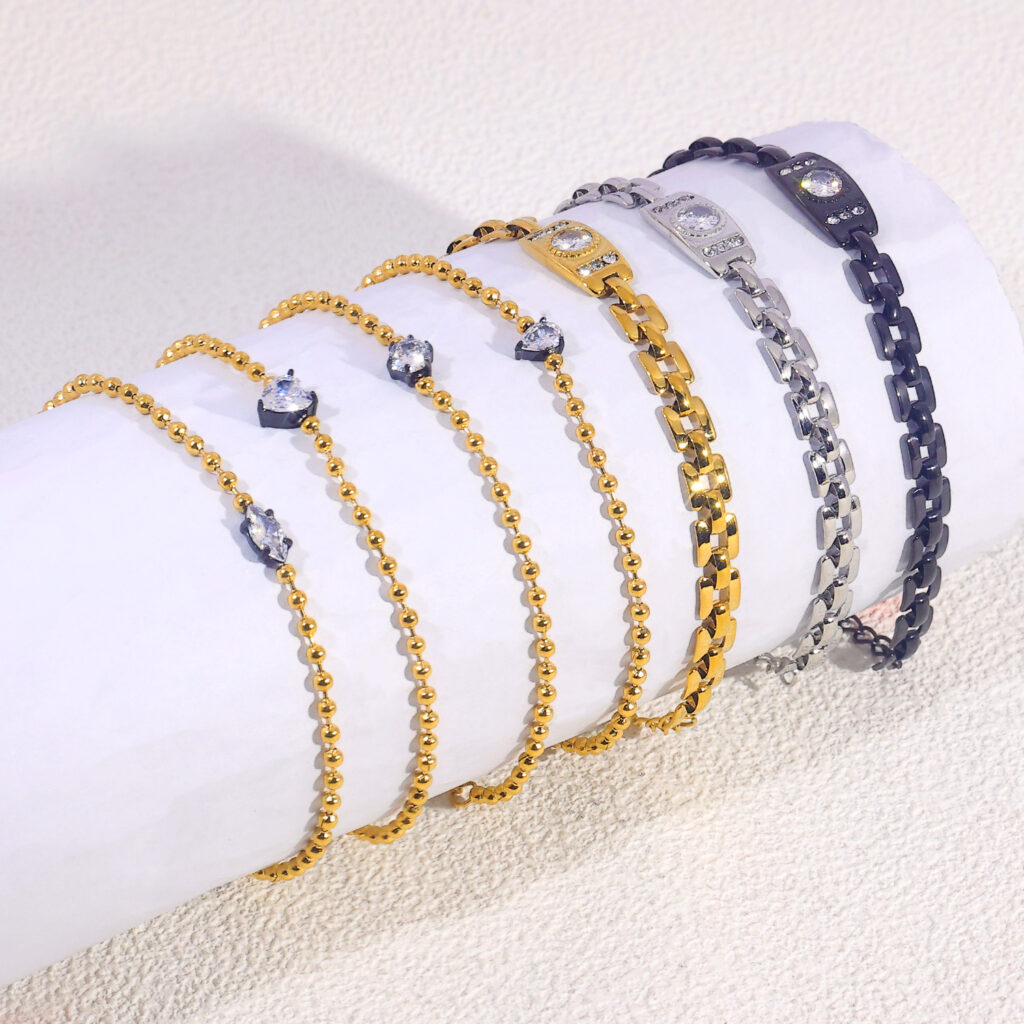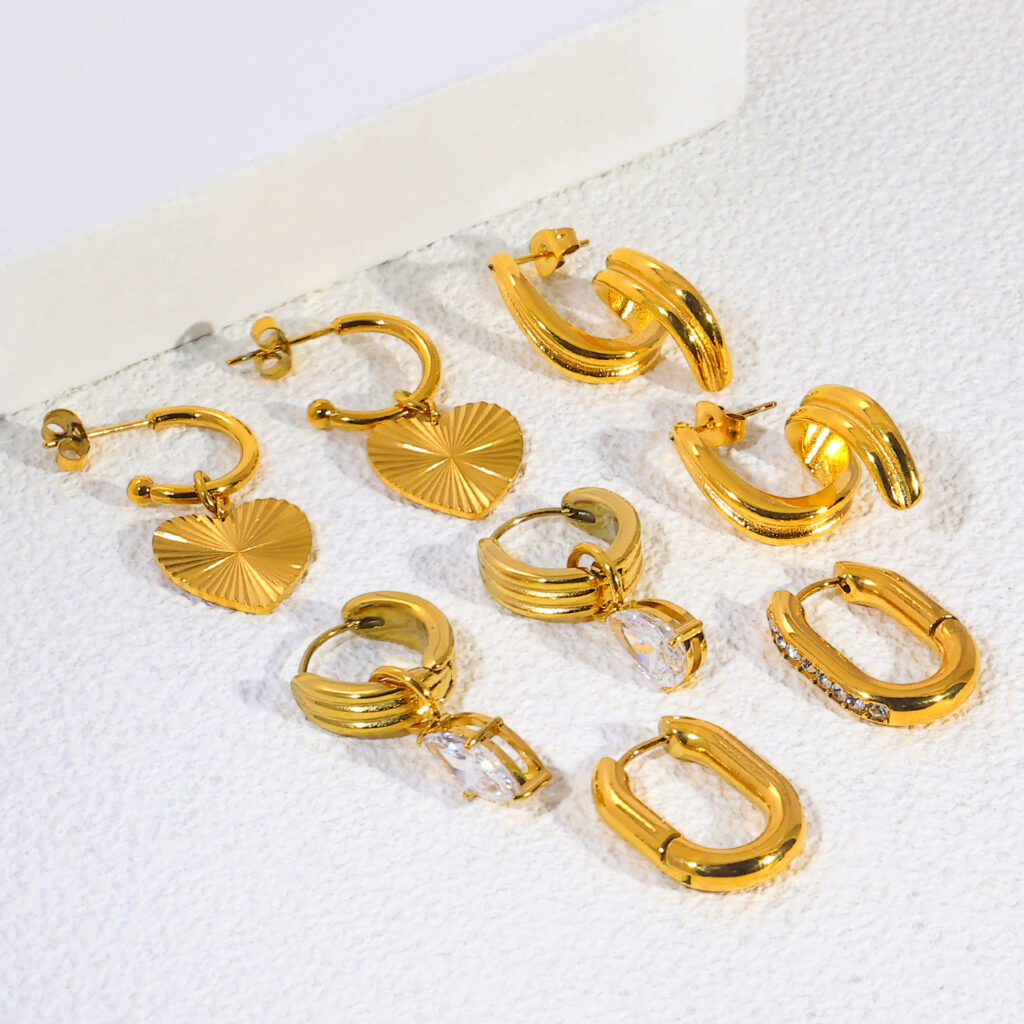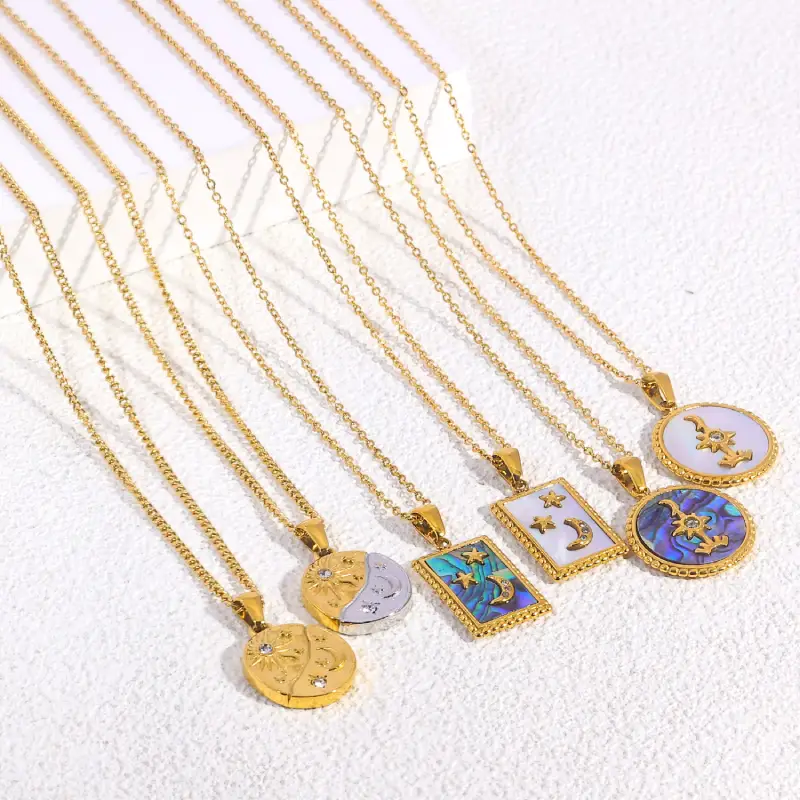
What Is PVD Jewelry?
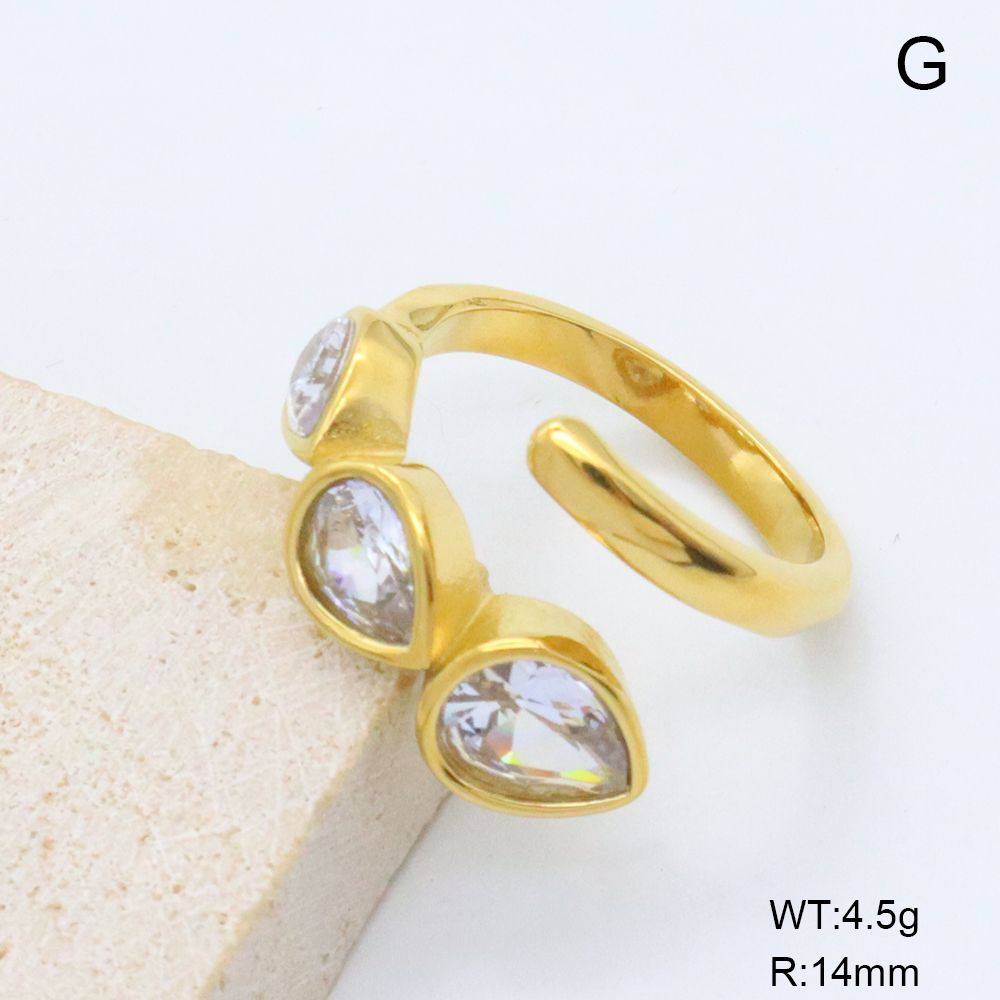
PVD jewelry is created by applying a durable metal coating through a vacuum process, making it tough against wear, water, and tarnish. This offers a middle ground for quality and cost.
PVD (Physical Vapor Deposition) is an advanced vacuum coating process used to produce highly durable, tarnish-resistant jewelry. Unlike traditional chemical electroplating, PVD vaporizes solid metals (such as Titanium or Zirconium) within a high-vacuum chamber and bonds them directly to a base metal—most commonly 316L stainless steel—at an atomic level.
For jewelry brands and wholesalers, PVD is not just a technical term; it is the industry standard for high-margin, “waterproof” collections.
Understanding this process is crucial for your business because the structural integrity of a PVD coating directly solves the biggest pain points in jewelry retail:
- 10x the Lifespan: While standard flash plating may fade in months, a quality PVD finish lasts 3 to 5 years under daily wear, effectively eliminating tarnish-related customer returns.
- The “Waterproof” Advantage: The intense bonding process makes PVD jewelry highly resistant to sweat, ocean water, and perfume. This allows your brand to confidently market pieces as “waterproof” and “tarnish-free.”
- Eco-Friendly & Hypoallergenic: The PVD process is clean, dry, and free of toxic chemical baths. It effectively seals the base metal, minimizing nickel exposure, making it 100% safe for sensitive skin and aligning your brand with global RoHS environmental standards.
In short, PVD jewelry bridges the gap between the high cost of solid gold and the poor longevity of basic plating, offering retailers a scalable, reliable product line.
How Does PVD Coating Work on Jewelry?
PVD coating on jewelry is a vacuum process. It vaporizes metals, then deposits them atom by atom onto surfaces. This creates a thin, hard, protective layer.
Understanding the technical precision behind PVD coating helps jewelry brands appreciate why this method delivers such unmatched durability. It is not a simple chemical dip; it is a highly controlled, multi-stage physics-based engineering process.
At a high-quality factory, the PVD manufacturing pipeline is executed in four meticulous phases to ensure flawless adhesion and color consistency across massive wholesale batches:
Phase 1: Advanced Surface Ultra-Purification
Before entering the vacuum chamber, the substrate—typically 316L stainless steel or 925 sterling silver—must undergo rigorous preparation. Any microscopic trace of oil, dust, or polishing compound will cause the coating to peel later.
- Ultrasonic Cleaning: Jewelry pieces go through multiple stages of automated ultrasonic baths using specialized detergents and deionized water.
- Drying & Fixturing: Once completely contaminant-free, the pieces are carefully mounted onto custom-designed rotating racks. This ensures every angle of the ring, necklace, or earring receives uniform exposure during coating.
Phase 2: Creating the High-Vacuum Environment
The loaded racks are sealed inside a heavy-duty PVD vacuum chamber.
- Air Evacuation: High-vacuum pumps remove air, moisture, and impurities until the chamber reaches an ultra-clean, low-pressure state. This prevents any unwanted oxidation during the process.
- Pre-heating & Ion Bombardment: The chamber is heated, and inert gases like Argon (Ar) are introduced. An electrical bias safely “blasts” the jewelry surface at an atomic level, providing a final microscopic cleaning and activating the metal surface for maximum molecular bonding.
Phase 3: Vaporization and Precision Layering
This is where the actual transformation happens. The coating material (known as the “target”)—such as solid pure gold, titanium, or zirconium—is vaporized using a high-energy source like a cathodic arc or sputtering plasma.
- Atomic Bonding: The vaporized metal atoms form a high-density plasma cloud. Driven by electrical currents, these atoms migrate toward the jewelry, bonding atom-by-atom into the surface structure of the base metal.
- Color Control & Reactive Gases: By introducing precise mixtures of reactive gases, the factory controls the exact color outcome. For instance, mixing titanium with Nitrogen ($N_2$) produces a crisp, stable 14K or 18K yellow gold finish, while carbon-bearing gases are used to create deep rose gold, gunmetal, or intense black coatings.
Phase 4: Controlled Cooling and QC Inspection
Once the optimal thickness (typically 2 to 5 microns) is achieved, the vaporization stops.
- The chamber undergoes a controlled cooling cycle to stabilize the newly formed molecular layers and prevent thermal stress on the jewelry.
- After the vacuum is released, every batch undergoes strict quality control (QC) inspection for color uniformity, coverage, and adhesion strength before heading to package and shipment.
High-Margin Jewelry: Custom, Durable, & Waterproof
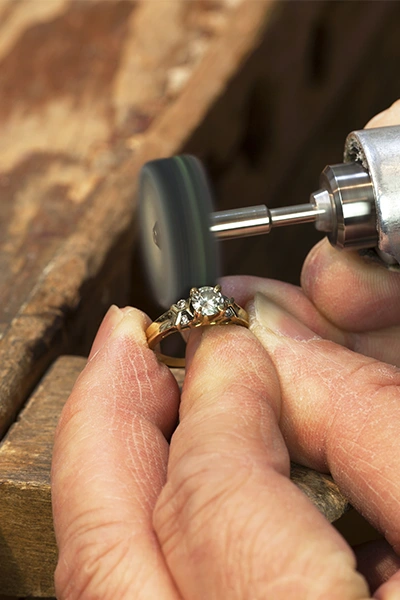
PVD Materials in Detail: Substrates, Coatings, and Process Essentials
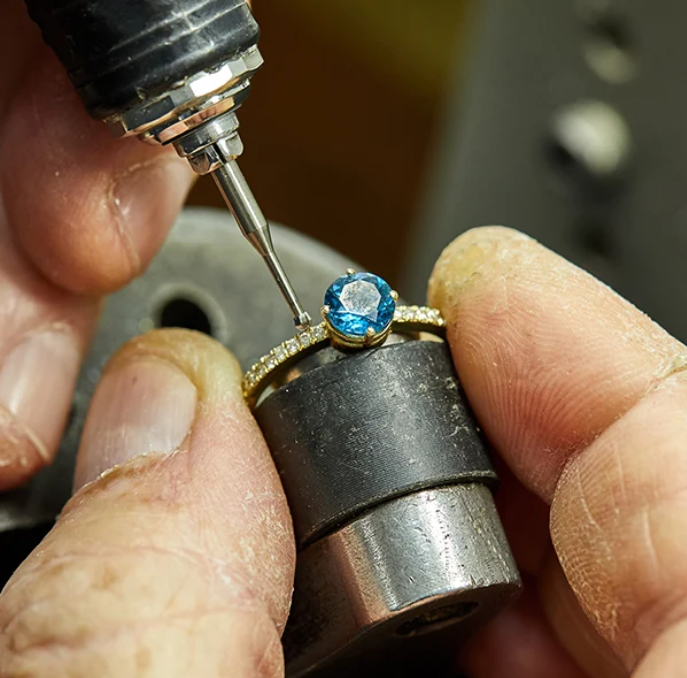
PVD jewelry relies on specific base metals, target coatings, and process gases. These choices create durable, decorative finishes.
What Materials Are Used in PVD Jewelry Manufacturing?
The selection of base metals (substrates) and coating materials (targets) directly determines the durability, price point, and market appeal of your final jewelry line. For brands building a collection, understanding these material combinations is essential for correct product positioning.
Here is the technical breakdown of the materials driving high-performance PVD jewelry:
The Base Metals (Substrates)
The core metal must withstand the high-vacuum and moderate thermal environment of the PVD chamber without warping or releasing impurities.
- 316L Stainless Steel (The B2B Gold Standard): This is the most robust and cost-effective base for PVD jewelry. Its natural resistance to corrosion and low vapor pressure allow the PVD coating to form an unbreakable bond. It is the foundation of almost all commercial “waterproof” lines.
- Titanium (Grade 5 / Implant Grade): Preferred for premium, biocompatible, and body piercing jewelry. It is ultra-lightweight and excellent for sensitive-skin niches, fetching a higher retail markup for your brand.
- Brass & Zinc Alloys (Low-End Fashion): While some budget manufacturers use them, they require complex copper or nickel barrier layers first because they are softer and prone to outgassing under vacuum. Note: For high-quality, long-lasting lines, Jusnova recommends sticking to 316L steel or silver.
The PVD Coating Materials & Target Colors
The “target” is the solid metal block inside the chamber that gets vaporized. By blending different targets with specific reactive gases, a factory can achieve highly stable, commercial-grade colors tailored to your target market:
- Titanium Nitride (TiN) + Nitrogen Gas → 14K / 18K Yellow Gold
- This combination replicates the classic, warm look of solid gold at a fraction of the cost. It is the most popular choice for everyday fashion jewelry due to its incredible scratch resistance.
- Zirconium Nitride (ZrN) → Premium Champagne Gold
- Yields a deeper, richer, and more luxurious gold tone. It is heavily favored by high-end boutique brands looking to differentiate themselves from standard fashion lines.
- Titanium Carbonitride (TiCN) → Elegant Rose Gold
- Traditional rose gold electroplating uses copper, which tarnishes and turns green rapidly. TiCN achieves that trendy, delicate pink-gold tone while remaining completely tarnish-free.
- Diamond-Like Carbon (DLC) → Intense Jet Black
- Provides an ultra-hard, low-friction dark finish. This is an essential material for brands expanding into men’s jewelry, industrial-chic, or minimalist unisex collections.
Process Essentials (Quality Control Materials)
Achieving a flawless, premium finish requires more than just the metal itself. High-purity Argon (Ar) gas is utilized to safely ignite the plasma cloud inside the chamber. Additionally, specialized Ultrasonic cleaning detergents and Deionized water are non-negotiable to ensure the jewelry surface has zero microscopic residue before the coating cycle begins.
Why Are Jewelry Brands Choosing PVD Coating?
For modern jewelry labels, integrating PVD coating into the supply chain is a strategic decision that goes far beyond aesthetics. By delivering unmatched durability and skin-safe properties, PVD directly drives long-term customer retention, slashes return rates, and provides brands with a highly marketable, eco-friendly production narrative.
For sourcing managers and DTC brand founders, upgrading to PVD is a strategic investment that balances performance, profitability, and sustainability. While the upfront manufacturing cost can be 20% to 50% higher than basic flash plating, the long-term ROI makes it the most financially sound choice for modern brands.
Here are the key competitive advantages that make PVD coating the industry standard for contemporary jewelry lines:
Marketability: The Power of “24/7 Waterproof Jewelry”
Traditional fashion jewelry forces consumers to take off their rings and necklaces before showering or swimming. PVD coating changes the game entirely.
- True Sweat & Water Resistance: A premium PVD layer withstands daily exposure to water, sweat, ocean salt, and perfumes.
- Command Higher Markups: This allows your brand to confidently market collections as “100% Waterproof & Tarnish-Free”—a high-converting hook that commands premium retail prices and drives social media growth.
Operational Relief: Eliminating Customer Returns
Nothing drains an e-commerce brand’s profits faster than return shipping costs and negative reviews due to tarnished jewelry.
- Extended Lifespan: A quality PVD finish holds up for 3 to 5 years of daily wear, compared to just 3 to 6 months for cheaper electroplating.
- Hypoallergenic & Safe: PVD coatings act as a permanent barrier that minimizes nickel release from the base metal, meeting the strict guidelines of the EU Nickel Directive. This eliminates “green skin” complaints and slashes your after-sales warranty costs to nearly zero.
Technical Insight: Why Electroplating Fails on Stainless Steel
Stainless steel naturally forms a passive oxide layer on its surface, which acts as a barrier that prevents traditional chemical electroplating from adhering properly. PVD solves this entirely. The high-energy vacuum environment forces the vaporized metal ions to penetrate this oxide layer, creating a superior molecular bond that will never flake, peel, or blister.
3. Regulatory Safety: Clean, Eco-Friendly Production
As global compliance tightens and consumer preferences shift toward sustainable fashion, your supply chain’s environmental footprint matters more than ever.
Global Compliance: All PVD manufacturing processes at Jusnova are fully RoHS Compliant, ensuring your brand stays perfectly aligned with global environmental regulations and appeals directly to eco-conscious buyers.
Zero Toxic Waste: Unlike traditional electroplating, which relies on hazardous chemical baths, PVD is a clean, dry physical process that releases no toxic liquid waste.
For a more detailed breakdown of how PVD stacks up against traditional gold plating in terms of cost and durability, you can read our full analysis on PVD vs. Gold-Plated Jewelry here.
PVD Jewelry vs Traditional Gold Plated Jewelry
When comparing PVD coating to traditional electroplating, inexperienced sourcing managers often focus solely on the initial unit cost. However, the “true cost” of a jewelry line includes customer acquisition, return rates, and long-term brand reputation.
Understanding the structural differences between these two methods will help you make the most profitable inventory decisions for your brand:
| Feature | PVD Jewelry | Traditional Gold-Plated Jewelry |
|---|---|---|
| Coating method | Vacuum deposition / PVD | Electroplating / traditional plating |
| Typical base metal | Usually stainless steel, especially 316L | Brass, copper, silver, nickel, or stainless steel |
| Durability | Higher | Lower |
| Scratch resistance | Higher | Lower |
| Tarnish / fade resistance | Better | More likely to fade or tarnish over time |
| Daily wear suitability | Better for frequent wear | Better for occasional wear |
| Price | Usually higher than standard plating | Usually lower |
Why This Matters for Your ROI
While traditional electroplating offers a lower initial manufacturing cost (saving pennies per unit), these short-term savings are quickly erased by:
- The Cost of Returns: Every return costs you double: the lost sale and the cost of reverse logistics.
- Brand Erosion: Nothing destroys an e-commerce brand faster than negative reviews triggered by tarnished items.
- Markup Potential: PVD allows your brand to command premium retail price points due to the “waterproof” and “long-lasting” value proposition, which simply isn’t possible with basic flash-plated items.
The Strategic Verdict
If your business model relies on “fast fashion” (ultra-cheap, disposable items), electroplating might suffice. But if you are building a reputable DTC brand focused on high customer retention and premium pricing, PVD coating is the only financially sound choice.
How Long Does PVD Jewelry Last?
For jewelry brands, defining “product lifespan” is essential for setting customer expectations and maintaining high retention rates. While PVD is not permanent like solid gold, it is the industry’s most durable finishing technology for stainless steel collections.
Expected Durability: The Reality for Your Customers
Under daily wear conditions, high-quality PVD-coated stainless steel jewelry typically remains vibrant for 3 to 5 years.
- High-Friction Items (Rings/Bracelets): Expect a lifespan of 1 to 3 years due to constant contact with surfaces and skin.
- Low-Friction Items (Necklaces/Earrings): These pieces can maintain their luster for 5+ years as they face minimal mechanical abrasion.
Note: Claims of “10-year durability” are often theoretical best-case scenarios. At Jusnova, we focus on providing realistic, reliable benchmarks that align your brand with honest product marketing.
Engineering Longevity: What Jusnova Optimizes
The lifespan of a PVD piece isn’t just about the coating—it’s about the factory’s technical parameters. We optimize three specific areas to ensure your collections perform better than competitors:
- Substrate Selection: We utilize exclusively high-grade 316L stainless steel, which provides the stable, corrosion-resistant base necessary for a long-lasting PVD bond.
- Coating Thickness: We calibrate our vacuum deposition process to achieve an optimal micron density (0.2–0.3+ microns), balancing scratch resistance with structural flexibility.
- Environmental Hardening: Our proprietary cooling and stabilization cycles ensure the finish is hardened against common degradants like lotions, perfumes, and saltwater.
Helping Your Customers Extend the Life
To reinforce your brand’s reputation for quality, we recommend including a simple “Care Card” with every order. Educating your customers on these three simple habits directly correlates to higher satisfaction:
- Chemical First: Apply lotions, perfumes, and hairsprays before putting on jewelry.
- Rinse After Use: A quick rinse with fresh water after heavy sweat or ocean exposure prevents salt buildup.
- Soft Storage: Store pieces individually in a soft pouch to avoid surface scratches from other jewelry.
Ready to launch a high-durability collection? We specialize in high-contact jewelry—like rings and chains—engineered with reinforced PVD coverage for daily wear. Explore our PVD Jewelry Catalog for custom coating specifications.
Performance Standards: Durability, Safety, and Strategic Selection
For jewelry brands, technical performance is the foundation of your retail marketing. Understanding how PVD interacts with base metals is essential for setting customer expectations and maintaining brand reputation.
1. Waterproofing and Tarnish Resistance
When your brand markets collections as “waterproof,” you are promising durability that traditional electroplating cannot provide.
- The PVD Advantage: Unlike flash plating, which relies on chemical deposition, PVD creates a molecular-level bond. This finish is highly resistant to daily environmental stressors as documented in materials science research, outperforming traditional electroplating in both hardness and corrosion resistance.
- Performance Reality: While PVD-coated stainless steel is designed for “24/7 wear,” it is a high-performance barrier rather than an invincible one. For maximum longevity, we recommend advising customers to rinse pieces with fresh water after heavy exposure to saltwater or chlorine, ensuring the finish maintains its original luster for years, not months.
2. Biocompatibility and Skin Safety
A brand’s commitment to quality is often judged by the wearer’s skin comfort.
- The Inert Barrier: The PVD process acts as a non-porous seal, effectively encapsulating the base metal. This makes the jewelry hypoallergenic and significantly minimizes the risk of nickel-based skin reactions common in standard fashion jewelry.
- Sensitive Skin Solutions: For brands targeting sensitive skin or specialized niches (such as ear stacks or body jewelry), PVD provides the necessary layer of separation. While it is safe for healed piercings, we always advocate for pairing this finish with premium substrates to ensure a truly irritation-free experience for your customers.
3. Strategic Base Metal Selection
The choice of base metal is not just a material decision—it is a strategic choice that dictates your market position and price point:
Brass & Copper Alloys (Trend-Driven Fashion): These serve a specific purpose for short-cycle, budget-conscious fashion lines. While they can be PVD-coated, they require thicker barrier layers to achieve longevity. They are best utilized when your retail strategy focuses on fast, seasonal turnover rather than long-term durability.
316L Stainless Steel (The Industry Benchmark): This is the definitive choice for mid-to-high-tier jewelry. Its natural resistance to corrosion and excellent adhesion properties make it the ideal candidate for long-lasting, high-demand collections.
Implant-Grade Titanium (The Premium Standard): Recommended for brands operating in the luxury or body-focused space. Titanium’s biocompatibility combined with its ultra-lightweight nature creates a superior selling proposition for premium price points.
While our PVD coatings are engineered for 24/7 wear, understanding the full lifecycle expectations is key to setting the right retail standards. Learn more about the factors that influence long-term wear in our guide: The Expected Lifespan of PVD Jewelry.
Precision Engineering: The Science of PVD Thickness
Many brands mistakenly believe that a thicker coating always equates to better quality. In reality, the “ideal” PVD thickness is a precise balance between wear resistance, structural flexibility, and surface detail retention.
The Thickness Spectrum
PVD coatings are ultra-thin, dense ceramic-metal layers. We calibrate the deposition process to match the specific utility of your jewelry:
- The Detail-Preservation Range (0.03 – 0.08 µm): This is the gold standard for high-fashion stainless steel pieces. Because the layer is so thin, it preserves crisp micro-engravings and fine textures (like brushed or satin finishes) that thicker coatings would “soften” or obscure.
- The Daily-Wear Range (0.2 – 0.3 µm): For high-contact items like rings, bracelets, and watch cases, we recommend this slightly thicker range. Each 0.1 µm increase in density provides roughly 20% greater wear resistance, effectively extending the lifespan of pieces subjected to constant daily friction.
- The Heavy-Duty Range (0.5 – 1.0 µm): Rarely used for decorative jewelry, this thickness is reserved for functional components (like watch bezels or industrial-grade hardware) where maximum scratch resistance is required at the expense of fine aesthetic detail.
Why “Thin” Outperforms “Thick”
PVD is not traditional electroplating; it does not rely on mass to create durability. It relies on molecular density.
- Flexibility Without Flaking: Ultra-thin PVD layers (0.03–0.08 µm) are remarkably flexible. They move with the metal, preventing the cracking or flaking often seen in thicker, brittle coatings—making them ideal for delicate clasps and hinges.
- Molecular Bonding: Because PVD forms a superior molecular bond with stainless steel, a 0.05 µm PVD layer can actually offer higher scratch resistance than a soft gold plating layer 50 times its thickness.
- Non-Porous Protection: Even at the lowest micron settings, our PVD process creates a fully dense, non-porous barrier. This locks out moisture and oxygen, providing years of tarnish-free performance without the need for excess material.
Strategic Recommendations for Your Brand
When submitting your technical specs to our team, we guide you based on your product’s intended use:
For Premium Collections: Aim for the 0.2–0.3 µm range. This ensures your brand delivers a “premium feel” with maximum durability, perfect for items meant to be worn 24/7.
For Mass-Market Fashion: We suggest the 0.03–0.08 µm range. It is the most cost-efficient way to deliver multi-year color retention while ensuring your brand’s unique design details remain sharp and defined.
How Is PVD Jewelry Manufactured?
A high-performance PVD finish is the result of rigorous manufacturing discipline. At Jusnova, we integrate precision metal fabrication with advanced vacuum deposition, ensuring every piece meets the exacting standards required for modern jewelry brands.
1. Surface Engineering & Pre-Coating Preparation
The quality of a PVD finish is 90% dependent on the base surface. Before a single atom of metal is vaporized, we ensure the substrate is flawless.
- Precision Fabrication: We utilize a hybrid of CNC machining, casting, and laser cutting to achieve the base form, followed by automated mechanical polishing to reach the desired surface finish (high polish, satin, or matte).
- The Ultra-Clean Protocol: A PVD bond is only as strong as the cleanliness of the substrate. We employ a multi-stage ultrasonic cleaning system using specialized solvents and alkaline degreasers to strip away even the most microscopic polishing compounds, dust, or fingerprints.
- Optimized Racking: Every piece is strategically mounted on custom-designed racks. This precise placement ensures uniform vapor distribution and consistent electrical contact, preventing “shadowing” or color inconsistencies on complex, multi-faceted designs.
2. The Vacuum Deposition Process
Once cleaned and racked, the jewelry enters our high-vacuum chamber, where the transformation occurs.
- Atmospheric Control: We evacuate the chamber to create an ultra-low-pressure environment. This allows metal ions to travel at high velocities without interference, ensuring a perfectly uniform layer across the entire surface.
- Plasma Transformation: By energizing a solid target (such as titanium, zirconium, or gold), we convert the metal into a high-energy plasma cloud. Through precise gas-flow regulation—introducing reactive gases like nitrogen or carbon—we synthesize ceramic compounds that are significantly harder than traditional gold.
- Atomic-Level Bonding: The high-energy ions strike the surface with such force that they integrate into the substrate’s crystal lattice. This is not a “paint” or a “coating” in the traditional sense; it is a permanent molecular bond that is practically impossible to peel or flake.
3. Post-Process Quality Assurance
Manufacturing does not end when the chamber opens. Every batch undergoes a structured inspection phase:
- Color Verification: Each production run is compared against our master color standards using spectrophotometers to guarantee batch-to-batch consistency—essential for brands managing recurring inventory.
- Adhesion & Integrity Testing: Beyond visual inspection, we perform standardized adhesion checks to ensure the molecular bond meets our durability benchmarks.
- Final Inspection: Every piece is reviewed for finish uniformity, scratch resistance, and aesthetic clarity before moving to the final packaging stage.
The Buyer’s Guide: How to Evaluate PVD Quality
As a brand founder or sourcing manager, navigating the PVD market requires knowing exactly what to look for. Not all “PVD” is created equal. Use these professional benchmarks to evaluate the technical integrity of any supplier.
Technical Transparency as a Filter
High-performance PVD is a precise engineering process. If a supplier cannot provide specific data, they likely aren’t controlling the process variables.
- Specify Materials: A reputable manufacturer should explicitly state the base metal grade (e.g., 316L/ASTM F-138 Stainless Steel or ASTM F-136 Titanium). Avoid suppliers that use vague terms like “alloy” or “base metal,” as these are often covers for inferior materials that will degrade rapidly.
- Demand Technical Specs: Professional suppliers provide data on coating thickness (target 0.2–0.3 µm for high-wear items). If a supplier cannot verify their micron density or process controls, treat their durability claims as marketing hyperbole rather than engineering reality.
Visual & Structural Integrity
The finish is the most visible indicator of manufacturing control. When reviewing samples, examine these three areas:
- Color Uniformity: The coating should be consistent across the entire piece, including hard-to-reach areas like the inside of rings, clasps, or earring posts. Patchy or cloudy spots indicate improper racking or unstable vacuum pressure.
- Surface Texture: A quality PVD finish should feel smooth and sleek. If the surface feels grainy or exhibits micro-chipping at the edges, it points to poor base-material preparation or inadequate cleaning protocols prior to deposition.
- Consistency Across Batches: Professional PVD processing yields repeatable results. Ask potential suppliers for their color deviation (Delta E) standards. A high-quality facility will maintain tight tolerances across different production batches, ensuring your reorders perfectly match your original collection.
Market Signaling and Transparency
Align your supplier selection with the honesty of their market positioning.
Standardized Care Guidance: A transparent partner will provide clear, industry-aligned care instructions. If a supplier suggests that their jewelry is entirely maintenance-free or impervious to all chemicals, they are likely overpromising. True quality lies in educating your brand on how to maximize the lifespan of the piece through simple, proper care.
Realistic Durability Claims: Be wary of suppliers promising “lifetime wear” or “10-year durability” under heavy use. Professional suppliers will provide realistic benchmarks (e.g., “3–5 years with standard care”) that align with industry standards, helping you build genuine trust with your end-consumers.
Care & Longevity: Empowering Your Brand’s After-Sales Experience
High-quality PVD jewelry is built for “real life,” but its luster is best preserved through sensible care habits. Providing your customers with professional guidance not only extends product lifespan but also serves as a crucial trust-building touchpoint after the sale.
The “Brand-Approved” Care Protocol
We recommend providing a digital or physical “Care Guide” with every purchase. Clear, simple instructions minimize preventable damage and reduce unnecessary return requests.
- Daily Maintenance: Encourage customers to wipe pieces with a soft microfiber cloth after each wear. This simple habit removes skin oils and product residue that can dull the finish over time.
- The Gentle Clean: For deeper cleaning, a solution of mild dish soap and lukewarm water is sufficient. Stress that the piece should be rinsed with fresh water and dried immediately—moisture is the enemy of any finish when left to pool.
- The Golden Sequence: Market this to your customers as the “Last-On, First-Off” rule: Apply lotions, perfumes, and sunscreens before putting on jewelry, and remove jewelry first when ending the day.
Proactive Wear Protection
Educating your customers on how to wear their pieces helps manage expectations and protects your brand reputation.
- Minimize Environmental Stress: While PVD is highly water-resistant, it is not “chemical-proof.” Encourage customers to remove pieces before extended swimming, hot tub sessions, or exposure to harsh cleaning agents.
- Chemical-Free Zones: Remind customers that harsh abrasive cleaners, toothpaste, and baking soda—common “hacks” for old-school jewelry—will damage the molecular integrity of a PVD coating.
- Storage Strategy: Advise customers to store pieces in individual soft pouches. Preventing metal-on-metal contact is the single most effective way to avoid surface scratches and maintain a “brand new” appearance for years.
Strategic Rotation for Sustainability
Encourage your customers to curate their daily jewelry choices. Rotating pieces reduces the constant friction on high-contact items (like rings or bracelets) and allows the jewelry to “rest.” This not only preserves the coating for the long term but also encourages customers to expand their collection—a win-win for your brand’s retail strategy.
Pro-Tip for Your Brand: Use these guidelines to create custom “Care Cards” or social media content for your customers. Providing this level of professional detail positions your brand as an expert, not just a seller—which directly correlates to higher customer loyalty and lower return rates.
Final Thoughts: Making the Strategic Shift
Low-cost, traditional plating often creates a cycle of tarnished products and frustrated customers. By contrast, PVD coating on 316L stainless steel provides the durability and consistent quality required to build a reputable, high-retention brand.
It is more than just a finishing technique—it is a strategic investment in customer satisfaction and brand equity.
You now understand the clear market advantage of PVD. The next step is execution. We recommend a strategic review to integrate this high-performance finish into your upcoming collections.
Ready to start? Contact our team to discuss your product specifications and explore tailored manufacturing solutions for your brand.
What is PVD jewelry and how is it made?
PVD jewelry uses base metal (often 316L stainless steel) coated with Physical Vapor Deposition, a vacuum process. This deposits a hard metallic layer for enhanced durability, color, and corrosion resistance.
What does PVD mean in jewelry?
PVD in jewelry means Physical Vapor Deposition. It is a vacuum coating process that bonds a thin metal layer onto a base metal, like stainless steel, at a molecular level.
Is PVD jewelry real gold?
No, PVD jewelry is not solid gold. It is base metal jewelry, often stainless steel, with a PVD-applied surface layer that may be real gold or a gold-colored compound.
How does PVD coating work on jewelry?
PVD coating transforms solid metals into vapor within a vacuum. This vapor then deposits atom by atom onto the jewelry surface, forming a thin, dense, strongly bonded layer.
What materials are used for PVD jewelry?
PVD jewelry uses base metals such as stainless steel or titanium. Coating materials, vaporized as targets, include gold, titanium nitride, zirconium nitride, and carbon-based films for color and durability.
Is PVD jewelry better than traditional gold plating?
PVD jewelry offers superior durability, wear resistance, corrosion resistance, and low maintenance over traditional gold plating, making it better for most everyday uses.
How long does PVD jewelry usually last?
PVD jewelry typically lasts 1–5 years with normal wear. High-quality pieces, with good care, can achieve longer lifespans, though 2–5 years is a common expectation.
Is PVD jewelry waterproof?
Yes, PVD jewelry is generally waterproof. Especially PVD on stainless steel, it withstands showers, sweat, pools, and ocean water without typical tarnish, fading, or green skin reactions.
Does PVD jewelry tarnish or fade?
PVD jewelry is highly tarnish-resistant and fades much slower than traditional gold plating. It is a coating, so wear or dulling can eventually occur with frequent friction or chemical exposure.
Is PVD jewelry safe for sensitive skin?
PVD jewelry is generally safe for sensitive skin, especially when made with nickel-free 316L surgical stainless steel or titanium. The coating acts as a barrier, reducing contact with allergens.
What is the difference between PVD gold jewelry and gold plated jewelry?
PVD gold jewelry uses vacuum deposition on stainless steel for a durable, tightly bonded finish. Gold plated jewelry uses electroplating for a thin gold layer over other metals. PVD offers higher durability and resistance to wear.
What base metal is best for PVD jewelry?
The best base metals for PVD jewelry are 316L surgical-grade stainless steel and implant-grade titanium (ASTM F-136). Surgical steel (ASTM F-138) is also a strong choice for body jewelry.
How can I tell if PVD jewelry is high quality?
Look for explicit “PVD” terminology, a stated base metal (e.g., 316L stainless steel), uniform color, smooth finish, realistic pricing, and positive reviews regarding color retention over time.
Can PVD coating be repaired or recoated?
PVD coatings can be professionally repaired and recoated, usually requiring stripping and full recoating in a PVD chamber. Minor cosmetic issues can be improved with gentle cleaning.